Battery makers see fully charged future after cuts to raw materials tariffs









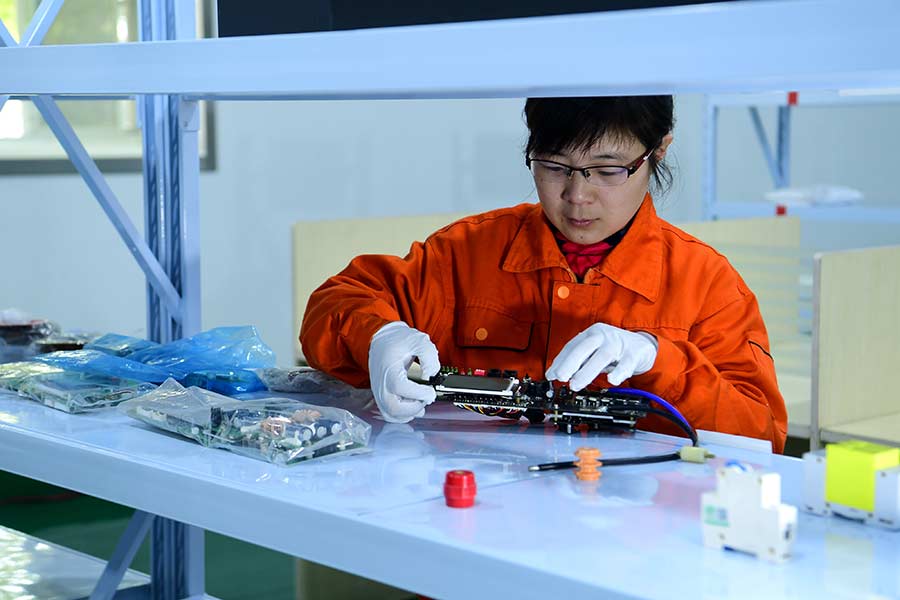
The outlook for lithium battery firms in China is turning positive, powered by tariff cuts on raw materials, say experts.
The analysis comes after China's Ministry of Finance announced in December it would slash import tariffs on lithium carbonate and cobalt sulfate from 5 percent to 2 percent, and cut tariffs on many other raw materials by 3 to 5 percent. The ministry also said it was set to scrap all tariffs on spodumene ore and cobalt hydrometallurgical semi-products, two key materials in the lithium extraction process.
In conjunction, the ministry also increased import tariffs on lithium batteries from 8 percent to 12 percent, a sign to encourage domestic production and attract inward investment from overseas, experts said.
Zhao Ping, director of the department of international trade research at the Academy of China Council for the Promotion of International Trade, told China Daily that the tariff cut "is no doubt a positive signal for lithium battery firms in China, as it helps reduce production costs, creates more space for local production, and encourages self-innovation in the battery manufacturing process".
She explained that the country currently has a relatively high dependence on imported raw materials, and their rising prices in recent years have led to surging production costs for domestic manufacturers. Firms have also been further squeezed by a slow and steady decline in the price of lithium batteries.
"Now lithium battery firms can be free from such pressure, but the influence remains limited, as tariffs make up just a small part of their production costs," Zhao added.
Han Xiaoping, chief researcher at the industry analysis website china5e.com, agreed. He said higher import tariffs will encourage local companies to self-innovate.
Similarly, the Ministry of Industry and Information Technology also launched a draft on Jan 2, encouraging tech innovation and accelerated industrial automation.
"Such policies are going to be a strong push in promoting self-innovative technologies in lithium batteries' production," Han said.
Commenting on the influence of the tariff cuts, Han noted that they will bring new momentum to the manufacturing and sales of electric-powered vehicles, where lithium batteries are mostly used, after a year of flat market performance.
Meanwhile, production of lithium batteries, especially lithium-ion batteries that are mostly seen in portable devices such as phones and laptops, is on the rise.
According to a report from the Ministry of Industry and Information Technology, China's total lithium-ion battery production in 2017 increased by 31.25 percent year-on-year and surpassed 11 billion units. Its capacity reached 100.9 gigawatthours in 2017, a 15.6 percent increase year-on-year.
However, the rise of lithium-ion battery production has triggered discussions of overcapacity. Recent reports have showed concern from industry experts that lithium-ion battery production in China is outstripping demand.
A report from lithium study website libattery.ofweek.com shows that the total amount of lithium batteries sold to dealers in 2017 was around 74.8 GWh, much lower than its production.
Yet Han pointed out that lithium batteries are mostly used in fastgrowing areas, and overcapacity should not be a concern.
"Lithium batteries are now more frequently seen in energy reservation and electric-powered bicycles, and are developing more uses ... the demand will continue to grow," Han said.
A report from auto market analysis website 12365auto.com forecast that sales of electric-powered vehicles in 2019 will surge by over 40 percent year-on-year, giving strong momentum to lithium battery sales.
Sales for electric-powered vehicles already hit 1.03 million units in the first 11 months of 2018, a 68 percent increase compared with the same period of 2017.
"A key element to develop lithium batteries' multiple uses and accelerate the industry's further development is tech innovation," Han added.