Global example set on poverty eradication









Global poverty has been falling for decades: In the 1960s, around 50 percent of the world population was living in extreme poverty (defined as living on less than $1.90 per day). Today, that number is around 10 percent.
China has been at the forefront of this achievement and is responsible for more than 70 percent of the fall in poverty levels worldwide over the past 40 years.
Chinese poverty reduction is a success story of historic significance. Over the past 40 years, the Chinese government has embarked on a well-organized campaign to reduce poverty and turn the nation into a middle-income country within a generation. The result has been unprecedented progress, with more people lifted out of poverty more quickly than has ever been achieved by humanity.
Since the announcement of targeted economic reforms in 1978, the number of extremely poor Chinese went from 88 percent of the population in the 1990s to less than 2 percent in 2014, according to the World Bank, with over 700 million people being lifted out of extreme poverty in 40 years. This has been achieved through a concerted modernization of the economy.
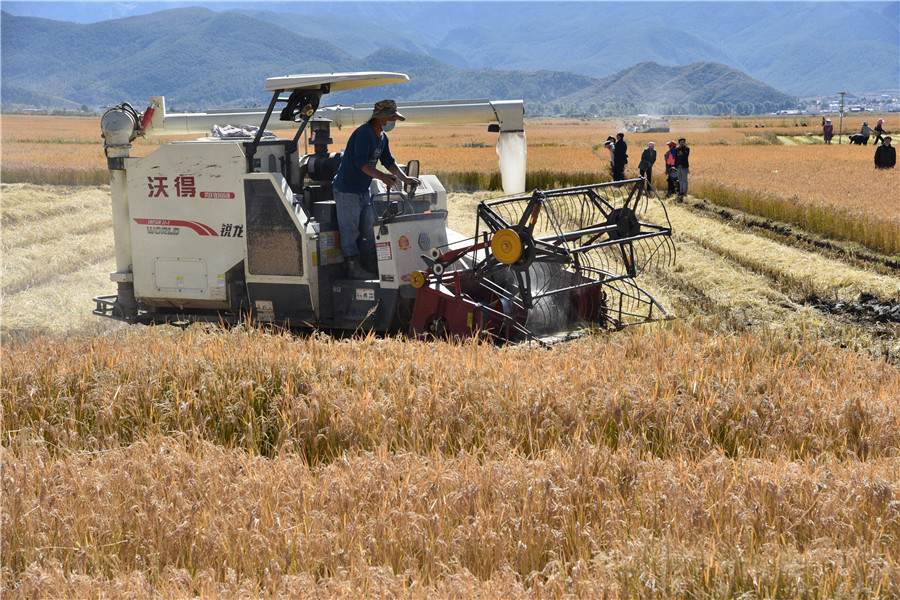
Agriculture has been reduced in significance as a share of employment, from more than 75 percent 40 years ago to less than 25 percent today, with manufacturing and then services overtaking agriculture to account for the largest share of employment. This has been associated with a process of urbanization and a commitment to universal education and health services, as well as access to clean water and electricity.
Whereas barely 20 percent of the population lived in urban areas 40 years ago, now over 60 percent of the population of 1.4 billion are in urban areas. Urban wealth has also increased more than threefold since 2000. Along with urbanization has come a dramatic increase of 12 years in life expectancy to 77 years. Average incomes increased more than 40-fold, and when adjusted by purchasing power, by more than 60 times.
The ambition of the Chinese government, as announced by President Xi Jinping at the Global Poverty Reduction Forum in 2015, is to eradicate extreme poverty in China by 2020. Considering China's extraordinary economic success, this objective appears to be within reach.
How has China achieved such a remarkable feat, and what lessons can developing countries learn from China's poverty reduction?
The key to the Chinese success is that, together with strong economic growth, development policies specifically aimed at poverty reduction have been firmly in place since market reforms were initiated 40 years ago.
For example, the introduction of land ownership, which spurred agricultural productivity in the late 1970s, is the result of a successful villagewide experiment of "household land responsibility". Market policies, gradually liberalizing capital flows, trade reforms and financial exchanges, have been tested first in Special Economic Zones since their inception, and the Free Trade Zones and Economic and Technological Development Zones represent the success of Chinese sectoral and experimental policymaking.
The development of cities like Changsha in Central China is a case in point for this unique growth strategy. Coming from a very low base and a relatively isolated and poor region, the city has experienced prodigious growth in recent decades: Its GDP per capita increased fourfold from 2000 to 2012.
This would not have been possible without the creation of a network of educational, social and research institutions, and widespread transportation and communication links.
The Chinese growth phenomenon, impressive as it is, does have risks-particularly the environmental sustainability of such growth.
Eager to maintain social stability and reap the benefits that come with sustainable growth, the Chinese administration has embraced the pursuit of a wide range of environmental policies. Xi has declared his intention to transform China into an "ecological civilization". Chinese leadership in climate change has seen a remarkable acceleration in renewable energy, with China in a short time becoming the biggest manufacturer and user of solar and wind energy. As a result of these and other efforts, China has managed to achieve a reduction of 46 percent in carbon intensity of GDP over 2005-17, ahead of its ambition to achieve a 45 percent reduction by 2020.
Growing environmental concerns are one side effect of China's rapid economic growth.
In part, growing inequality is the result of income gains for the poor having been achieved through job creation in the industrial sector, which has spurred internal migration to urban areas, and through the implementation of welfare policies and improvement of public services. The urban share of wealth was 80 percent in 2015, up from 30 percent in 1975.
The author is a professor of globalization and development at the University of Oxford and former World Bank vice-president.