



Provinces swap coal for renewable energy









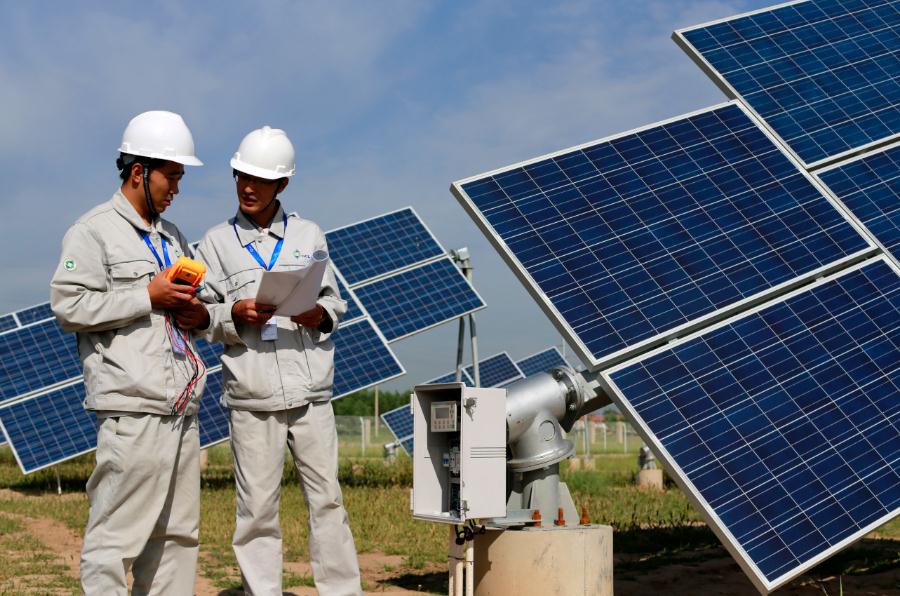
Two of China's most coal-rich provinces, Shanxi and Heilongjiang, are stepping up their development of new energy in a bid to reduce coal consumption and curb air pollution.
Aside from answering the country's call to increase natural gas supplies for heating this winter, the two provinces have also enacted a series of measures to increase installed wind and solar power generating capacities.
By the end of 2018, the northern province of Shanxi saw its total installed wind and solar power generating capacities top 19 gigawatts, up 30 percent year-on-year, according to the State Grid Shanxi Electric Power Co Ltd.
Wind and solar power generation in Shanxi rose 40 percent year-on-year to 30,600 gigawatt-hours in 2018, in the country's long-time largest coal producing area.
Last year also saw wind power generation rise in the northeastern province of Heilongjiang, up 15.4 percent year-on-year to 12,500 GWh, while solar power generation soared 254.1 percent to 2,000 GWh, according to the State Grid Heilongjiang Electric Power Co Ltd.
The installed wind and solar power generating capacities in Heilongjiang totaled 8.07 GW at the end of 2018, accounting for 25.8 percent of local power generating capacity.
New energy development in the two provinces is progressing in parallel with their actions to close small coal-fired power plants and reduce coal consumption in line with the country's tightening environmental policies.
"The moves to boost clean energy use in the two provinces are essential for China to battle air pollution, as Shanxi remains one of China's biggest coal-producing provinces, and Heilongjiang's heating and power generation have a long-time reliance on coal," said Wu Lixin, deputy director of the Coal Strategic Planning Research Institute of the China Coal Research Institute.
Wu commented that Shanxi has seen a more rapid development of new energy compared with its peers, but currently new energy like wind and solar is considered complementary to coal, which still dominates the province's power mix.
"But new energy development has great potential in Shanxi, especially as the province is seeing declining coal production," Wu said.
Local authorities are encouraging more households to switch from coal to new energy-generated electricity for their winter heating, as part of the country's larger efforts to battle gas shortages, especially in industrial supplies.
New energy like wind and solar power are also seen as more efficient. Just 1.12 percent of the installed wind and solar power generating capacities in Shanxi province were left idle in 2018, down 4.03 percentage points from the previous year.
The new capacity means that Shanxi is able to send more new energy-generated electricity to power the economy in other regions.
Heilongjiang in China's northeastern industrial heartland is also seeking to reduce its long-time reliance on coal. The new energy generation helped reduce the emissions of pollutants, including carbon dioxide, by about 14.4 million metric tons last year, said the State Grid Heilongjiang Electric Power Co Ltd.
"New energy development might be more challenging in Heilongjiang, as the province has limited energy resources," Wu commented.
"That requires more efforts from local governments to attract investment and incubate related businesses," Wu said.
Xinhua contributed to the story.



















