'Educated youth' who stayed in remote Mongolian village









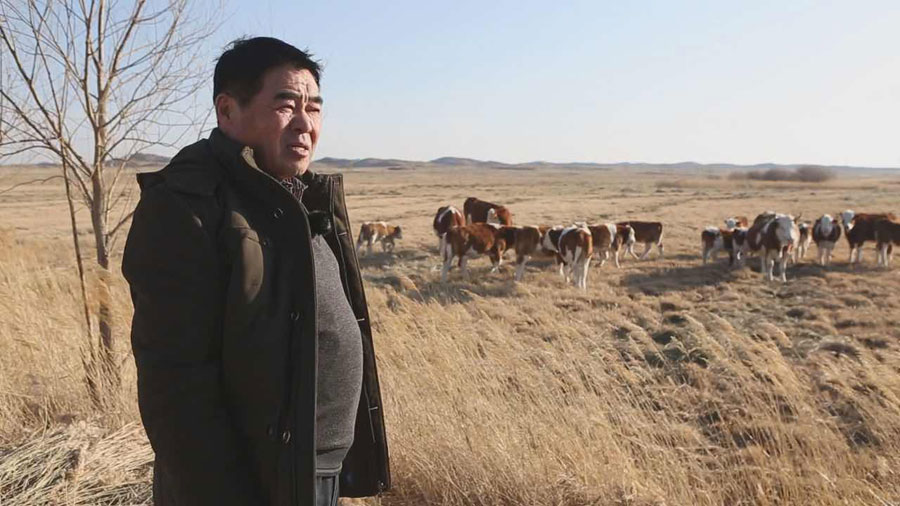
He arrived in Saruultuya Gastaa at age 19 and went on to become its Party chief
There was barely a road in the village when 19-year-old Ting Baatar arrived in Saruultuya Gastaa, Inner Mongolia autonomous region's Xilin Gol League, in the summer of 1974.
He was sent to the impoverished village for re-education during the "cultural revolution" (1966-76), along with 60 other "educated youths".
That was a familiar scene at the time, when an estimated 17 million young people - mostly middle or high school graduates from cities - were sent to the countryside by Mao Zedong.
Relatives said Ting, a member of the Mongolian ethnic group, had been sent to a place so isolated that he could never manage to leave.
The words came true. Ting was the only educated youth to stay when the "cultural revolution" ended, but said it was of his own volition. "At the time, the quota for homecoming was very limited and many city kids cried for fear they would be stranded," he said. "Finally, I decided to stay."
Ting, by then the head of a tree farm, said the rural area - though poor and lacking basic infrastructure - offered a vast platform for his talents.
He was among 100 people honored in December for their significant contributions to the country's development since the launch of the reform and opening-up policy in 1978.
The policy shift ended years of domestic turmoil and kick-started the economy.
Ting, raised in the regional capital Hohhot and unable to speak much Mongolian, managed to integrate into the rural community and helped its residents shake off poverty.
When he retired as the village's Party chief in 2015, Saruultuya Gastaa's annual per capita income had reached 18,000 yuan ($2,670), well above the country's poverty line.
"The number was barely 40 yuan when I arrived," the 63-year-old said.
Following the launch of reform and opening-up, China discarded the egalitarian people's commune, and adopted the household contract system, which linked remuneration to personal productivity.
In 1983, Party chief Ting allocated 14,000 livestock and thousands of hectares of grassland to the villagers.
But problems followed the boost to productivity, with a lack of ecological awareness leading to the grassland being overgrazed and over-cultivated.
Ting responded quickly, fencing off about 20 hectares of his grassland for a rest in 1986. The next year, the forage from the rested land had almost tripled, and many herding families decided to follow his lead.
But Ting knew it was not a permanent solution.
Through practice, he found that to reduce the pressure on the grassland, villagers needed to first reduce the number of livestock and then switch from raising sheep to beef cattle, whose grazing caused less damage.
The profit from selling a steer was also almost five times higher than for a sheep, he said.
Ting again pioneered the reform, selling his sheep and switching to beef cattle.
Fewer livestock meant the cattle had enough forage and the beef sold well because it was of better quality, he said. Ting also attempted to develop local tourism and the dairy and beef processing industries to boost the local economy.
Another source of pride was the "healthy atmosphere" he managed to cultivate in the village by rewarding the diligent and penalizing the lazy, Ting said.
The village used to give the poor households livestock, but he thought that was not sustainable and set criteria for assistance, barring the indolent, people with alcoholism and those who failed to keep their homes clean from benefits.
He also established "awards" for bad habits: a hand broom for those who failed to keep their homes clean; a spittoon for those who spat on the floor; and a bar of soap for those who did not wash their hands before cooking.
"Though born and raised in Hohhot, I took root in the village when I was 19," he said. "And it was in the village that I realized my value."




- China moves to set national standards for pre-made dishes
- Chinese company unveils plans for commercial space flights
- Latest addition to Shiziyang Bridge constructions brings main tower above 300 meters
- Hebei's 'ancient pressure cooker' setting internet ablaze
- Major urban renovation restores Xi'an's ancient moat
- China launches nationwide employment assistance program