Ocean to turn darker by end of this century due to climate change: study









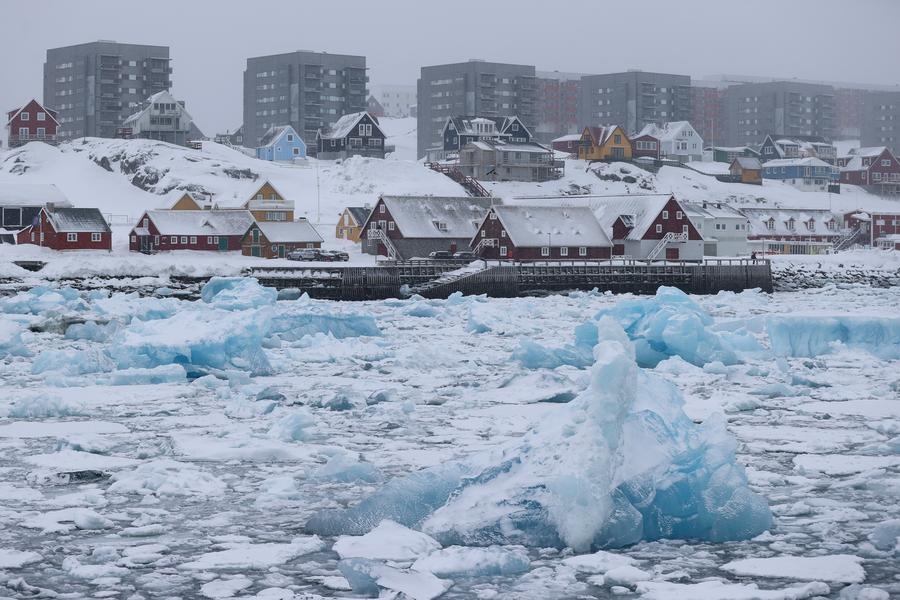
WASHINGTON — The color of the sea will become darker by the end of this century due to the climate change, according to a study published on Monday in the journal Nature Communications.
Researchers from Massachusetts Institute of Technology (MIT) found that by the year 2100, over half of the world's oceans will shift in color, as the algae population change.
The study has shown that blue regions such as the subtropics will become even more blue, reflecting less phytoplankton and life in general in those waters.
Also, those green regions such as near the poles, may turn deeper green as warmer temperature caused larger blooms of more diverse phytoplankton, according to the study.
"The changes won't appear huge to the naked eye, and the ocean will still look like it has blue regions in the subtropics and greener regions near the equator and poles," said the paper's lead author Stephanie Dutkiewicz.
"But it'll be enough different that it will affect the rest of the food web that phytoplankton supports," said Dutkiewicz, a principal research scientist at MIT.
The ocean appears blue because water molecules alone absorb almost all sunlight except for the blue part of the spectrum, but with any organism in the ocean, phytoplankton for instance, the pigment in it will absorb less in the green portions and reflect more green light.
MIT scientists created a model to estimate the relations between temperature and sea's color and what the latter would become if the global temperature would have gone up to 3 degrees Celsius by 2100.
"It could be potentially quite serious. Different types of phytoplankton absorb light differently, and if climate change shifts one community of phytoplankton to another, that will also change the types of food webs they can support," said Dutkiewicz.
Dutkiewicz said satellite could detect those changes in hue, which can provide early warning of changes in marine ecosystems.