China: Copycat or leader in innovation?









The world is holding its breath as United States President Donald Trump decides, depending on the results of the trade talks, whether to impose further tariffs on imports from China. There are many intertwined issues between China and the US (and the West in general) but the core issue is how the world (including China itself) should comprehend and cope with the rise of China and its technological giants.
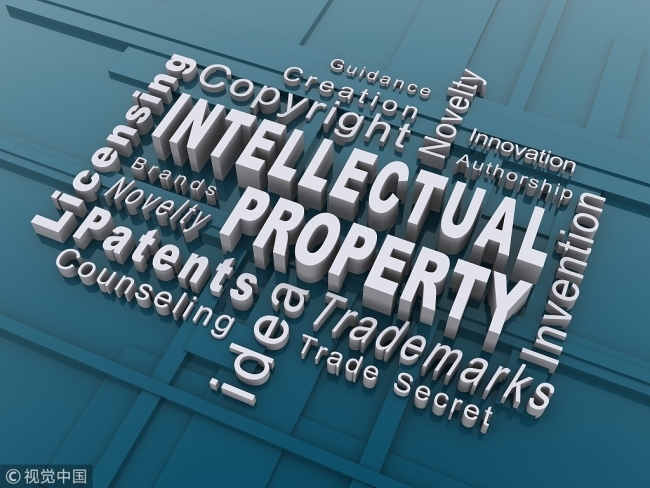
On the US' long list of demands, one of the most prominent relates to intellectual property protection and technology transfers. In the heated debate on the subject, Chinese technology giants including Huawei are often depicted as villains, constantly stealing technologies from Western counterparts and competing unfairly, with the backing of the Chinese government's forced technology transfer policy. Of course, there are villains in China, just like anywhere else — but those who argue that China's giants have only risen on the back of foreign technology are like ostriches, burying their heads in the sand and refusing to accept reality.
Learning from the West
China's recent advances in innovation are indeed partly the result of the globalization of innovation. After China's reform and opening-up in the late 1970s, newly arrived Western companies brought with them sophisticated and relevant technologies, presenting domestic Chinese companies with plenty of opportunities for learning by doing, reverse engineering and technological diffusion via talent mobility. Over time the Chinese market became more sophisticated and skills of Chinese labor upgraded, triggering the establishment of R&D centers by Western multinationals, which in turn resulted in more and deeper learning opportunities for China (but also for the Western multinationals as they started to learn new innovation approaches such as 'frugal innovation' and business model innovation).
Perseverance in innovation
However, it would be foolish to believe that Chinese technology giants rose purely because of learning from the West. The other part of the story is their R&D which became more apparent in the last decade. At the beginning of the 21st century, only a handful of Chinese companies could afford a large R&D budget. Today, according to the 2018 European Union Industrial R&D Investment Scoreboard, among the 2,500 companies that invest the largest sums in R&D in the world, 438 are Chinese, with Huawei ranking fifth, spending a staggering 11.3 billion euros ($12.7 billion) on R&D in 2017/2018. Given this huge investment plus Chinese' entrepreneurial spirit and work ethic, it should not really be a surprise to see China becoming a global leader in e-commerce, high-speed railway, nuclear power generation, telecommunications, quantum cryptography communication, and many other fields.
What has perhaps taken aback many in the West is the sheer speed and scale of the rise of China as a global innovation leader; a non-Western country leading the world is unprecedented in recent human history and the West does not know how to deal with it. Some see China as a strategic threat. I would argue that China is not, as China does not export ideology.
Intellectual property protection
To many people in the West, China's rapid rise is a source of unease purely because China is so different and they were often told China encourages a weak intellectual property regime. Sure, China is different, but this does not mean that the West cannot work with it. And yes, China's IP protection system is still young. However, we should recognize the huge strides that China has made in the last few decades. Today it is in China's interest to further improve its IP protection system as they need to attract foreign direct investment and protect their own innovators. And it is certainly encouraging to see the recent move by China's National People's Congress to strengthen legislation that would create an Intellectual Property Court.
Moving up the value chain
While Western observers should keep pressing and helping China to further improve IP protection, they must also recognize and appreciate the legitimate concerns of China, and developing countries in general, in upgrading themselves in global value chains. It is morally unacceptable that developing countries should always be constrained to the lower end of global value chains such as simple assembling tasks. Here even the political elite in Washington has a moral deficit (Obama's 2015 statement on the Trans-Pacific Partnership springs to mind — "we can't let countries like China write the rules of the global economy").
Instead of ignoring and dismissing China and other developing countries' concern in upgrading, the West should appreciate their pursuit of higher-end value chain activities such as R&D. In fact, there is a good reason that they should welcome such a move: recent research by my team at the University of Northampton indicated that the latest stages of globalization of innovation actually involved Chinese companies investing in developed countries for R&D and, perhaps counter-intuitively, they have things to teach their partners in the West, therefore also helping the latter to further upgrade their capabilities.
We do not know what future globalization will entail. Whatever it is, the world must address the concerns of both developing and developed countries, and it is only via healthy competition, instead of protection, that we can properly address these two concerns together.
The author of this article: He Shaowei, China and Emerging Economies Centre, University of Northampton




- School launched for interstellar travel
- Deepening of Sino-Finnish ties stressed
- Over 7.3 million people recorded as registered organ donation volunteers in China
- China says Nipah outbreak poses limited risk
- PLA's aerobatic jets arrive in Singapore to take part in air show
- China's garbage sorting drive still has a long way to go in many cities