



China’s last lap in eradicating poverty by 2020









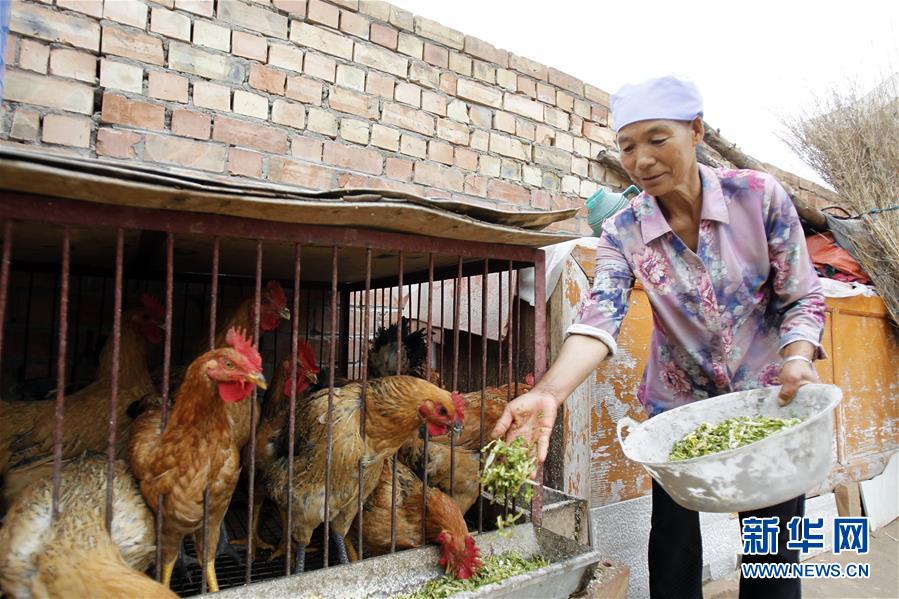
This year mark the 70th anniversary of the founding of the People’s Republic of China and the 70th anniversary of China-Africa diplomatic relations. It seems China is in the year of diverse activities, but poverty eradication is clearly the top priority as the 2020 deadline of alleviating poverty is approaching. Notably, poverty eradication goals, among other rural development aims, are solemn promises made by the Chinese leadership to Chinese people, especially rural people. Consistent with China’s meteoric economic transformation, China has made remarkable headway in alleviating poverty over the past four decades.
Nowadays, poverty in China primarily refers to poor inhabitants in rural areas with urban poverty largely reduced. Based on the World Bank report, over 750 million Chinese inhabitants were living below the global poverty line across China in 1990. The poverty line is measured by the percentage of inhabitants living on $1.90 or less per day in 2011 purchasing price parity terms. The report asserts that by 2015, the figure of Chinese inhabitants living in extreme poverty had fallen to 700, 000. China, via its reform and opening-up policy that has now lasted for over four decades, has been able to lift 800 million Chinese persons out of extreme poverty as defined by the World Bank – an income of $1.90 or less per day. This figure is more than the combined population of Germany, Japan, Russia, and the United States. It also accounts for nearly 70 percent of the worldwide poverty alleviation numbers.
Although China has dealt with its extreme poverty, the nation presently needs to move attention to its absolute poverty, especially in the rural areas. This is because according to Matteo Marchisio, who has led the United Nations International Fund for agricultural lending work in China since 2014, asserts that China’s $1.90 per day benchmark is lower than the internationally accepted poverty line for an upper-middle income nation like China. He further asserts that “if $1.90 per day that is used to measure the international poverty line for upper-middle income nations is upsurge by $5, then we will realize that we still have a significant part of the population that is below that poverty line”.
With that said, since China is marching toward eradicating poverty, in 2015, the Chinese leadership promises to completely eradicate absolute poverty by 2020 and since then they have lifted 68 million Chinese people out of poverty – which surpassed the entire population of the United Kingdom. In 2018, the Chinese government took concrete measures to ensure social welfare for the most disadvantaged people living under the poverty line.
According to the Ministry of Civil Affairs, China has allocated about $335 million of its welfare lottery fund for 22 most poverty-stricken provincial areas, accounting for 80 percent of the total allocated amount in 2018. Also, the ministry has improved the welfare of severely sick or disabled persons by granting them an individual living allowance on top of their family plans. Thus far, minimum living allowances across China have exceeded the national poverty reduction standard. Other measures comprise of sending professional social workers to poverty-stricken regions, enhancing protection of unsupervised “left-behind” children and disabled inhabitants as well as improving community governance.
According to the Ministry of Finance, the Chinese leadership has dispensed in advance part of its 2019 poverty eradication fund to local governments. The ministry further asserts that the poverty reduction fund already earmarked to 28 provinces, autonomous regions and municipalities totaled $13 billion accounting for 86 percent recorded in 2018. Also, it is obvious that part of the allocated $13 billion will be used to support regions in deep poverty including Xinjiang, Tibet, parts of Yunnan, Gansu, and Sichuan provinces. The funds deployed under the poverty eradication campaign cover numerous areas, including funding for rural infrastructure, agricultural subsidies and discounted loans.
The broad objective for such assistance is to encourage self-development and empowerment of poor populations. Multi-sectoral approaches, targeted strategies, leadership, constant innovation such as using e-commerce to connect the farmers to the markets, which managed to increase farmers income to a large extent and commitment have been core enablers of poverty alleviation in China. As such, China’s achievements in poverty alleviation in the past four decades have been possible as a result of the Chinese government’s strong leadership and the mobilization of impressive levels of resources and innovation.
In continuation of the fight against poverty, in this year two sessions, we saw that poverty eradication has been high on the agenda of the Chinese government, which aims to lift the entire rural residents living below the current poverty line out of poverty by the year 2020. Qinghai is one of the least developing provinces in China, according to Xinhua report, it had 736, 000 people living in poverty in 2014, but by the end of 2018, the number had reduced to 77, 000. Also, Jianxin, a village that is three hours drive from Beijing, was initially classified as “unfit to live”, but when China unveiled targeted poverty reduction measures coupled with the $8.8 dollar that was invested in rebuilding the village the story of the lives of the 163 families changed. Jianxin is now a landscaped enclosure dubbed the Courtyard of Happiness. With the deadline for eradicating poverty fully within the nation’s borders gets closer, Chinese leadership promise to continue its poverty eradication among those in need by setting poverty alleviation as a criterion on which officials job performance will be evaluated as well as punish those with violations plus dereliction of duties, corruption and undesirable work styles.
Chinese government stresses that funds should not be used for any projects or tasks unrelated to poverty eradication. This implies that government workers have clearly set targets of a fixed number of persons/families that will be lifted out of poverty and importantly the impact it will have on GDP and HDI indicators. Industrial poverty reliefs whereby enterprises are encouraged to invest capital in development projects, and “mass entrepreneurship and innovation” campaign has also introduced extra market elements into the campaign, offering incentives and loans for rural residents to take on self-employment and create small businesses in rural areas.
As of October 2018, China has seen 153 counties officially removed from the nation’s list of impoverished regions, with documented inhabitants in absolute poverty accounting for less than 3 percent of the local population. China looks set to hit its target of eradicating poverty by 2020; nevertheless, Chinese leaders need to know that the battle against poverty eradication does not end in 2020 and will not be the end of China’s long fight against poverty. The Chinese leadership would need to continue these efforts to bring the Chinese inhabitants who are no longer very poor but who are still poor out of that status.
The author is executive director, Center for Nigerian Studies, at the Institute of African Studies, Zhejiang Normal University.
The opinions expressed here are those of the writer and do not necessarily represent the views of China Daily and China Daily website.





