


Discoveries unearthed last year provide clearer views through mists of the past
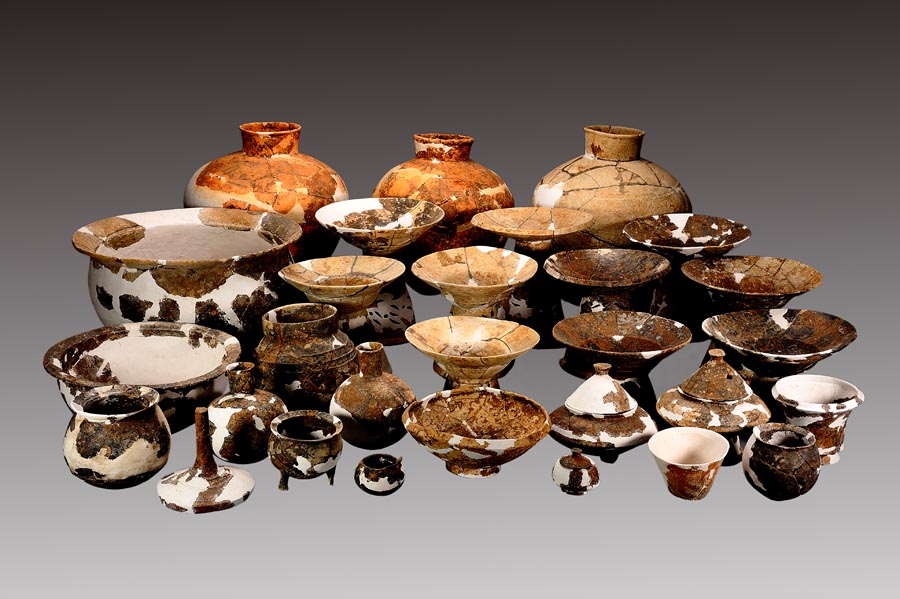
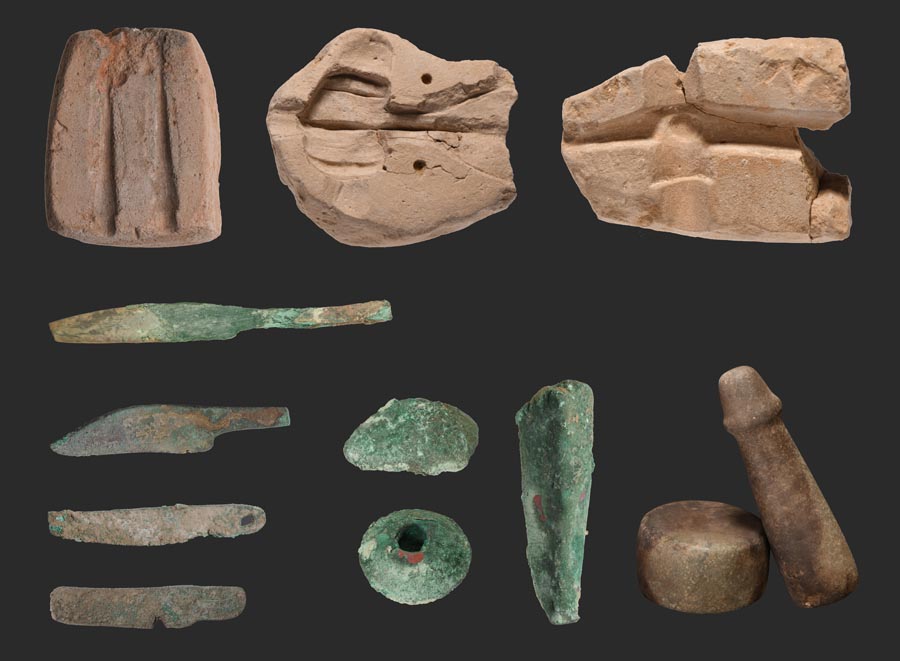
Ten newly discovered heritage sites that span much of known history, from the Paleolithic Era to the late 19th century, were recognized when a list known as the "Oscars of Chinese Archaeology" was released on Friday.
The list — China's Top 10 New Archaeological Discoveries of 2018 — witnessed the growth, glory and struggles of Chinese civilization, as well as its frequent overseas contacts.
Included are relics that date from over 20,000 years ago in Guangdong province to the wreckage of a modern warship sunk in 1894. Awardees were picked by a panel of judges comprising 21 top-tier experts from academic institutions, universities and museums nationwide.
Among the key findings of 2018 is the earliest evidence of humans' use of coal, dating to 3,500 years ago, in a river valley in Ili, Xinjiang Uygur autonomous region. That is about 1,000 years before people were believed to have first used coal.
"Abundant relics of copper and iron metallurgy were also unearthed from the site," said Yu Zhiyong, a Xinjiang archaeologist. "They've provided significant references for similar studies all across the Eurasian grasslands."
At the Lushanmao site in Yan'an, Shaanxi province, many breakthrough discoveries were made at the ruins of a city from 4,500 years ago covering more than 2 million square meters. The remains of a courtyard and terraces there are considered prototypes of Chinese palaces and ancestral temples, according to Chen Honghai, an archaeology professor at Northwest University in Xi'an.
Some of the discoveries are from much more recent times.
Jingyuan, an armored cruiser from the Beiyang Fleet, which became the most powerful of the four modernized Chinese navies in the late Qing Dynasty (1644-1911), once represented the nation's collective dream of possessing an up-to-date, powerful force on the seas. Still, the Jingyuan was sunk and the fleet destroyed in the Sino-Japanese War (1894-95) and the ship remained underwater until its wreckage was finally identified last year.
The ship was built in Stettin, Germany (now Szczecin, Poland). It is one of the earliest examples of German armored cruisers. Apart from the emotional importance of the warship for the Chinese people, the discovery was crucial for studies of world naval history, said Chai Xiaoming, director of the Chinese Academy of Cultural Heritage.
In another discovery of martial significance, the Fanjiayan site in Chongqing shows how the famous Diaoyu Fortress helped defend against the Mongol army for 36 years before the fall of the Southern Song Dynasty (1127-1279). The location is considered to have witnessed a turning point in world history because Mongke Khan, the fourth supreme khan of the Mongol Empire, died during the siege of the fortress, and the westward expansion of Mongol army into Europe halted.
Also at that site, the rarely seen remains of a local government from that dynasty were found.
Nevertheless, evidence of friendship and cultural communications in ancient times also was present among the new discoveries.
The Qingtang site in Guangdong province shows signs of communication between East Asia and Southeast Asia from 25,000 years to 10,000 years ago.
At Liujiawa, in Shaanxi province, people of different ethnic groups and cultural backgrounds were found to be buried in the same graveyard from the Eastern Zhou Dynasty (770-256 BC). Many musical instruments also were excavated.








