



Ambitious concept needs tactics that match









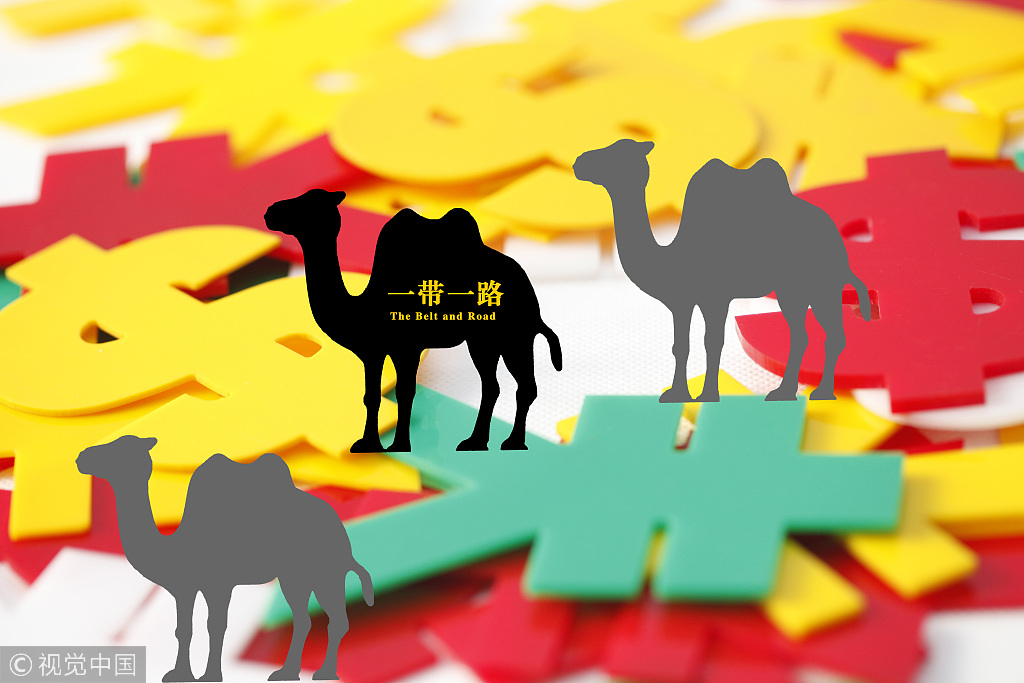
In March 2014, I listened to President Xi Jinping unveil his vision for the Belt and Road Initiative at the Boao Forum for Asia in Hainan province.
The excitement about the potential of linking up so many historically important countries along the old Silk Road, all the way through to Europe, was so easy to be swept up in.
Whether it be neighboring Kazakhstan or distant but crucially located Austria, the conceptual benefits could be huge. For someone like myself, with a background in international economics and especially development economics, I realized just how transforming this could be.
Not only does economic theory suggest that international trade and cross-border investment boost economic growth in a win-win way, but there is a huge amount of evidence that this actually happens. Whether it be Singapore, to take one example in Asia, or Switzerland, in Europe, there are countless examples. Indeed, China itself, since opening up 40 years ago, has perhaps benefited more than many realize from just these two forces, both of which lie at the core of the BRI concept.
People might not realize the potential scale of what a successfully implemented BRI could unleash. I created the acronym BRIC when, in2001, I first highlighted the potential for the economies of Brazil, Russia, India and China to become important to the world (The acronym was later expanded to BRICS with the inclusion of South Africa). In 2003, colleagues and I first showed that by the late 2030s, these four combined could become economically larger than the G7 countries. Three of these four countries are critically placed for the BRI, with China at its eastern edge and India and Russia in key geographic places. If the ongoing development of the BRI just achieved major increases in trade between China and these two, that in itself could have huge positive trade and foreign direct investment consequences, not just for these countries, but also for satellite nations of each of the three.
In some ways, the BRI is the first major global initiative that modern China has embarked upon, and it is hardly surprising that there might be some serious challenges. Obviously, China is unique in many ways, including its political system and its interplay with business. It is also unique in that, for such a large country, in its modern incarnation, it has understandably completely prioritized domestic development. The launch of the BRI changes this and brings China's uniqueness into so many other countries.
I have some specific ideas to help reposition the BRI. First, China should invite some other key Asian countries to feel empowered to influence the path of the initiative. A seemingly radical idea would be to encourage India to influence the next stage. Whenever I have discussed this idea with seasoned Asia watchers, they think I am either joking or very naive, due to the two countries' tricky historical relationship. An undiplomatic response might be, "If China can't really engage India, then the whole project can't really be serious." After all, China and India are immediate neighbors, part of the same BRIC political small club, and the only countries in the world with billion-plus populations. If the BRI is truly ambitious, then it requires serious ambition.
Second, why not invite some non-Chinese expert entities to devise a code of best practices for BRI project financing that would guide how infrastructure projects might be financed? Such an approach might even help improve the operational efficiency of Chinese companies.
Third, China should seek a group of trusted helpful countries, possibly involving the most advanced countries such as the United Kingdom, to help with these two ideas and maybe others. An even more radical idea might be to invite the United States to be such a trusted ally as part of some truly ambitious trade deal. Apart from anything else, it would demonstrate to the US that the BRI is not about China trying to impose its will on the world.
What is for sure is that the underlying ambition of the BRI concept is so ambitious, it requires equally ambitious tactics to ensure its success.
The views do not necessarily reflect those of China Daily.










