



China's poverty-relief approach is exemplary









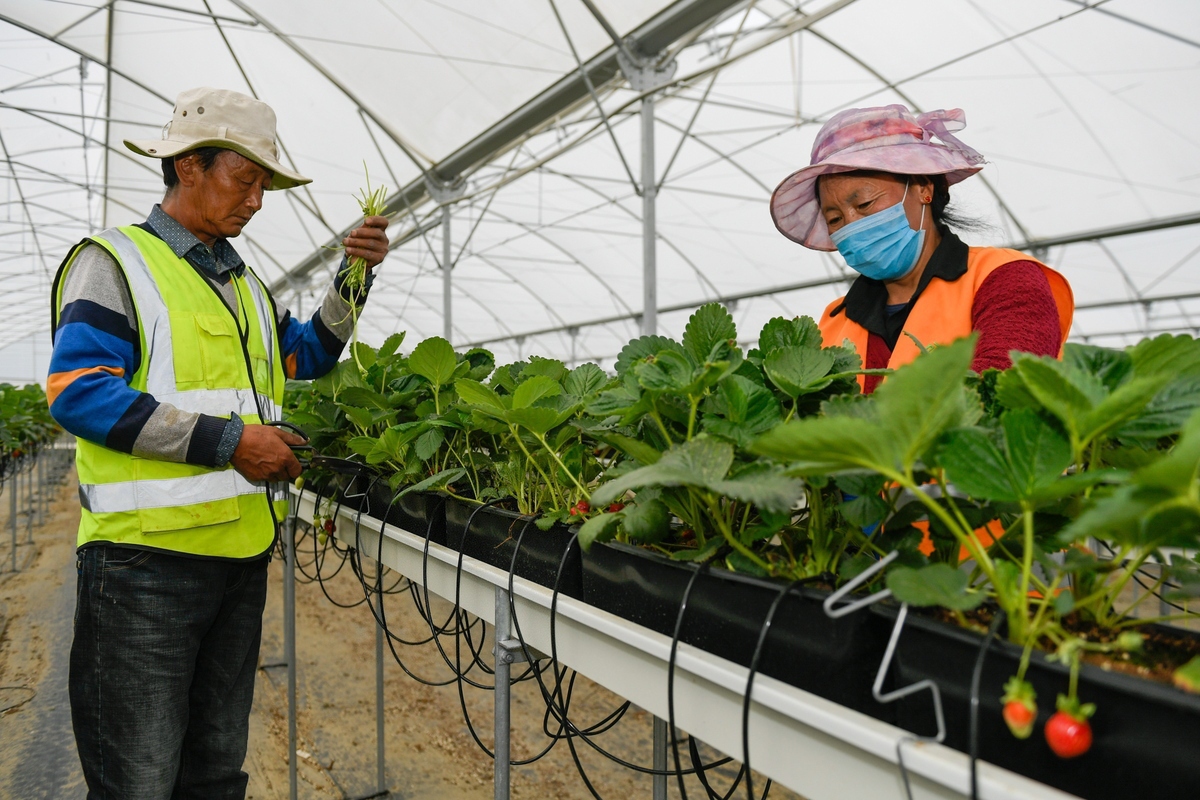
China's poverty-relief achievements have contributed more than 70 percent to global poverty alleviation in the past four decades, a feat acknowledged by the United Nations and the World Bank.
China lifted 740 million people in rural areas out of poverty between 1978 and 2017, or about 19 million people each year, according to the National Bureau of Statistics. The country had another 30 million people to lift out of abject poverty, according to the figures.
In 2018, official data showed that 13.86 million people were lifted out of poverty. The government aims to help another 20 million people in the next two years, in order to eradicate poverty in the country.
No other country in the world has managed to improve the living conditions of so many people over such a relatively short period.
How did China do it?
In 1978, the leadership embarked on reform and opening-up to take the country forward. "Poverty is not socialism," late leader Deng Xiaoping once said, and the country has since followed a comprehensive approach to fight poverty.
The gradual opening-up of the economy to external investments for export production provided vast numbers of jobs for people from rural villages. These workers gained new skills and sent money home. The government constructed transportation, logistics and communication networks that made China the "factory of the world". This part of the story is probably the best known outside China.
What should not be overlooked is not only China's unswerving attention to poverty eradication over the decades, but also its host of less well-known, complementary policies to improve the well-being of the poor. Examining those policies shows the true magnitude of China's efforts and achievements in that regard.
First, what does "poverty" mean in China today? People whose annual net income was less than 200 yuan ($30) were defined as living below the poverty line in China in 1985. The line was raised to less than 2,300 yuan by 2011.
Second, how are policies designed to help the poorest people? Chinese policies aim to give the poor a roof over their heads, guarantee food, clothing and basic medical services, and provide their children with nine years of compulsory education.
Funds and resources have been made available for agricultural subsidies and cheap loans to rural farmers. Funds also went into rural revitalization, to integrate regional development and build infrastructure connecting villages to markets so that farmers could sell their products more easily. Villagers have been encouraged to be innovative, with incentives and loans for them to become self-employed and to set up micro-businesses.
Moreover, teams of officials have been traveling to faraway and isolated rural areas to help individuals and families with individualized plans that target specific problems, such as whether there is illness or disability in the household. In other words, China has not taken a "one-size-fits-all" approach for the tough cases.
Third, there is a serious focus on education overall. Over the past five years, China has built or expanded 260,000 primary and secondary schools, added 1.7 million teachers and increased the student body by 27.3 million. The Ministry of Education committed more resources last year to poverty-stricken areas to ensure every child is able to attend school by 2020.
Beyond easing dire poverty in rural areas, China has an ongoing parallel policy to build a moderately prosperous society by 2020, a crucial aspect of which is setting up a basic social security system. This has been done progressively since the 1980s.
China also has had several social insurance programs since the 1990s, covering unemployment, employment injury, maternity, medical care and pension. The country subsequently embarked on a new and successful phase of social security development to provide healthcare benefits to rural and nonworking urban residents.
Thus, another feather in China's cap is its establishment of a comprehensive social security system in record time. Having set up the foundation, it can now focus on targeted improvements. For example, in 2017, China provided special funds for pre-pregnancy and other medical checkups for women, benefiting 12 million women, or 91.7 percent of the target group.
The country's modernization could not have occurred without the people increasing their capabilities. Beyond general education for the population, the government has increased the knowledge and experience of officials to be at the forefront of solving problems. Specialist schools and academies have been set up in multiple fields, including a national social security school in Beijing to build the capacity of social security officers across the nation.
It is the totality of the Chinese experience over the past four decades, in rebuilding the country in so many ways, that has become an inspiration for other countries. China has been a diligent student learning from others. Today, it also has many experiences to share with the world.
The author is a former undersecretary for the environment of the Hong Kong Special Administrative Region government. The views do not necessarily reflect those of China Daily.


- Judicial efforts lead to decline in China's pollution cases
- SPP steps up food and drug safety oversight
- Visually impaired student's rail journey goes viral
- First nighttime high-speed departs from Guangzhou for Wuhan
- Chongqing, Hunan, Guizhou host cross-province Spring Festival celebration
- Foreign diplomats join Chongqing's New Year market event












