Promising Chinese research gets UK funding









The Royal Society in the United Kingdom has awarded grants totaling 444,000 pounds ($582,000) to help fund promising research headed by Chinese scientists, including projects aimed at developing novel treatments for Huntington’s disease and hepatitis B.
Four researchers from China have received the Newton Advanced Fellowship, which is awarded by British science academy the Royal Society and funded by the UK government.
The fellowship offers financial support and provides established foreign scientists with an opportunity to develop their research with partners in the UK. Twenty-two of the grants were handed out this year.
The scheme takes its name from storied mathematician and physicist Isaac Newton, who was president of the Royal Society from 1703 to 1727.
The Chinese Academy of Sciences and the National Natural Science Foundation of China also provide funding when winners are selected from China.
One of the winners, neurobiologist Luo Shouqing, is already working in the UK, at the University of Plymouth.
Luo will receive 111,000 pounds ($146,000) from the Royal Society and 500,000 renminbi ($74,400) from the Chinese Academy of Sciences to help fund his research into the treatment of Huntington’s disease. He is collaborating on the project with colleagues from Fudan University in Shanghai.
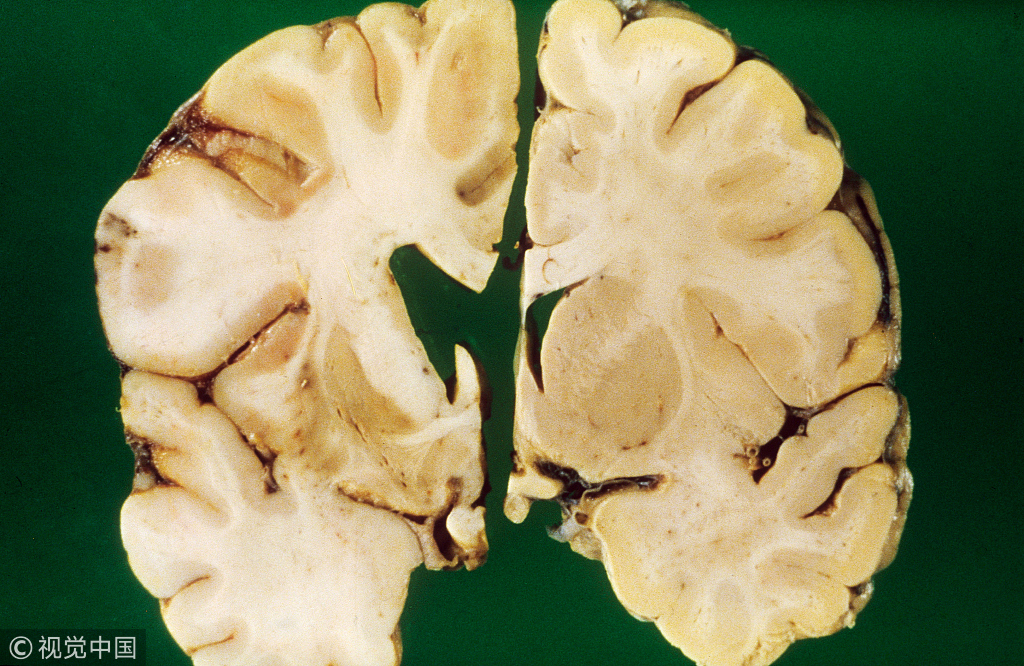
Huntington’s is a hereditary form of dementia caused by a gene mutation. The faulty gene leads to nerve damage in the brain, resulting in physical, mental, and emotional changes. Those born to a parent with Huntington’s have a 50:50 chance of developing the disease, for which there is currently no cure.
Around 10,000 people in the UK and 700,000 worldwide are affected by the disease.
“The studies we have previously undertaken here at Plymouth have shown there is real potential for the development of an effective therapy for this devastating neurological disease,” said Luo. “To have now received this fellowship from the Royal Society, we can open up more collaborations leading to more ideas, more research and ultimately a faster path to establishing a treatment for Huntington’s disease.”
Luo’s work concerns the role of autophagy in Huntington’s. The word autophagy comes from the Greek for “self-eating”, and refers to a natural process in which cells recycle waste into energy.
Huntington’s disease is associated with the abnormal production of proteins that misfold and accumulate inside nerve cells, disrupting the autophagy process, which leads to cell death.
Luo theorizes that developing treatments that reactivate autophagy could prevent cell death in patients with Huntington’s.
Luo’s work is considered among the most promising in the field. His lab has received a 520,000-pound grant from the UK Medical Research Council, and, in 2017, Luo and his team successfully collected more than 30,000 pounds of charity money to buy a special fluorescence microscope that enables the study of toxic proteins in the brain.
Three further Chinese scientists received the fellowship. Each will receive 111,000 pounds, which will be matched by the National Natural Science Foundation of China, and all three will now partner with labs at the University of Birmingham.
Chen Guozhen, from Fudan University, received the award for work into nanoparticles and the immune system. Fu Pingqing, from Tianjin University, got the grant for work into atmospheric aerosols in the coastal areas of North China. And Sun Xun, from Sichuan University, received the grant for the development of a painless, slow-release hepatitis B vaccine.
“We are working together on research partnerships which produce outcomes that benefit not just China, but the wider world,” said Zhang Zhibing, director of the University of Birmingham’s China Institute. “These Fellowships will further strengthen the research excellence of our partnerships by supporting promising young researchers in China.”