



BRI allows countries to coordinate economic, trade policies









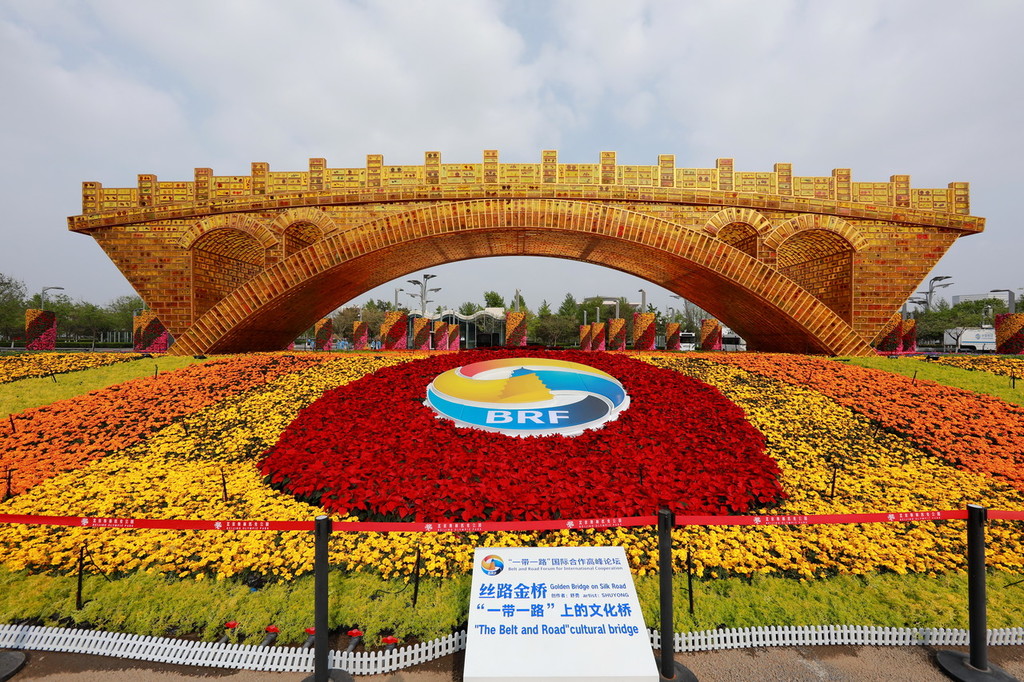
In his speech on Friday to the Second Belt and Road Forum for International Cooperation, President Xi Jinping emphasized the close links between China's domestic reform, its opening-up policies and the Belt and Road Initiative.
Xi laid out five reform and opening-up measures. Four of them will open China's markets further to international trade and investment. These include broadening market access for foreign investment, strengthening international cooperation in intellectual property rights protection, increasing imports of goods and services on a larger scale and attaching greater importance to the implementation of opening-up policies.
His fourth measure stressed the need for more effective international macroeconomic policy coordination. Why is this critical?
Macroeconomic policy coordination is important even in normal times. Ordinarily, policymakers who need to alleviate a coming slowdown or recession have two major tools. They can use stimulative fiscal policy - tax cuts or increased government spending - to put more funds directly into the hands of consumers and businesses. They can also use monetary policy - increases in the availability of loans and cuts in the interest rate - to encourage businesses to invest and consumers to buy large durable goods such as cars, homes or appliances. Ideally, additional spending will lead to more jobs, which in turn leads to more spending in a beneficial cycle.
However, some portion of that added spending will be used to purchase imports. This will drive up the trade deficit of the stimulating country if other countries don't also use stimulative policies. This means the stimulus may not achieve its desired domestic effects. Naturally, a country will be reluctant to implement a policy if much of the benefit goes to foreigners. So macroeconomic policy coordination among major trading partners makes anti-recessionary measures much more effective.
Coordination is even more critical in times of crisis. During the high point of the 2008 financial crisis, former US Treasury Secretary Hank Paulson worked closely with China and European countries to avoid imminent financial and currency collapse. For example, US Treasury bonds and bonds issued by US government-supported home mortgage lending agencies Fannie Mae and Freddie Mac were at risk of significant devaluation or even default during the worst days of the crisis. Many investors moved out of these unexpectedly risky assets into cash. But, the Chinese government supported the crisis-fighting efforts of the US government by continuing to hold them. If it had not done so, the world financial system may well have collapsed. In an October 2008 speech, Paulson stressed China's "useful and constructive" help in fighting the turmoil.
Both the US and China used extensive monetary and fiscal stimulus to recover from the crisis. Europe's recovery was much slower, because its nations were not able to coordinate fiscal policy and because the European Central Bank adopted a restrictive monetary policy.
President Xi's call for "attaching greater importance to the implementation of opening-up policies" reinforced a raft of recent policy initiatives to promote further supply-side structural reform of the Chinese economy, including very large domestic tax cuts and financial policies designed to support private companies.
By the end of June, China will set up an investment policy in which foreign companies will be welcome to invest throughout the economy except in sectors explicitly named on a "negative list". Sectors being opened up include transportation, infrastructure, energy, education, medical care and venture capital, among others. There will be increased enforcement of intellectual property rights.
Opening up to foreign competition by broadening market access to foreign investment, strengthening cooperation in intellectual property rights protection and increasing imports of goods and services will benefit foreign companies. But, more importantly, this competition is also a key part of China's long-term development strategy.
China is pushing competitiveness in its domestic markets by opening them further to foreign competition - thus forcing Chinese companies to step up independent innovation and industrial upgrading. At the Boao Forum in March, Premier Li Keqiang explained China will not resort to massive stimulus to boost growth, but will continue to open up and innovate to energize market players.
The infrastructure investments of the BRI can enable entrepreneurs immersed in this system to take advantage of opportunities by building businesses or technologies that can't be imagined in advance. In many cases in history, we've seen economies take off and prosperity spread because trade or transport costs are lowered. The latest studies by the World Bank and other international institutions suggest that cooperation has begun to pay off. The BRI will cut the costs of global trade by 1.1 to 2.2 percent, and those of trade along the China-Central Asia-West Asia Economic Corridor by 10.2 percent.
Coordinated fiscal, monetary, trade, and development policies made possible by the BRI are a great opportunity for many countries to implement more effective macroeconomic and development strategies.



















