



International standardization essential to TCM progress









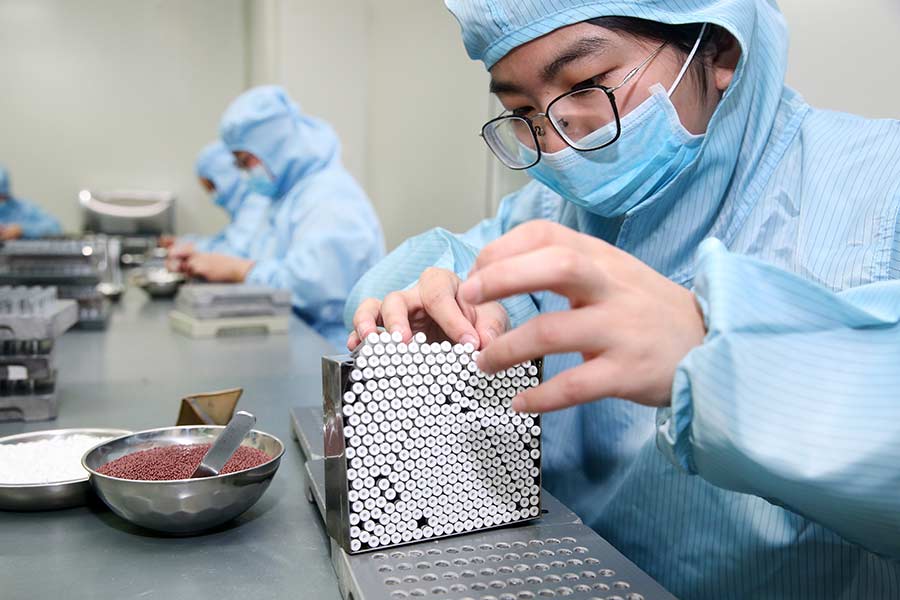
The latest TCM international standard, released in February by the ISO, was formulated for the quality control of the Isatis indigotica root - banlangen or Indigowoad root in English. It is one of the most widely used traditional Chinese herb for the prevention and cure of conditions such as cold and flu.
The ISO standard, which specifies the minimum quality requirements and testing methods for the herb, was proposed by a research team from the Shanghai University of Traditional Chinese Medicine in 2014. The research team referred to existing domestic standards for the herb while establishing the ISO standard, which covers testing methods and content limit of some pesticides and heavy metals in the herb.
In addition to the team, experts from five other countries including Germany, Canada and Australia, participated in the formulation of the ISO standard, according to Wang Zhengtao, a professor of traditional Chinese medicine.
Wang said that the release of the ISO standard for banlangen will play an important role in improving international recognition and popularization of the herb, and facilitating international trade of the herb.
More international standards on traditional Chinese herbs are being established, and some may be completed over the next year.
In addition to banlangen, some other common traditional Chinese herbs used as major ingredients for TCM have had ISO standards in recent years, including sanqi or Panax notoginseng root which relieves pain and stops bleeding, and jinyinhua or the Lonicera japonica flower, which relieves conditions such as fever and headache.
A major progress in the international promotion of traditional Chinese medicine is the inclusion of TCM in the World Health Organization International Classification of Diseases for the first time. This will take effect in the organization's global compendium after endorsement from member states in 2022.

When asked why TCM is included in the ICD, WHO spokesperson Tarik Jasarevic wrote in an email response that it will help promote TCM internationally by improving international comparability of practice, the research and reporting of morbidity in TCM, digitization of TCM diagnoses data, enhance adverse-event reporting, and enables integration of TCM into insurance coverage and reimbursement systems.
"Traditional medicine is used in many countries around the world, but often without being noted, documented and reported," wrote Jasarevic in the response. He added that the inclusion of traditional medicine in the ICD will help log traditional medicine encounters in a standardized and internationally comparable manner.
As the best preserved traditional medicine in the world, TCM is practiced in more than 180 countries and regions, with 10 overseas TCM centers having been built by the end of last year, according to the National Administration of Traditional Chinese Medicine.
TCM normally uses various herbal medications to restore health and prevent and relieve illnesses. Moreover, TCM includes procedures such as acupuncture and cupping.
Yang Zhen, an associate professor at the Beijing University of Chinese Medicine, said TCM therapies such as acupuncture have been widely adopted in Western countries such as the United States and Canada, but TCM still lacks international recognition, and most insurance companies overseas do not cover these treatments.
Lu Chuanjian, a professor at the Guangzhou University of Chinese Medicine, said the lack of international standards is a major obstacle to the promotion of TCM overseas, including its trade.
"Intensified efforts should be made to formulate technical standards for TCM, including guidelines for the diagnosis and treatment of common illnesses, and regulations for commonly used therapies," she said. "Pharmaceutical companies should be encouraged to participate in the formulation of international standards for TCM."
Meanwhile, Lu said authorities should pay more importance to the cultivation of talent for professionals or experts in TCM international standardization so that China can contribute more to the standardization of TCM.
Huang, president of the China Academy of Chinese Medical Sciences, said that despite an increasing number of ISO standards established for TCM herbs in recent years, formulation of the standards should be accelerated to promote its use overseas.
The total number of commonly used traditional Chinese herbs exceeds 600, with more than 300 being cultivated in China, according to the TCM Administration, which means only a small fraction of all the herbs have ISO standards.
As the place where TCM originated, Huang said that China should better use its advantage in the expertise and intensify international cooperation so it can take the lead in the formulation of international standards of TCM. He added that countries involved in the Belt and Road Initiative should cooperate in standardizing traditional medicine from their countries.
"Countries involved in the BRI can establish an information exchange and cooperation platform on the standardization of traditional medicine to promote the development of pharmaceutical industries in these countries, and promote the international use of TCM so it benefits more people," he said.


- China demonstrates AI computing power in outer space with satellite network breakthrough
- Sketching new life for new year
- Various festive events held across China to celebrate upcoming Chinese New Year
- Hong Kong's passenger traffic at boundary control points up 12 percent in 2025
- Foreign experts' support for modernization hailed
- Long March 10's booster retrieved from sea for 1st time








