Scientists discover new 'cold vent' on ocean floor









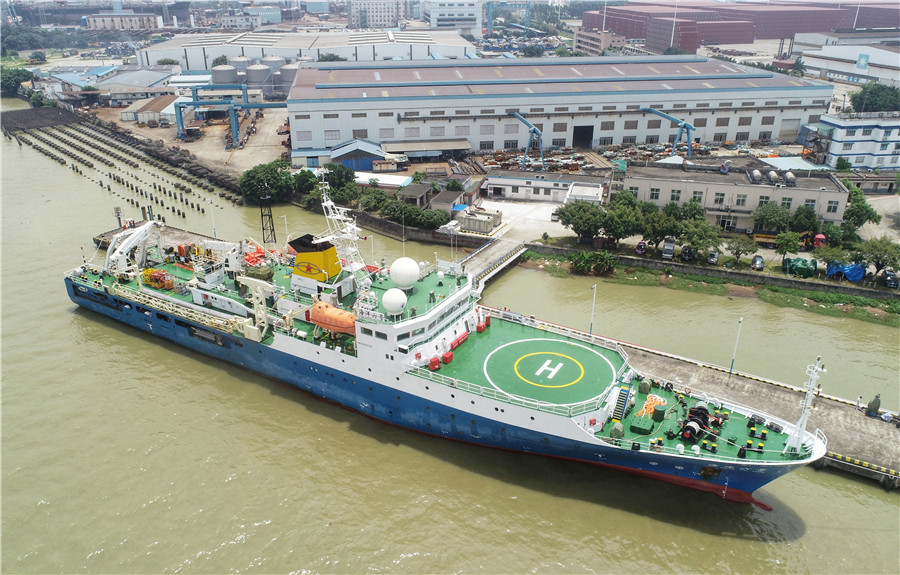
Chinese scientists discovered an active "cold vent" in the South China Sea during a research voyage that concluded on Thursday.
Cold vents are areas where methane, hydrogen sulfide and other hydrocarbons seep out off the ocean floor, providing a unique environment for organisms or the development of topographic features.
Samples and data of organisms, water, gas and sediments were collected to further the study of the evolution and mechanisms of cold vents, according to the China Geological Survey of the Ministry of Natural Resources.
Among the organisms seen was a type of tubeworm-paraescarpia echinospica-in the cold vent 1,390 meters below sea level.
With a 250-year life span, the species is one of the longest living, said Gong Yuehua, a senior engineer of the Guangzhou Marine Geological Survey, according to a report by China Central Television.






- China ramping up Nipah virus surveillance
- Shanghai to host embodied intelligence expo in July
- Chongqing sets GDP growth target of over 5% for 2026
- Xinjiang strengthens economic, cultural ties with Hong Kong, Macao
- Former senior political adviser sentenced to 12 years for bribery
- Hubei's government becomes first in China to add 'emotional value' to work report