



Mainland's affluent young consumers set to drive spending on designer brands and luxury products









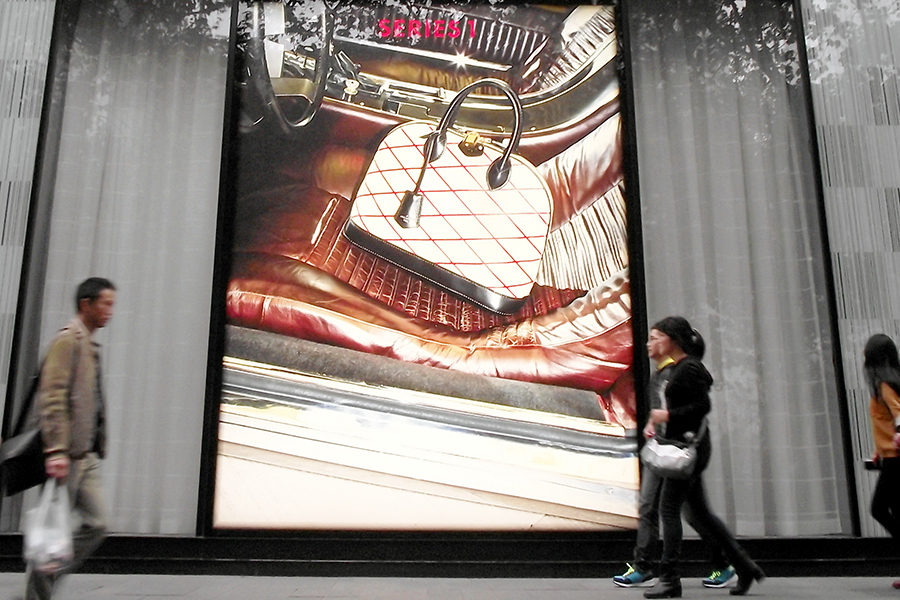
China's affluent upper-middle-income people, especially young consumers, present a promising prospect for the world's designer brands and they are set to be the driving force of global spending on high-end shoes, bags, fashion, jewelry, and watches.
By 2026, Chinese luxury spending is expected to double to 1.2 trillion yuan ($173.6 billion), accounting for almost two-thirds of global growth in luxury spending, a new luxury report by consulting firm McKinsey& Co said.
"China's young luxury consumers are more interested in aspiration than heritage, making it imperative for brands to modernize their stories and deliver them through digital channels," said Luan Lan, partner and leader of McKinsey's apparel, fashion, and luxury group in China.
"Savvy brands should design an integrated marketing strategy that satisfies young Chinese consumers' appetite for consuming media at every available touch point, whether they are online or offline, and whether they are traveling or staying in China," she said.
Young Chinese consumers in particular are eager to tap luxury as a means of social advancement and self-differentiation. They view ownership and affiliation with designer brands as a form of social capital, not just something to wear, but a life style choice that marks them as part of a distinct and exclusive community, the report found.
Last year, Chinese consumers spent 770 billion yuan on luxury items, with each luxury-consuming household spending an average of 80,000 yuan per year, the report said, based on transaction data of UnionPay.
Promoting iconic style is key for brands, including developing a Chinese nickname to increase the possibility of going viral on social media. While discovery comes from multiple channels, purchases are mostly made in store. Brands should also team up with key opinion leaders (KOLs) to help stimulate excitement for product launches, the report found.
"Brands can foster the newness and exclusivity that appeals to China's young consumers through launching limited editions, collaborations with KOLs, and hosting an annual calendar of special events, particularly around art and fashion," said Aimee Kim, senior partner and leader of McKinsey's apparel, fashion, and luxury group in Asia.
In 2017, Burberry partnered with top fashion KOL Mr. Bags to promote a special edition exclusively launched via WeChat, the largest Chinese messaging and social networking app, and the items were sold out in less than 10 minutes.
Christian Dior became the first to sell top-notch bags on WeChat in 2016. The luxury retailer launched its limited-edition Lady Dior bag online, and they were sold out within a day.
Other leading luxury brands such as Cartier, International Watch Co, and Montblanc, have also started selling on WeChat. And most luxury brands have created their official WeChat public accounts to post and promote their goods, while a group of brands have launched special limited editions that combined with Chinese Zodiac features to attract more consumers.
"Reaching young Chinese consumers requires a considered approach to e-commerce, one which cultivates a rich and consistent brand image on owned platforms," Kim said.
In the fourth quarter of 2018, LVMH, the world's largest luxury group, and Switzerland's Richemont, owner of Cartier, reported to have accelerated China sales.
Du Ni, a 29-year-old bank employee in Beijing, said she likes buying luxury bags that she can afford, and the purchase makes her feel happy. She often seeks related fashion information on social media, and the recommendations from KOLs have had some impact on her, but the final decisions were made depending on prices and the available styles and colors at stores.
"I like the quality and designs of luxury bags, and I prefer to buy those classic style bags. Buying ordinary and average-price bags makes me feel less happy, and it is actually kind of a waste of money," she said.



















