



Graduates shun first-tier cities for easier lifestyle









Residency problems, high rents, smog driving young people away, survey says
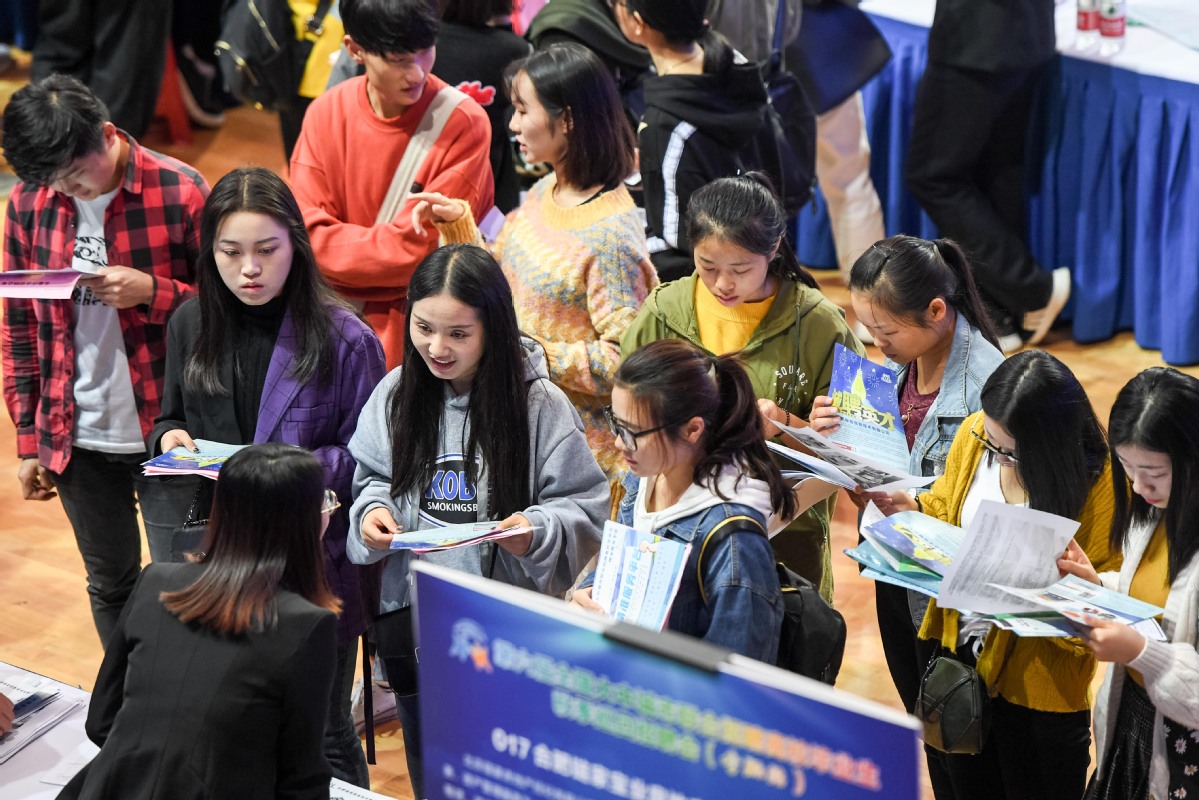
College graduates in China are leaving first-tier cities for second-tier ones, according to the annual College Graduates' Employment Report issued on Monday.
The report said that only 21 percent of college graduates last year chose to work in first-tier cities-Beijing, Shanghai, Guangzhou and Shenzhen-down 4 percentage points from 2014.
Last year, 24 percent of college graduates chose to leave first-tier cities after working there for three years, up 6 percentage points from 2014.
The report also found that leading second-tier cities are luring more recent graduates.
Around 37.3 percent of college graduates who chose to work in one of the top 10 second-tier cities such as Hangzhou, Chengdu, Ningbo and Wuhan were from other regions in 2018, up 9.4 percentage points from 2014, the report said.
The report, the 11th of its kind, was based on a survey of 303,000 graduates from 30 provincial-level regions. It was released by MyCOS, an education consulting and research institute in Beijing, and Social Sciences Academic Press (China), part of the Chinese Academy of Social Sciences.
Wang Boqing, founder of MyCOS, said large populations, traffic congestion, smog, surging property prices and difficulty in obtaining permanent residence, or hukou, have made life in first-tier cities less attractive for college graduates, which gives second-tier cities an opportunity to attract talented workers.
Second-tier cities have also rolled out favorable policies to attract university graduates, which include preferential treatment to obtain hukou, as well as housing and government subsidies, he said.
Those cities should maintain their advantages, such as a low cost of living and nicer environment, to retain their appeal, he added.
Bai Fan, who graduated in 2015, moved to Ningbo after working in Shenzhen for about one year because he felt too much pressure working in a first-tier city.
"I had to work till 10 pm almost everyday in Shenzhen but after I moved to Ningbo, I can leave work around 5 pm. I feel much more relaxed in Ningbo as it is much cheaper to live there and the city has a much slower pace of life," he said.
Wang Xin left Beijing in 2017 after working there for two years and found a new job in Hangzhou.
"I don't dislike Beijing, in fact I enjoyed working there quite a lot. However, the high housing prices and difficulty to obtain hukou in the city meant it was very hard for me to live there permanently," he said.
Wang added that if he works hard enough, buying an apartment in Hangzhou is within reach.
China's universities are expected to produce a record 8.34 million graduates this year, up 140,000 from a year earlier, according to the Ministry of Education.
Employment is being emphasized by the government this year. Its employment-first policy was included as one of the State's three macro policies for the first time in March, together with fiscal and monetary policies.
In this year's Government Work Report, Premier Li Keqiang said that employment is the cornerstone of well-being and the wellspring of wealth. First and foremost, maintaining stable growth ensures employment, Li said.


- Hainan's 1st batch of daily consumer goods duty-free shops for island residents opens
- Cross-Strait affairs should be settled 'like family', official says
- Whale injured in collision with fishing boat near Weizhou Island
- Lizard found on high-speed train brought by passenger, rail authorities say
- Zeiss top exec: Learn from China speed
- Ancient tomb cluster in Changsha offers a glimpse into millennia of history











