



Businesses plead for relief from US tariffs
One by one, nearly 50 American businesses, under the specter of tariffs on their imports from China, pleaded with authorities on Monday to spare certain items, arguing that some are critical to consumer safety.









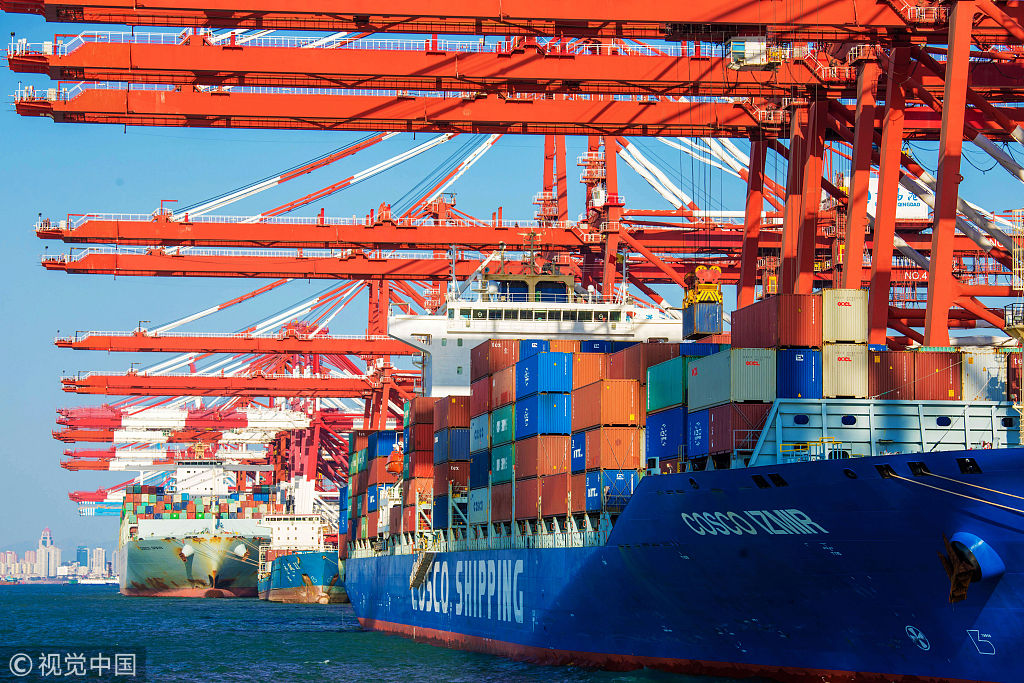
One by one, nearly 50 American businesses, under the specter of tariffs on their imports from China, pleaded with authorities on Monday to spare certain items, arguing that some are critical to consumer safety.
It was the first of seven days of hearings at the US International Trade Commission on increased tariffs on Chinese imports, for which US firms have found few alternatives.
More than 300 scheduled witnesses are expected to voice their concerns about US President Donald Trump's threat to impose tariffs on another $300 billion worth of Chinese products, with levies of up to 25 percent, on top of the $250 billion worth targeted previously.
Unlike previous rounds of tariffs that focused more on industrial and agricultural products, the latest round targets consumer goods such as home appliances, clothing and electronics.
Lisa Trofe, managing director of the Juvenile Products Manufacturers Association (JPMA), an industry group concerned with the quality and safety of baby and children's products, told administration officials that the increased costs arising from higher tariffs would render "lifesaving" childcare products unaffordable to much of the country's population.
She said that overseas manufacturing has been the norm in the industry for decades, so for most, shifting the supply chain would be a lengthy process.
"We estimate 90 percent of the core products that keep babies safe are made in Asia, the vast majority in China, so a comparable US or other foreign manufacturing base no longer exists," Trofe said.
Any tariff that increases the cost of products that provide for the care and safety of the country's most vulnerable populations must be avoided, she said in the testimony.
"Our message to American families should be clear: The importance of the trade war does not surpass the importance of baby safety," she said.
Another witness, Bradley Mattarocci, vice-president of Baby Trend, a California-based child-safety product-maker, also highlighted the negative impact of additional 25 percent tariffs on safe, affordable baby products for US caregivers.
He also said that adjusting the supply chain to offset the impact of the proposed tariffs on the company's well established, mature suppliers would require significant changes.
"Those changes would be very costly, disruptive, take years in some cases and create untenable new safety and quality risks," he said. "They would also be impractical and, in some cases, not possible at all."
While the US trade representative's office (USTR) has said product exclusions granted on prior tranches will not be affected, some products, such as car seats and some other juvenile products, which were spared from the administration's previous tariffs on $200 billion worth of Chinese goods imposed in September, are targeted again.
"We are disturbed that the new tariff list includes several categories of imported textiles, shoe materials, equipment and machinery that our members need to make products in America," said Rick Helfenbein, president and CEO of the American Apparel & Footwear Association.
"In fact, you had previously removed many of these items, and we are shocked that you have put them back on the list," he told a panel of officials from the USTR, the Commerce and Treasury departments, and other federal agencies.
Helfenbein, whose organization represents more than 300 companies and 1,000 world famous brands, said China has emerged as a top supplier because it has "unparalleled supply chains" that have been developed over generations.
"The tariffs will drive price up, which means sales (go) down. If sales go down, jobs are going to be lost. It is not good for the American economy," he told China Daily after his testimony. "It is going to be a way for the US and China to get together and talk about the issue. Tariffs are not a good way."
Mark Schneider, CEO of Kenneth Cole Productions, who has been in the industry for 39 years, said nearly 69 percent of all American-branded footwear is produced in China, and its supply chains cannot easily be shifted to other countries.
"Moreover, it is not feasible that our production could be brought back to the US, since the infrastructure no longer exists, and the cost to produce our footwear domestically would be exponentially higher, resulting in shoes that would be unaffordable to our consumers," he said.
"I respectfully urge you not to approve these additional tariffs that the administration is proposing," he said.
Asked about the chance the companies stand in having certain items spared from the tariffs, Douglas H. Paal, vice-president of the Asia Program at the Carnegie Endowment for International Peace, said it will be difficult to grant relief to some and not others at this point, but there may be a few exceptions if public safety is involved.
"Outsourcing elsewhere is reaching its limits in some industries under present circumstances," Paal told China Daily. "Things like fireworks will be irreplaceable. Prices will go up for consumers on other things they really want for holiday shopping and decorations."
If the latest tariffs go through, average Americans will notice higher prices in Target, Walmart and other retailers, according to Gary Hufbauer, a senior fellow and trade expert at the Peterson Institute for International Economics in Washington.
"Many medium- and low-income families will be unhappy. It remains to be seen what difference that will make in the 2020 elections," he said.
Zhang Jing in Washington contributed to this story.




















