



China should define its own success









China's model of economic development has reduced poverty at a rate unmatched by any other country. That is real success. And China (and the rest of the world) will face never-before-seen challenges in the 21st century, such as climate change and resource constraints.
Yet the aspirations of Chinese people and their officials sometimes seem to be attached to Western definitions of success and prosperity: globally competitive technology companies, consumption-driven growth and an American-level quality of life.
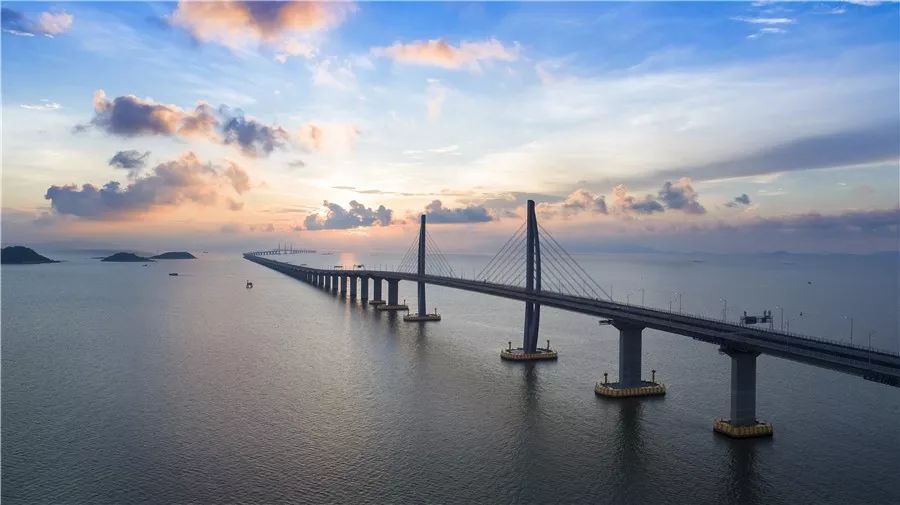
The Greater Bay Area, a recent major initiative, is often seen as China's answer to the urban centers of San Francisco and New York. These are important role models, but still Western ones. Much of the energy behind the Greater Bay Area is focused on digital technology and innovation, but surely the region can be framed through a much wider lens.
China should avoid falling into the trap of striving for a Western version of success, or gaining legitimacy and respect according to a Western definition of progress and modernity.
Relying on Western definitions of success works against China's self-interest. First of all, it leads to tensions with the West, as it directly challenges the West's self-perception of dominance. These countries view China as a competitor, which encourages business and media to push for government pressure on China.
Second, China's success, if defined along Western lines, may be more fragile than it appears. For all of Huawei's success, US pressure does seem to be affecting how it does business. Western governments may try to take more action against Chinese companies. But more fundamentally, defining success along Western lines means the West will be the entity that decides whether or not China is "successful".
The answer is not that China should abandon the mechanisms that have worked thus far, but rather shift its priorities toward a longterm future and define success according to global challenges in the coming decades. It can focus not just on an "industrial strategy", but a "post-industrial strategy", looking at new sectors and technologies that would automatically make China a world leader, rather than a country striving to catch up.
China is already doing this in certain sectors.
Its support for solar power is a major cause of the plummeting cost of renewable energy. If countries want to decarbonize their economies, they will turn to Chinese solar panel manufacturers as their suppliers.
China is the world leader in connecting its major cities through its high-speed rail network, something that countries will have to consider as they attempt to implement a program of sustainable development. In the field of mobility and reducing the carbon footprint, it can be a world leader in even creating the first hydrogen economy, as indicated by former science and technology minister Wan Gang in his recent interview with Bloomberg.
If China leads the way, it can then offer technology and investment to other countries that need to pursue a similar path. Chinese companies will thus be perceived as constructive partners.
What might a "post-industrial, post-tech strategy" for China look like? Such a plan could rely on terms that already exist in Chinese policy planning.
The strategy can fully embrace the idea of "ecological civilization", developing innovations and technologies that will better allow China's society to live within resource constraints.
China's long-term strategy should support sectors that are crucial to this vision, from water conservation and food safety to reducing energy intensity.
The strategy could also define what it means for a society to have "moderate prosperity", a necessity for a large developing nation such as China. Clearly, such a definition would not simply be a standard of living that is less than the West's, but one that is more suited to the opportunities, demands and constraints of the 21st century in a country like China.
The West currently defines prosperity in a resource-heavy, consumerist and unsustainable manner in which individual rights to consume are unfettered. This leaves the door open for China to propose something very different. After all, if someone can take the high-speed train from Beijing to Guangzhou, are they less prosperous or free than someone who takes a plane or drives a car for hours and burns all that fuel?
One innovation that is sorely needed is a way to understand prosperity within hard resource constraints. Can people live happily and comfortably without depriving the planet of resources? If China succeeds, this will boost its soft power as other nations in the developing world try to emulate it.
China's development strategy should look at resolving the global problems that will emerge in the coming decades, rather than use today's Western-derived framework for success. Then China's challenges to the status quo will be welcomed, rather than feared.
Being listed on the New York Stock Exchange is last century's definition of success and has become a very clear trap. It's time to move on.
The author is founder and CEO of the Global Institute for Tomorrow and author of The Sustainable State. The views do not necessarily reflect those of China Daily.










