



Industrial relocation won't curb growth









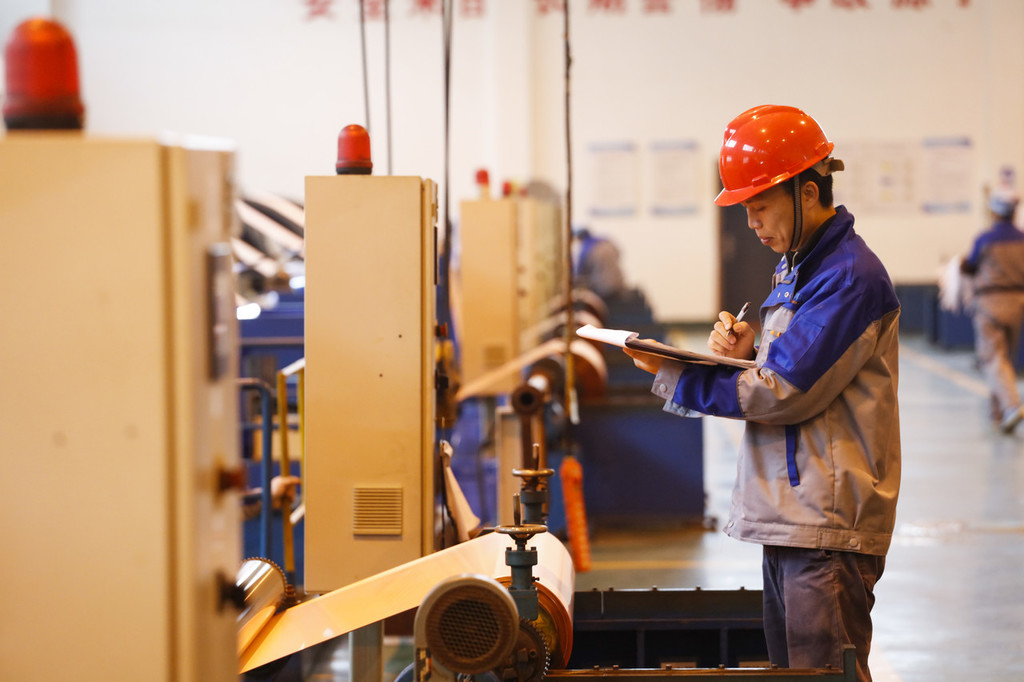
The relocation of some manufacturing enterprises from China to overseas destinations in the past years has raised market concerns, especially due to the trade tensions between the US and China. Indeed, if manufacturing enterprises relocate abroad in large numbers, China's manufacturing sector could suffer a serious blow, which in turn could deprive China of a driver of economic growth.
Such concerns are understandable. But the speed or scope of the relocation of manufacturing enterprises from China to other regions is not fast or large enough to feel pessimistic about the future of China's economy. Besides, after the middle-and low-end manufacturing enterprises shift abroad, some high-end ones will take their place. And often the slowdown in manufacturing growth is usually followed by the accelerated growth of the service sector.
'Sixth industrial migration' in progress
Equally important, the relocation of manufacturing enterprises is not only the rule of global economic development, but also the driving force of global growth and the engine of economic upgrading. There have been five large-scale global industrial relocations in modern economic history. The current relocation of some manufacturing industries from China to some Southeast and South Asian, even African countries can be regarded as the "sixth industrial migration".
On the one hand, judging by global industrial development history, the relocation of some manufacturing industries from China to overseas destinations is inevitable given the extent of China's development. On the other hand, this phenomenon does not mean China will lose its manufacturing and economic power.
During the previous five industrial migrations, the economic development of the leading countries that hosted such industries didn't stop after some of the traditional sectors relocated to other countries. Instead, they soon saw the rise of new industries, high-end manufacturing and the service sector-and they are still developed economies. For example, the US is still the world's largest economy even 60 years after the third industrial migration, while Japan, Germany and Britain are ranked among the top seven economies in terms of size and quality even decades after the industrial migration.
Relocation speed and scope not alarming
As a country with the world's largest population, the third-largest territory, and the longest continuous economic growth curve, China's case will be the same even after the relocation of some of its manufacturing industries.
First, as mentioned above, the speed and scope of the manufacturing units' relocation from China are not as fast and large as some people imagine. The industrial relocation from China started after the 2008 global financial crisis broke out, accelerated in 2012, and gained pace last year due to the Sino-US trade conflicts.
But the consequences are not expected to be very serious. For instance, from 2008 to 2018, global trade grew at an annual average rate of 2.4 percent, while China saw 6.3 percent annual average export growth, which shows China's export growth has been not only steady, but also 3.9 percentage points higher than that of global trade.
As a result, the share of China's exports in global exports rose from 8.9 percent in 2008 to 12.9 percent in 2018, an increase of 4 percentage points. Which is a clear indication that the relocation of manufacturing industries from China is not fast enough to make us feel worried.
Second, the rapid rise of emerging manufacturing industries in China will to a large extent offset the impact of the relocation of low-end industries on its entire manufacturing industry and economy. Therefore, China will continue to be a manufacturing and economic powerhouse.
For example, the booming development of eight major emerging industries of strategic importance-new generation information technology, energy saving, environmental protection, biology, high-end equipment, new materials, new energy and new-energy vehicles-will play a role that traditional middle-and low-end industries such as clothing and shoes, and furniture making could not play in driving China's growth and boosting its manufacturing and economic power.
Third, China's service sector has been growing rapidly-at an average annual nominal growth rate of 13.1 percent over the past decade-outpacing industrial growth by 4.3 percentage points. Despite that, the service sector's share of GDP is just over 50 percent, still lower than the 70-80 percent in developed countries, indicating it has huge potential for further growth.
Moreover, the continuous improvement of consumer services and the dynamic rise of producer services in China will largely offset the impact of the slowdown in its manufacturing growth, and thus help the country to become a modern economic powerhouse with strong manufacturing and service sectors.
The author is chief economist of China CITIC Bank International and director of China Chief Economist Forum. The views don't necessarily represent those of China Daily.





