



China invites others to join moon program









International cooperation seen as key element of nation's space strategy
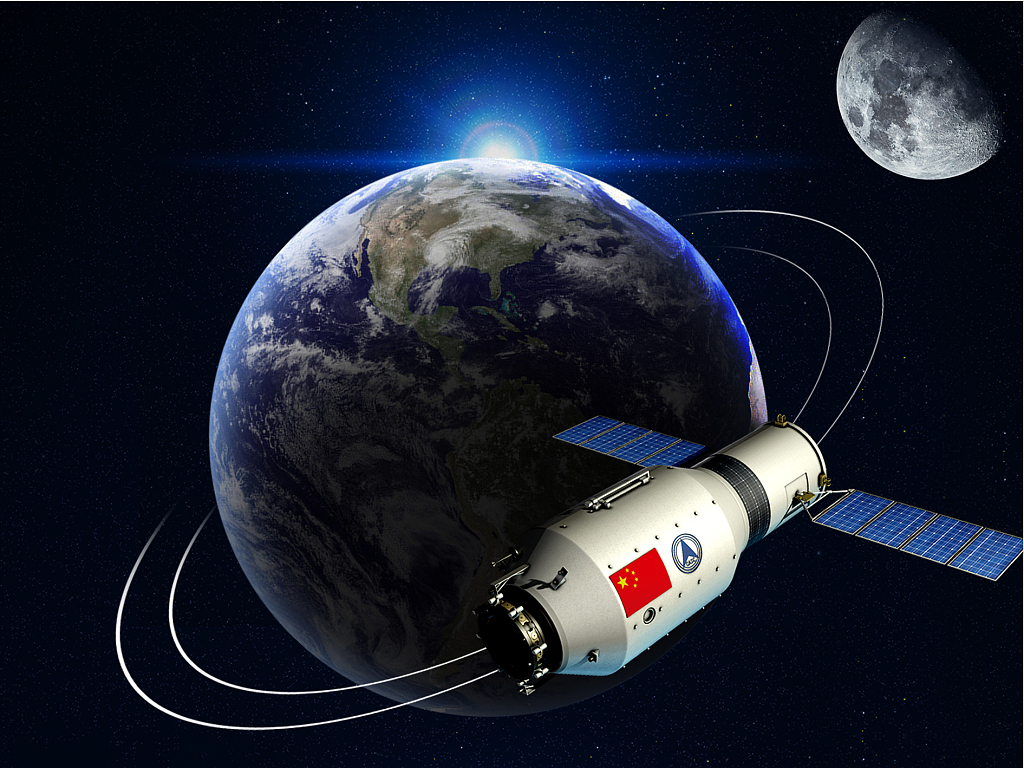
In 1969, when Neil Armstrong became the first person to walk on the moon, the astronomical body was, to the Chinese, something that people just gazed at and mused about. Fifty years later, China has become the first country to land a robotic spacecraft on the far side of the moon.
As the world celebrated the historic moon landing on July 20 half a century ago, Chinese lunar explorers said China's moon exploration program, which includes a planned robotic lunar research station prototype by 2030 to prepare for manned missions, is open to international cooperation.
With more lunar scientific exploration and technology, the lunar research station is expected to become a base for astronauts to visit briefly, with the eventual goal of long-term stays, according to Li Chunlai, director of the Ground Research and Application System of the Chinese Lunar Exploration Project.
"International cooperation is an important element in China's strategy of lunar and deep space exploration," Li and three of his colleagues wrote in an article published in a special issue of the US journal Science to mark the July 20, 1969, Apollo 11 moon landing.
China unveiled a robotic lunar exploration program in 2004, consisting of three phases - orbiting, landing and returning. The program was named the Chang'e Project after the Chinese goddess of the moon.
Four missions have already been conducted, between 2007 and this year, with the Chang'e 4 deploying a lander and the Yutu 2 rover on the surface of the far side of the moon in early January. The fifth mission, scheduled for early next year, is designed to return rocks to Earth from a lunar area that has not yet been sampled, according to the article's authors.
After 2030, China's lunar exploration program will continue to develop capabilities in robotic and human exploration, with robot exploration being the primary development direction of subsequent lunar exploration missions, they said.
Meanwhile, the National Aeronautics and Space Administration, the US space agency, has named its new moon program Artemis, after the twin sister of Greek mythology's Apollo.
The US space agency hopes to put Americans on the moon again by 2024. Congress has provided $21.5 billion to the agency in fiscal year 2019, which, adjusted for inflation, is NASA's best budget in a decade, according to Casey Dreier, chief advocate and senior space policy adviser of the Planetary Society in California.
In the Science article, which had the headline "China's present and future lunar exploration program", Li and his colleagues said China's exploration plan is "flexible and iterative", with an emphasis on international cooperation.
They also said China is open to cooperation with NASA on lunar exploration.
"Both sides can start cooperating on aspects such as exchange of scientific data and space situational awareness information," they wrote in the article. "China also looks forward to exploring more opportunities to cooperate with NASA to preserve the space environment for generations to come."
China's latest lunar mission, Chang'e 4, has already carried experiments from Germany, Sweden and the Netherlands, the article said.
In April, the China National Space Administration announced cooperation opportunities for China's sixth lunar mission and its asteroid exploration mission. It also signed lunar exploration cooperation agreements with the United Nations Office for Outer Space Affairs, Turkey, Ethiopia and Pakistan. James Head, a professor of geological science and planetology at Brown University in the US state of Rhode Island who participated in all the Apollo missions in the 1960s and '70s, said the 50th anniversary of the moon landing "makes us realize that when the astronauts looked back from the moon, they saw no national boundaries, but simply what Carl Sagan called a 'pale blue dot' that was their home planet".
"The ability of many countries to undertake robotic, and soon human, exploration is a wonderful, peaceful way to demonstrate their technical capability and develop space technology that can be used to better conditions in their own countries as well as the Earth as a planet," he told China Daily in an email. "International cooperation is already well underway on all of these missions."
In an earlier interview with China Daily, Head said the moon is a big place with "lots of exciting questions" to pursue, and there is lots of room for individual countries to have specific national lunar exploration programs.
"But it would be in no one's interest if we all duplicated each other's work. Coordination, collaboration and cooperation are among the many ways that we can work to optimize the scientific and fiscal outcomes," he said.
In 1963, then US president John F. Kennedy asked, "Why should the United States and the Soviet Union, in preparing for such expeditions, become involved in immense duplications of research, construction and expenditure?"
Asked to comment on the former president's remarks, David Mindell, professor of aeronautics and astronautics at the Massachusetts Institute of Technology, said Kennedy "certainly had some desire" for more collaboration there, while at the same time, projects that compete with each other tend to be very innovative.
"If you look at the United States and Russia right now, the closest links between the governments are in the space program, and that's a good thing, given whatever else happens around there," he said.
Asked about the feasibility of space cooperation between China and the US, Mindell said, "I would hope there would be. Actually, I think the politics have made it hard, as much on the US side - probably more on the US side than on China's part."
huanxinzhao@chinadailyusa.com










