



Fiction such as Frankenstein?can guide us away from dangers of AI tech









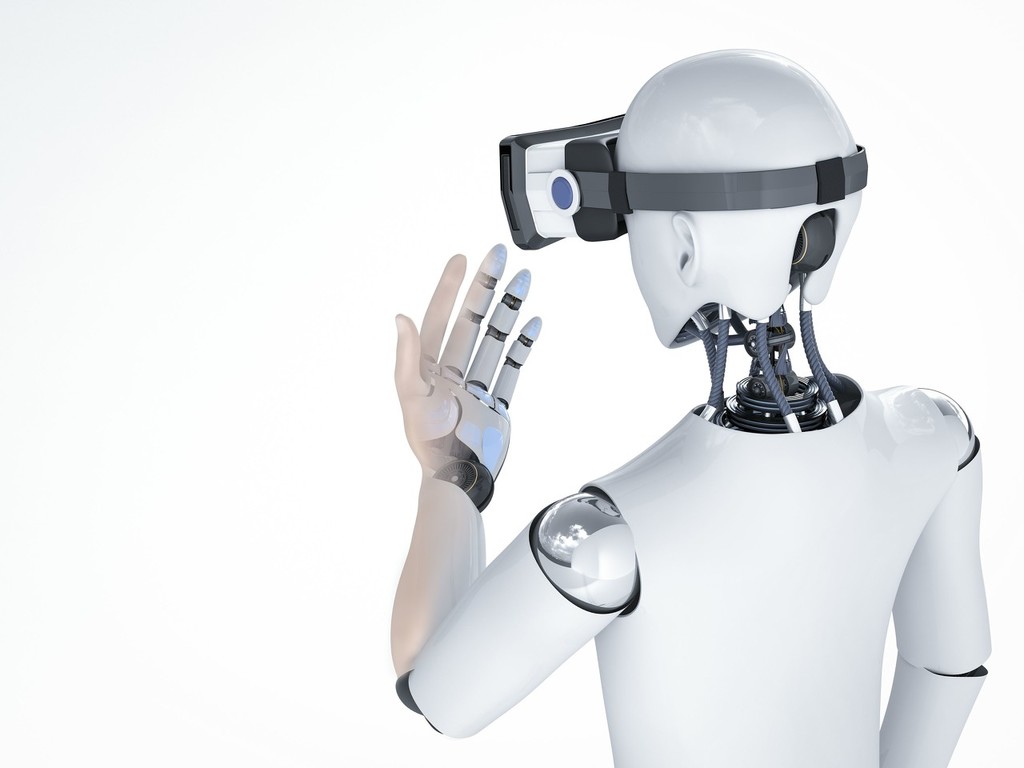
A diverse group of friends and colleagues gathered this summer in the Austrian Alps to add their modest contribution to an increasingly fraught debate about the uses and abuses of artificial intelligence.
Perhaps it was the gothic setting, the snow-capped mountains, the rushing waterfalls, the plunging ravines and towering castle turrets that got us thinking about an earlier discourse on the potential perils of science's attempts to create consciousness: Frankenstein.
The precocious Mary Godwin began the novel – part horror story, part science fiction – when she was just 18 and spending a wet and gloomy summer in the shadow of the Alps with a group of English luminaries, including the poets Byron and Percy Shelley, her future husband.
Her revolutionary work has earned an uneven reputation in the two centuries since it was published in 1818. While enthusiasts regard it as a work of genius, most people know it through often second-rate film and stage adaptations that have tended to emphasize the horror over the science. Many falsely believe the title refers to the monster, rather than to his eponymous creator, Victor Frankenstein.
The name itself has become shorthand for any wayward scientist regarded as tempting fate and challenging nature by trying to create life. The Chinese scientist He Jiankui sparked global outrage last year after he announced that he had created the world's first gene-edited human babies, rapidly earning the headline sobriquet The Chinese Frankenstein.
Chinese authorities responded to public unease by pledging to continue to improve ethics and academic integrity in scientific research in order to limit any negative impact on society brought by sub-standard practices or unethical conduct.
Mary Shelley's book is proof that such concerns about the unintended consequences of unmonitored scientific innovation are nothing new. She was the daughter of well-connected English radicals who mixed with the scientific and literary elite at a time when Britain was embarking on an industrial revolution that was to transform it.
The young Mary was familiar with the scientists who then, as now, gathered and debated their research at the Royal Institution in London. She knew of the work of the Italian, Luigi Galvani, who had used static electricity to produce a violent spasm in the leg of a dead frog. The fictional Frankenstein used electricity to spark life into the assembly of limbs and organs he had used to make his flawed creature.
The author is credited by some critics with having launched science fiction, a genre that has since thrived by creating a frisson of fear among readers and filmgoers at the nefarious consequences of science gone wrong. Modern examples, such as Britain's Black Mirror series, have focused on the techno-paranoia generated by our increasing reliance on an internet-mediated virtual world.
The concept of mechanical artificial intelligence, or thinking machines, also has a venerable history as a sub-genre of science fiction, dating back to the English author Samuel Butler in the 1870s.
In his satire Erewhon, Butler asserted: "There is no security against the ultimate development of mechanical consciousness, in the fact of machines possessing little consciousness now… Reflect upon the extraordinary advance which machines have made during the last few hundred years, and note how slowly the animal and vegetable kingdoms are advancing."
Elsewhere, in Darwin among the Machines, he wrote: "In the course of ages we shall find ourselves the inferior race. Inferior in power, inferior in that moral quality of self-control, we shall look up to them as the acme of all that the best and wisest man can ever dare to aim at."
These arguments pre-date present-day concerns about the dangers inherent in uncontrolled AI by a century and a half. Like modern day Butlers or Mary Shelleys, we worry that scientific advances that promise us utopia could lead to an anti-human dystopia.
Science usually gets it right. Scientists are currently engaged in finding innovative ways to tackle the man-made climate change created by previous generations of machines.
The essence of progress is that society as a whole should be involved in how scientific innovation is exploited. What is scientifically possible is not the same as what is needed or morally desirable – hence the Chinese authorities' response to He Jiankui's claims.
It is an area in which fiction such as Frankenstein can continue to serve as a light that guides us. To mark the book's bicentenary last year, MIT Press, affiliated with the Massachusetts Institute of Technology, published Frankenstein: Annotated for Scientists, Engineers, and Creators of All Kinds.
The editors' declared mission was to contribute to the growing movement to educate the tech community regarding social and ethical issues raised by today's emerging technologies by means of a classic 19th century novel about technology gone awry.





