



ASEAN braces for impact of trade tensions









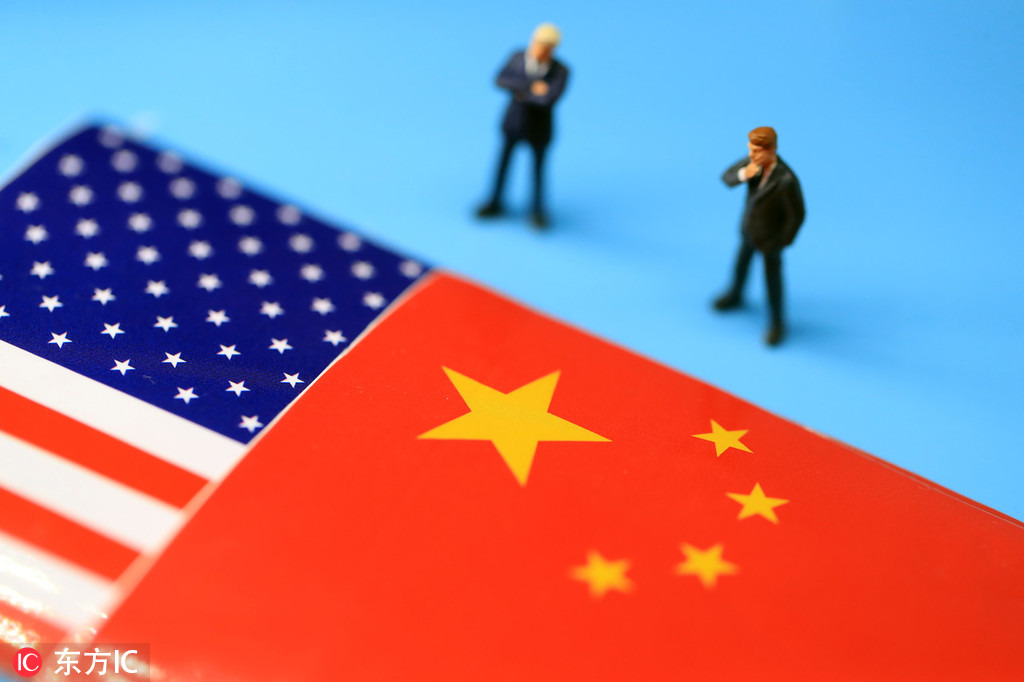
Escalation in China-US friction fuels concerns of slowdown across region
As the United States intensifies trade frictions with China, countries in the Asia-Pacific are starting to feel the impact and analysts are concerned that a slowdown would affect developing Southeast Asian countries and India.
Several countries in the Asia-Pacific have cut key policy rates to mitigate the impact on their economies. Should the United States continue its extreme trade pressure against China, the Association of Southeast Asian Nations, for the full year, could rank above the US for China trade and investment for the first time on record.
The escalation in the US-China trade tension comes at a time when export growth across most ASEAN economies is already in the doldrums, says the lead Asia economist with Oxford Economics, Sian Fenner.
Much of this is due to weaker Chinese import demand, a slowdown in the global information and communications technology cycle, and an increase in trade protectionism over the past year.
China has been the largest collective trading partner of the 10-nation ASEAN bloc for 10 consecutive years. The bloc became China's second-largest trading partner in the first half of 2019, with bilateral trade up 4.2 percent year-on-year to $291.85 billion, according to information from the Chinese Ministry of Commerce. Investment between China and ASEAN countries has witnessed stellar growth to reach $205.71 billion at the end of 2018.
China's Assistant Minister of Commerce Li Chenggang told a recent news conference that China does not pursue a trade surplus and is willing to import more commodities from ASEAN countries.
ASEAN exports to China saw sharp falls year-on-year in May, but their exports grew to intermediary countries such as South Korea, where goods were processed for export to China, said Oxford's Fenner.
Darren Tay, an Asia risk analyst with Fitch Solutions, said: "It is difficult to ascertain which countries are already benefiting from the trade war."
Some sectors in some countries are likely to benefit from relocated manufacturing capacity from China, Tay said. Among the beneficiaries will be Bangladesh's and Vietnam's low value-added industries, such as garments; Thailand's machinery and auto parts industries; and Malaysia's and Vietnam's mid-to-high value-added electronics industries.
"However, we note an increasing risk that no country benefits from escalating global protectionism," he said. "Any eventual winner could become the next target for US tariffs."
The trade war has already led to some trade diversion in US imports from China to other ASEAN economies, notably Vietnam, but that could be short lived, analysts say.
But generally, "economic slowdown in developed countries like the US will affect developing economies or emerging markets and hence to mitigate impact," said Filomeno Sta. Ana III, coordinator of the Manila-based think tank Action for Economic Reforms.
The global financial markets ended days of tailspin following the US decision on Aug 13 to postpone 10 percent tariffs on certain Chinese products. The tariffs supposedly on $300 billion worth of US imports from China were announced by US President Donald Trump after July trade talks between the two nations in Shanghai.
Trump's announcement already alarmed several central banks. Last week, the Philippines cut its benchmark interest rate by a quarter-percentage point.
The Bank of Thailand moved unexpectedly to cut its benchmark interest for the first time in more than four years to boost the economy, and said it sees more room to ease as global risks surge, Bloomberg reported. India's central bank lowered its benchmark interest rate by an unconventional 35 basis points.
Despite trade tensions with the US, China remained an attractive investment destination. Inflows to China last year increased by 4.0 percent to an all-time high of $139 billion, making it the second-largest recipient of Foreign Direct Investment behind the US, according to a latest report by the United Nations Conference on Trade and Development.










