



Playing its role in 'Chinese miracle'









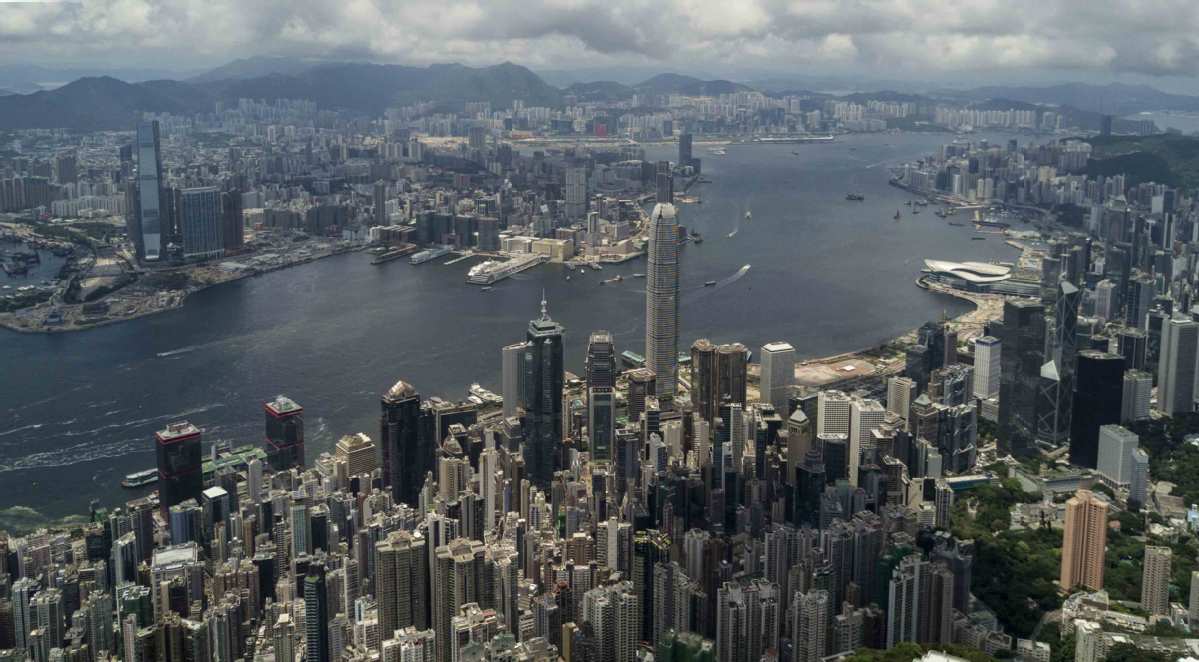
City has poured more than $1.1 trillion into mainland, accounting for 54 percent of total foreign direct investment
Editor's note: As the People's Republic of China prepares to celebrate its 70th anniversary on Oct 1, China Daily is featuring a series of stories on the role regions have played in the country's development and where they are today.
Hong Kong has been known for generations as the place where East met West, but that title took on even greater importance when the city became the gateway to one of the world's biggest markets.
The world stood in awe of the evolving "Chinese miracle" over the past 70 years. The return of Hong Kong to the motherland in 1997 under the "one country, two systems" principle became part of that miracle.
Reform and opening-up, which started in 1978, was a formula devised by Deng Xiaoping, the late architect of economic reform. It raised the curtain on a bold future for Hong Kong and Macao as part of China's economic transformation. The stage was set for the future special administrative regions to play key roles in a market of nearly 1 billion people then.
Entrepreneurs had already been preparing the groundwork. Many had strong familial links across the border in Guangdong province and were motivated by a desire to reconnect with their cultural roots.
"In the first 30 years of the seven decades since the founding of the nation in 1949, many businessmen from Hong Kong maintained their attachment to the motherland, despite the hiatus in trade," said Jonathan Choi Koon-shum, chairman of the Chinese General Chamber of Commerce in Hong Kong. "They still donated money for building roads, constructing bridges and setting up schools."
Choi was one of them. The son of Choi Kai-yau, dubbed "the seafood king" of Hong Kong, he was born in Macao, grew up in Hong Kong and made his fortune on the Chinese mainland.
In 1978, Choi, who had just taken over the Sunwah Group from his father, decided to donate money to build a school in Zhongshan, where his family came from.
He also invested HK$40 million in a fishing fleet that year, for compensation trade in Zhuhai and Zhongshan. The local authorities used his investment to build ships and, in return, they provided Choi with seafood.
But the local fishermen couldn't get the job done and the venture failed. In those days, everything produced in people's communes was to be shared equally by all and the workers just weren't motivated.
Things changed after Choi decided to take money as compensation instead. The fishermen were asked to pay Choi an agreed amount. Whatever they earned from selling fish over and above the set amount went into their pockets.
"When I saw coastal cities like Zhuhai lined with small, brick houses, instead of squatter huts, I felt proud of myself," Choi said.
His patriotism took him a long way in his future mainland endeavors and things started falling into place for Choi. He made his way from Zhuhai, in the south, to Shanghai and Dalian on the east coast.
He completed his value chain, opening shrimp farms and processing factories, and began exporting his products overseas.
Choi's success in business funded ongoing charity efforts on the mainland. Scholarships, teaching buildings and even colleges bearing the Choi name sprung up in about half a dozen universities across China. In 1995, he donated 6 million yuan to create a foundation that provided subsidies to elderly members of the Chinese Academy of Sciences. He later injected another 10 million yuan into the fund, with the late Chinese nuclear physicist He Zehui - the wife of Qian Sanqiang, the father of China's atomic bomb - among the beneficiaries.


- China comes a step closer to crewed moon mission
- Beijing, a perfect location for 'set-jetters'
- United front work urged to pool strength
- Xi sends festive greetings to all service personnel
- Hainan's 1st batch of daily consumer goods duty-free shops for island residents opens
- Cross-Strait affairs should be settled 'like family', official says











