Milk bank saving tiny lives in Kenya









When Roseline Kwamboka gave birth to a baby girl seven years ago, ill health affected the flow of her breast milk and this left her baby starved and crying incessantly. It took another three weeks for her to recover. By then, her baby had dropped a lot of weight.
To make up for the shortage, they had turned to baby formula, which was costly. It also took time for the baby to adjust from bottle to breast feeding afterwards, in what is referred to as nipple confusion.
Asked if she would have agreed to feed her baby human milk that was not hers, Kwamboka does not hesitate. "If it would have nourished her, I would have done it immediately," said the mother of two.
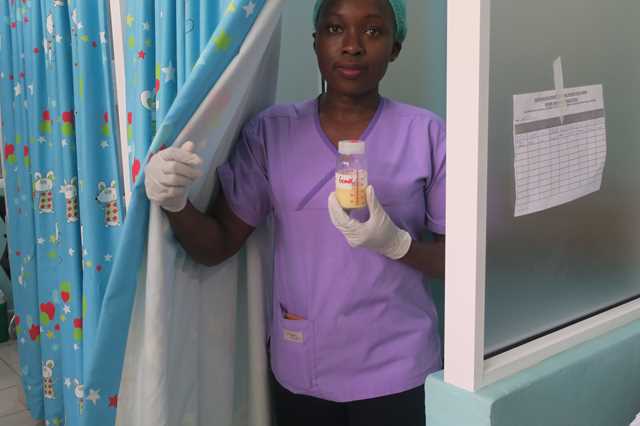
Presently, new mothers with premature or sickly babies do not have to undergo this experience anymore. Kenya's health ministry and PATH, a US-based nonprofit health organization, launched the region's first human milk bank at Pumwani Maternity Hospital in Nairobi city in April.
The facility is targeting babies who have no access to human milk because their mothers may be sick, unable to produce breast milk or dead, or because the babies were abandoned.
The move supports a global campaign by the World Health Organization promoting exclusive breastfeeding of newborn babies for six months.
According to the global health body, one of the leading causes of death among children under five in 2017 was preterm birth complications. More than 60 percent of these deaths are in Africa and South Asia. Furthermore, preterm babies make up 12 percent of babies born in Kenya
According to research by the African Population and Health Research Center, 44 percent of newborns in urban health facilities were separated from their mothers for varying periods of time. This ranged from less than an hour to more than six hours and even days after birth.
Of these infants, only 14 percent were fed the mother's own milk during separation. Thirty-six percent of the newborns were not fed anything during this period and an additional 23 percent were fed formula or cow's milk.
"There is very strong evidence on the innumerous benefits of human milk. It reduces the risk of diseases and infections such as respiratory tract infections. Infants are also able to better tolerate human milk than baby formula. This is especially acute in newborn babies," said Beatrice Marube, a nutritionist at the Pumwani Maternity Hospital.
The facility has been receiving at least 15 donors daily. Most of them have babies at the newborn unit, who are preterm or sickly. Therefore, after routinely feeding their babies, they would then donate the surplus at the milk bank.
The stream of donors matches the baby-feeding times. The mothers would come after every three hours starting at 10 o'clock in the morning. Donors are assisted by supporting staff on how to use either electric or manual breast pumps.
Prior to becoming a donor, the new mother undergoes counseling in a bid to determine their psychological fitness. She also goes through laboratory screening to test for HIV, hepatitis and syphilis. A clean bill of health adds her to the donor list.
"We also counsel them on their nutrition so that they are healthy throughout their stay in the hospital," said Marube. On average, they stay in hospital for five days.
"We have seen an upsurge in the number of voluntary donors. We have also seen a high uptake in the number of recipient babies as their mothers agree to feed them with the milk. We do not store this milk for long," said Faith Njeru, a nurse manning the station.
She attributed the uptake to the strict screening tests done on the milk to ensure it is free from conditions that are transmissible through breast milk. It is tested before and after pasteurization to kill microorganisms, ensuring its nutritional composition is not altered and that it is safe for vulnerable babies.
Before storing in a freezer, the milk is put in 50 milliliter bottles. "This curbs waste as the babies feed small amounts at a time," said Njeru. Priority is given to sick preterm babies, preterm babies, sick term babies and, last, a term baby without access to its mother's milk. Milk that is not used is discarded.
The impact of the facility is already evident. Marube, the nutritionist, said the length of hospital stay for both mothers and babies has been tremendously reduced. The recovery period for the babies has also improved.
On the other hand, the hospital has been able to significantly reduce the costs incurred in purchasing formula milk to cater to these babies. Geoffrey Mosiria, the hospital administrator, revealed that the hospital was spending $24,000 annually. "This has been cut down to zero," he said.
He added that besides the facility expanding the range of services it offers to mothers, it has also opened it up to more partners. The mortality rate has also been reduced drastically.
"We are looking forward to scaling up our reach and supplying other hospitals with the milk. Once the pilot program is over, probably next year, we will then work on the logistics," he said.
Mosiria said it will take time before they start receiving milk from donors already at home. Safety checks and storage are also a critical component in the supply chain and this cannot be guaranteed yet he said. "But I am sure we will reach there," he added.
The Kenyan project has borrowed from milk banks in South Africa and Scotland.
- Kenya halts adoptions on trafficking fears
- Why more African students choose Chinese universities
- Guangzhou Customs focus on travelers using their bodies to smuggle drugs
- Infrastructure, trade top agenda as Kenyan President meets special envoy from China
- Nairobi-Malaba Railway to bring prosperity to Kenya’s interior area