



Scientist planning a new 'Noah's Ark'









As a summer heat wave rippled through many regions across the globe, raising temperatures in several areas to record heights and causing Arctic sea ice to melt, the threat from the climate change crisis loomed larger than ever.
With sea levels continuing to rise and increasingly frequent droughts, what is the future for humanity?
For Xu Jianchu, a scientist with the World Agroforestry Center in Nairobi, Kenya, and also a professor at the Chinese Academy of Sciences' Kunming Institute of Botany, the Earth's mountainous regions may hold an answer based on various aspects of nature and biodiversity.
Through a joint laboratory founded by the two establishments, Xu has found himself in a dry-hot river valley in Honghe county, Yunnan province, seeking the answer, which he calls "Noah's Ark for the future of the global village".
Xu believes the world's mountainous regions can offer a solution not only because they may provide asylum for humans if rising sea levels leave many low-altitude plains inundated, but also because people in high-altitude areas display stronger resilience.
"Mountainous regions are prone to natural disasters. Residents of such areas show a stronger ability to adapt," he said.
He believes that the solution is also a development-based venture, which will require scientists to exploit the potential of plants with strong drought-resistant capabilities, which he refers to as "star species", to cope with the ongoing climate crisis.
The planet is facing two major crises-climate change and the loss of biodiversity-but the UN's 2030 Sustainable Development Goals are not being implemented effectively because of severely inadequate input. Simply resorting to protective measures will not help to solve these crises, so the development of biodiversity resources is needed to help address insufficient (financial) investment in protective measures and make them sustainable, he said.
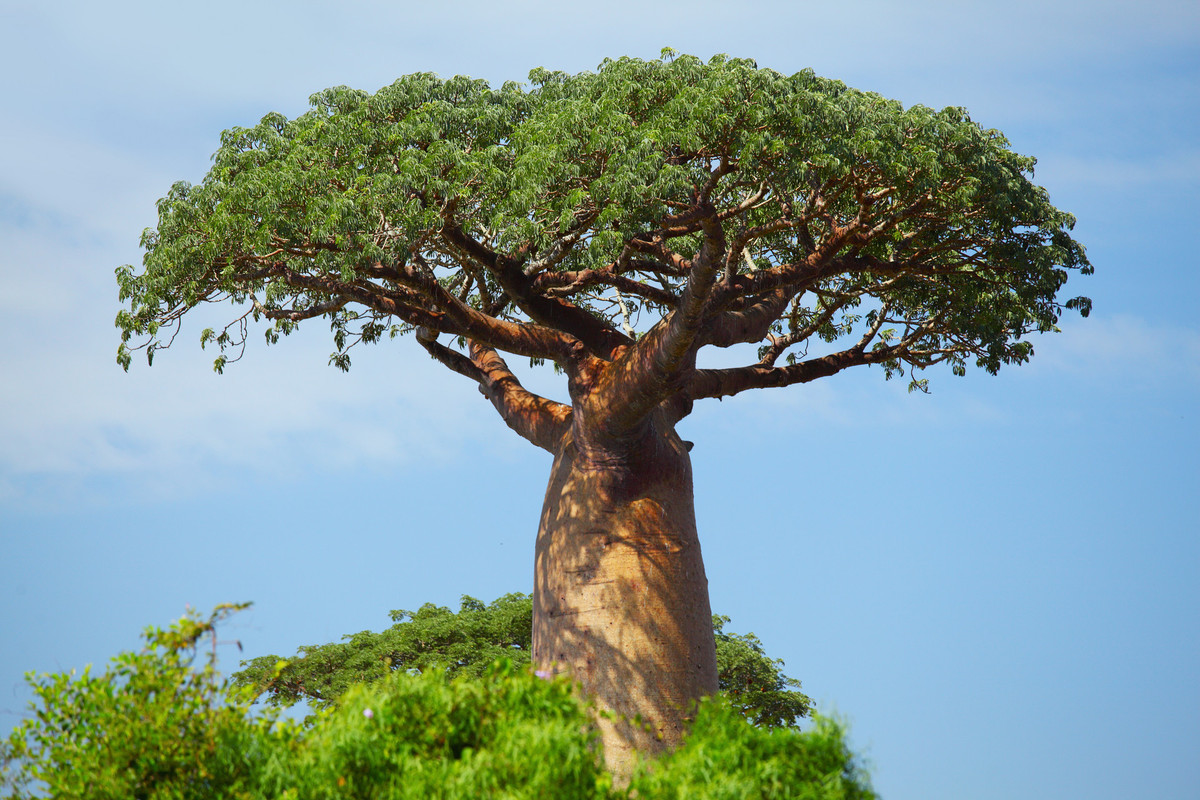
Construction of the joint laboratory, The Center for Mountain Futures, has started on mountain slopes in the valley, and seeds of the baobab, a tree native to tropical Africa, that were planted near the entrance of the more than 200-hectare project have already sprouted leaves.
"I want to build it into a botanical garden, but it goes far beyond that. It's also an industrial park and a research and development center," Xu said.
He added that instead of pure scientific research, the laboratory will emphasize comprehensive application.
He said the baobab is just one of 100 species he plans to bring in from Africa to tap their development potential.
With a broad swollen trunk and hanging, gourd-like fruit, the drought-resistant tree can live for up to 3,000 years.
Its branches and leaves contain abundant nutrients, for example protein and cellulose, which have the potential to be developed into food, drinks and pharmaceutical products, according to Xu.
He is also exploring the potential of Calotropis, a fast-growing, drought-resistant plant native to North Africa and semi-arid areas in Asia, that could help restore ecosystems in dry regions and also become an alternative provider of textile fibers.
In Africa, the plant is known as a poisonous weed, but Xu said: "The toxicity of Calotropis mainly comes from cardiac glycosides, which can be extracted and made into a very effective anticancer drug. The fiber inside its fruit has the potential to be developed into textiles. We could also turn the leaves into high-protein fodder."
He said the lab will adopt a benefit-sharing philosophy and new technologies developed there will be shared unconditionally with African countries. He also hopes to establish a similar laboratory in East Africa.
"I think there could be huge market potential if we could combine Chinese technologies with natural resources in Africa. That would not only help address ecological problems in Africa, but also improve people's livelihoods," he said.





- Agarwood exhibition steeps Shanghai museum in fragrance
- The Fujian Coast Guard conducts regular law enforcement patrol in the waters near Jinmen
- IP protection for new fields to improve
- Draft rules define premade dishes in consumer interest
- Self-powering pacemaker could last a lifetime
- China intensifies crackdown on misuse of personal data














