



Economy resilient despite trade war









After China released its third-quarter data, The Wall Street Journal headline sounded a warning: "China's economic growth slowest in decades." CNN seconded: "China's economic growth drops to lowest level since 1992." Reuters extended the timeline: "China's GDP growth grinds to near 30-year low as tariffs hit production."
The fallacy in these headlines is that they mistake business cycles for secular trends and vice versa. When countries industrialize, they enjoy relatively high growth. After industrialization, growth rates decelerate. China is no exception.
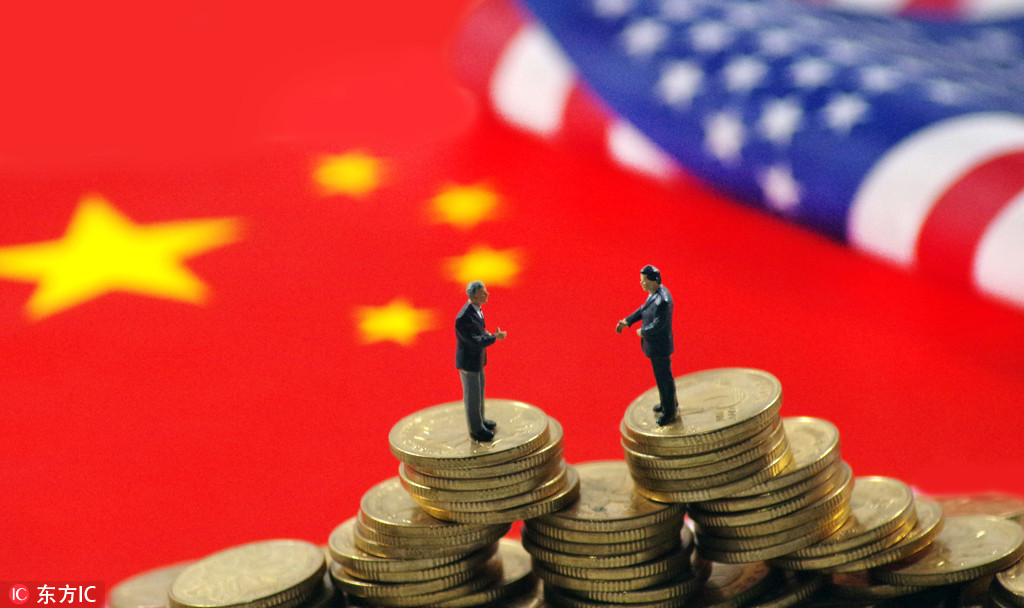
In reality, much of the recent quarterly data in China and other major economies has been penalized for the same reason: the US-launched trade wars and geopolitics, which foster diminished global economic prospects.
Only 0.1% behind quarterly expectations
In secular terms, China's economic growth has been gradually decelerating since the early 2010s, as it should after years of high-growth industrialization. Yet per capita income will almost double in the on-going decade. In other words, economic growth is decelerating, but living standards continue to rise.
That's very different from major advanced economies in which economic prospects continue to stagnate, in both secular and cyclical terms. In the United States, the living standards of the middle class and working people have lingered since the 1980s, contributing to steep income polarization. In the eurozone, polarization is not as bad, but it is deepening. In contrast, China's middle-income group continues to expand.
In terms of cyclical data, China's economic growth slowed to 6.0 percent from 6.2 percent in the second quarter. But seriously, how much did the actual result differ from the expected one? Analysts polled by Reuters had forecast a GDP growth of 6.1 percent in the July-September quarter from a year earlier. So the difference was a mere 0.1 percent.
Such a slight deviation does not warrant panicky headlines. Nor do such reports provide appropriate guidance to US investors. Unlike the media, institutional investors see economic resilience in China, even amid trade wars and geopolitical pressures. That's why almost half of fixed income institutional investors outside China plan to increase their exposure to China-issued debt in the coming year, according to FinanceAsia.
Cyclical resilience, secular potential
On the Chinese mainland, positive signs include growth in industrial production, which picked up in September, despite reduced export growth. And while months of trade wars have made consumers more cost-conscious, retail sales climbed to 7.8 percent thanks to the slate of policy support by the State Council, China's Cabinet. The latter are warranted because wage growth remains restrained.
Property prices have stayed relatively strong, which has left a substantial burden on households' shoulders. Since household debt to disposable income climbed to nearly 140 percent in 2018, household spending will be more cautious, as evidenced by lingering car sales. Yet the big picture is more nuanced. For example, education and medical expenditures remain solid.
Indeed, China's secular potential remains strong. The growth rate is still three-to-four times faster than in major advanced economies. The rebalancing of the Chinese economy toward innovation and consumption remains on track. And while the contribution of investment rose to 19.8 percent of the GDP, that of consumption climbed to 60.5 percent.
The International Monetary Fund has projected China's GDP growth to slow to 5.8 percent by 2020. That scenario presumes weakened consumption, coupled with cautious private investment and shrinking exports. But the final figure is more likely to hover around 5.8-6.2 percent in 2020, depending on the severity of the headwinds in trade-which will result in further fiscal and monetary accommodation and thus slower deleveraging.
Although this is not the policy the Chinese authorities would normally prefer, we do not live in normal times.
Policy mistakes and global uncertainty
When the US administration adopted a trade protectionist policy two years ago, it not only committed the worst policy mistake in the postwar era but also undermined the nascent global recovery.
Before the US launched the trade war against China, its annual GDP growth rate peaked at 3.2 percent in mid-2018. Now it has almost halved to 1.8 percent. As for the eurozone, after peaking at 3 percent in January 2018, its growth tumbled to about 1 percent, even before the German economy contracted and uncertainties over Brexit rose. In Japan, too, growth has plunged to below 1 percent after climbing to 2.4 percent in early 2018.
In 2017, global economic growth was as high as 3.8 percent. Given the right policies, it might have exceeded 4 percent in 2018 and this year.
Instead, thanks to US protectionism and geopolitical frictions, global integration has stalled. World trade is at pre-2008 levels, and the same goes for world investment. And as migration flows have plunged, the number of globally displaced has exceeded 71 million-15 million more than at the end of World War II.
If misguided policies are permitted to prevail, these adverse trends are likely to further intensify, compounded by potential divisions over the president's impeachment in the US, recessionary landscape in the eurozone and stagnation in Japan.
Guided by US policy mistakes, the global economy is now amid a "synchronized slowdown", as the IMF has warned. But there is much worse ahead, if these mistakes are permitted to prevail.
The author is the founder of Difference Group and has served at the India, China and America Institute (US), Shanghai Institute for International Studies (China) and the EU Centre (Singapore). The views don't necessarily represent those of China Daily.





