



Oil consumption to peak by 2025









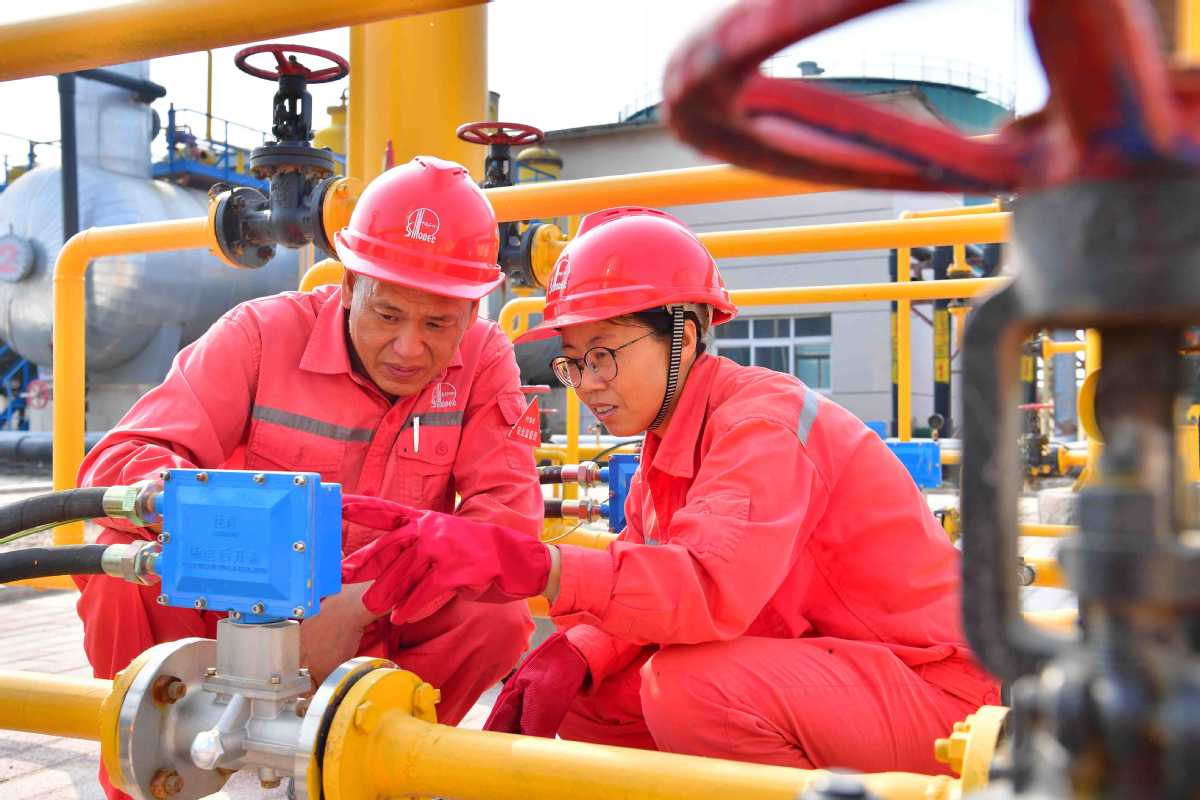
Report: Nation's carbon emissions to hit cap targets five years ahead of Paris Agreement goal
China expects to achieve its national oil consumption cap target of 720 million metric tons by 2025, five years ahead of its 2030 Paris Agreement target on carbon emissions, according to findings of the China Oil Consumption Cap and Policy Research Project.
The project, which was launched in January 2018 with the Natural Resources Defense Council and Energy Foundation China as the coordinating organizations, combines efforts from government think tanks, academic institutions, and industry associations. It aims to help address climate change and reduce environmental pollution in China, the world's second largest oil consumer and largest oil importer, by reducing oil consumption and helping the oil industry to tread a safe, green, and more efficient path.
Research on China's Oil Consumption Peak and Cap Plan, the project's most recent report released last week in Beijing, analyzes the experience of developed countries in peaking oil consumption and sets a China oil consumption cap pathway based on comprehensive consideration of three possible scenarios - the baseline scenario, the strengthened policy scenario, and the 2 C temperature control scenario.
Under the oil cap pathway, China will reach an oil consumption peak of 720 million tons by 2025, which will further drop to 600 million tons by 2035. By 2050, oil consumption would be capped at 420 million tons, achieving the 1.5 C temperature control target, a higher target of the Paris Agreement in 2015, the report said.
The Paris Agreement in 2015 pledged to limit the global temperature increase to well below 2 C above the preindustrial level and to strive for a lower limit of 1.5 C.
China's carbon emissions peak would be achieved around 2025 under the oil cap pathway, meaning that China would achieve peak carbon emissions five years ahead of its 2030 Paris Agreement target.
Fu Chengyu, chairman of the project's steering committee and former chairman of Sinopec Group, said an oil cap is an active and positive measure that must be taken immediately, as growth in oil consumption has had a serious impact on China's environmental protection, energy security, and high-quality economic development.
In 2018, China's oil consumption reached 628 million tons, and its dependence on imports from foreign countries exceeded 70 percent, while oil consumption has continued to grow in 2019, according to Fu.
"In the future, China should fully utilize its advantages, actively promote the development of renewable energy and new energy vehicles, focus on scientific and technological advancement, and make energy efficiency improvements a top priority," Fu said, adding overall, China must accelerate the transformation of its energy mix, from mainly depending on fossil fuels to low-carbon green energy sources.
The report findings suggested reducing oil consumption through five primary approaches - reducing demand, improving efficiency, replacing oil with alternative energy sources, optimizing industry structures and product portfolios, and encouraging clean use of oil.
Alternative energies and improving efficiency, with the greatest potential for oil reduction, will contribute 48 percent and 20 percent of the total amount of oil reduction respectively by 2050 if under the oil cap pathway, followed by structural optimization for 16 percent, reduced demand for 15 percent, and clean utilization for 1 percent, according to the report.
The main measures to implement an oil cap include gradually phasing out traditional petrol and diesel vehicles (or internal combustion engine vehicles) in the transportation sector, imposing stricter energy efficiency standards in other sectors, and prohibiting or discouraging use of certain plastic products, it suggested.
The transportation sector will experience the largest decline in oil consumption, while the petrochemical sector will see the largest increase, indicating that in the future oil consumption will see a significant shift from being used primarily as a fuel to being used primarily as a raw material, according to the report.
Under the oil cap pathway, oil consumption by the transportation sector is expected to peak between 2023 and 2025, and oil consumption in the petrochemical sector is expected to peak around 2035, and then to maintain a long plateau. The transportation sector's share of oil consumption will fall from 57.7 percent in 2017 to 33.3 percent by 2050, and the petrochemical sector's share of oil consumption will rise from 15.3 percent to 42.4 percent during the period, it said.
Besides, automobile technology revolution, the unconventional oil and gas technology revolution, as well as the rapid development of circular economy, energy conservation and environmental protection technology industries will provide new impetus for China's economic growth, according to the report.
Zhou Nan, department head of the International Energy Analysis Department at Lawrence Berkeley National Laboratory, spoke highly of the report findings, saying it is necessary for China to set ambitious targets to reduce and cap oil consumption to address environment issues and energy security.
However, she emphasized the importance of coordination between reducing oil consumption and overall energy mix optimization.
It is not helpful for carbon emission control if reducing oil consumption leads to higher use of natural gas or coal-fired electricity, Zhou said.



















