



Drawing from the past to form a blueprint for the future









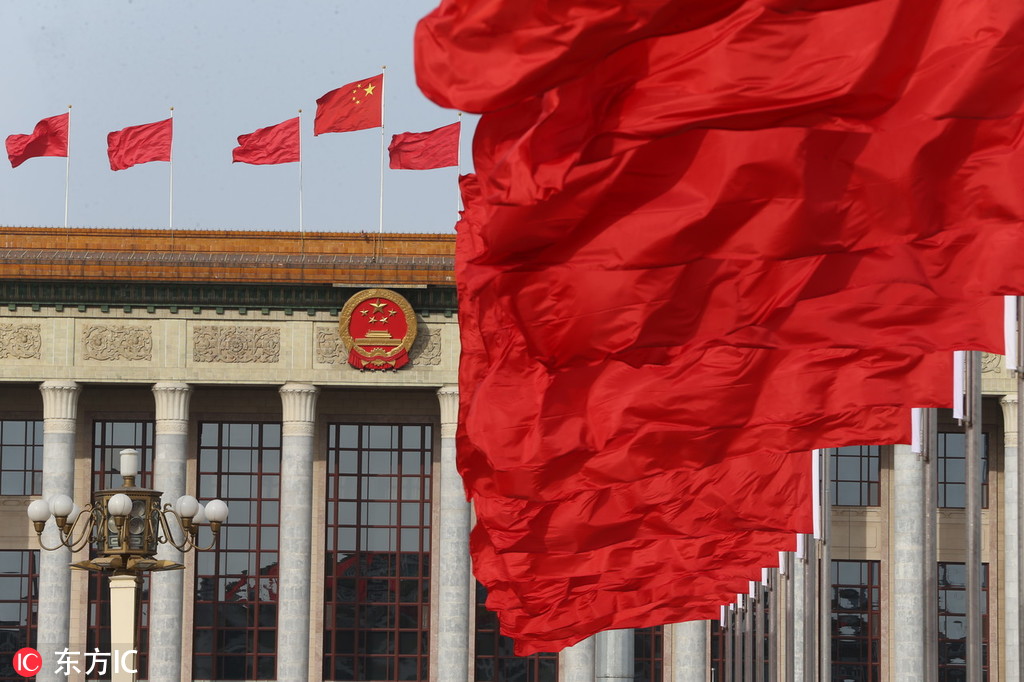
Just two weeks after the magnetizing celebration of the 70th anniversary of the founding of the People's Republic of China, the Political Bureau of the Communist Party of China (CPC) Central Committee hunkered down for some serious forward planning on the issue of governance.
The Fourth Plenary Session of the 19th Communist Party of China Central Committee convened in Beijing this week to lay out a blueprint for the organization of government in the future. The question of governance has been hotly debated in China over recent years as the nation steps away from a past economic structure that was agricultural based, pushing through the industrial era within just a manner of a few decades into the high tech horizons of the future.
For a country of 1.4 billion people, any task is gargantuan. The question of how to create governing systems that can work sustainably is a task that this leadership rolled up their sleeves to take on over the past week. In doing so, the leadership laid out a framework for understanding and projecting China’s governing systems, extending from a past to the present into the future. This involved a three-phase approach to analyzing and blueprinting governing systems for China.
In order for a tree to grow high and to continue growing regardless of the wind and storms, it has to have fundamental roots that are deep and gripping upon the solid earth of the past. The first phase of China’s blueprint for government involved a retrospective analysis of the decades leading from the last century to the present.
One century of governing experience was put into new perspective. From the establishment of the People’s Republic of China, one challenge after another was met. The solutions to address each challenge were in turn often met with unexpected outcomes that also became challenges in their own right. Each had to be addressed through new and innovative policies, which has led to sweeping reforms and changes in both policies and governance.
When the People’s Republic of China was established in 1949, the first challenge was to address hunger, poverty and unemployment in the aftermath of civil war and the tragedies of World War II. This involved socialization and central planning with an emphasis on agriculture and industrialization.
Fast forwarding to the 1980’s and 1990’s, the question in an era of globalization was how to introduce market mechanisms alongside planning while enhancing competitiveness of industry and modernizing agriculture. This led to sweeping reforms that affected all aspects of commercial and social life, placing China on a fast track for development and high growth. China’s exports and foreign exchange reserves reached unprecedented heights and China went from a past era of poverty to a new era of emerging middle class. However, progress was impaired by pollution and environmental damage as unforeseen outcomes that resulted from a concentrated focus on poverty reduction through industrialization.
In turn, China responded through a policy of Ecological Civilization in 2015 with new sweeping measures for environmental protection, green finance and natural asset evaluations to address water, food and health security. The sustained success of these policies now depends on governing systems, and checks and balances as mechanisms to provide a system of continued governance for the future. This first phase of the blueprint will review the refinement and maturation of the current system of governance covering all aspects, sectors and social strata up to the year 2021.
The second phase of this blueprint for governance will be put into play between 2021 and 2035. This will involve the systematization of governing principles. Effectively, each department of government will be operating on a basis of law and regulatory systems, removing the space for discretionary decision-making that may be personality based at both the departmental and local level. The vision is more transparency, predictability and procedural-based governance to assure effective response to social need.
The third phase outlined will focus on the refinement of these systems between the years 2035 and 2049. The vision being put forth as the CPC Central Committee Political Bureau met this week is one that seeks to have a fully modernized governance system in place by the 100th anniversary of the founding of the People’s Republic of China.
Ambitious plans were laid out in the Great Hall of the People during these crispy autumn days as China’s leadership met to blueprint programs of sustainable governance for the future. Such a vision for the future could not be blueprinted without the collective, accumulated trial-and-error success experiences of the past. Such horizons can nonetheless be attained thanks to roots that are so deep.
The author is the founding director of the Himalayan Consensus and a senior international fellow at the Center for China and Globalization.
The opinions expressed here are those of the writer and do not necessarily represent the views of China Daily and China Daily website.





