



Camel herding in Western Sahara: A passion with pedigree and new tech









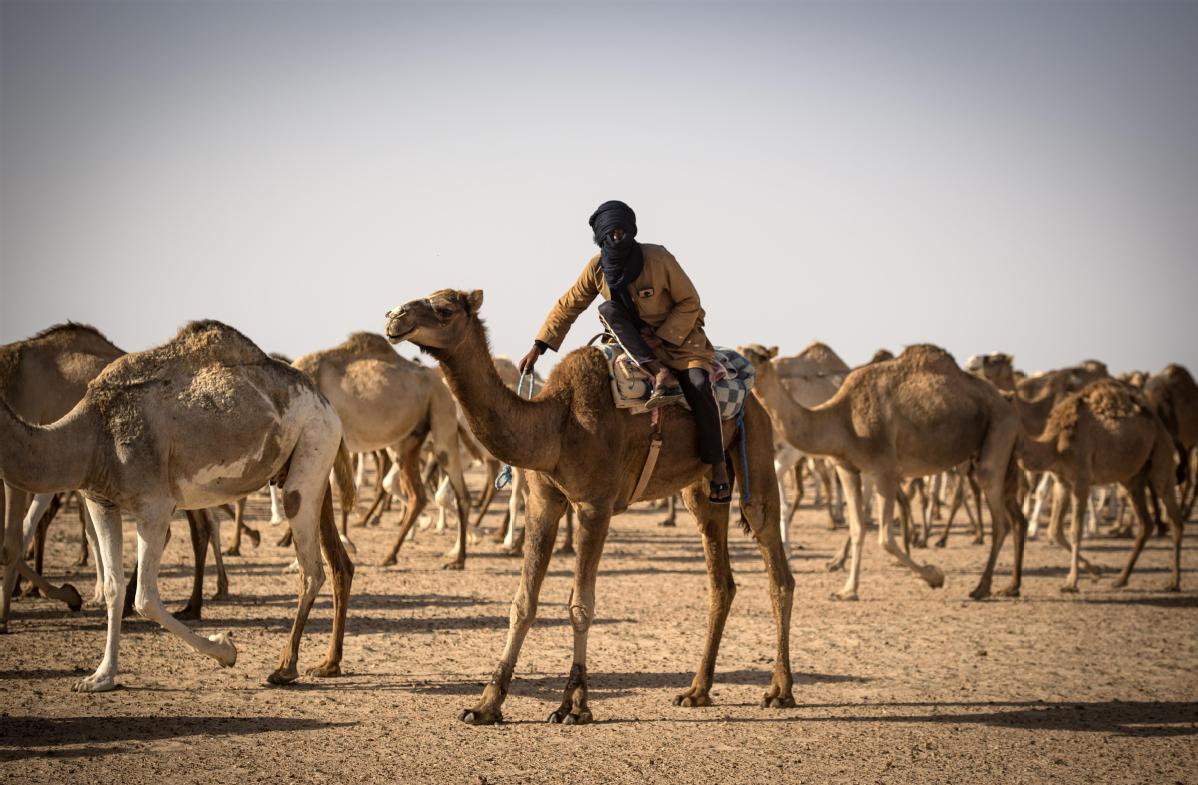
DAKHLA, Western Sahara - In the Oued Eddahab desert in Western Sahara, Habiboullah Dlimi raises dairy and racing camels just like his ancestors used to - but with a little help from modern technology.
His animals roam free in the desert and are milked by hand as camels always have been, at dawn and dusk.
When camels "feed on wild plants and walk all day, the milk is much better," said the 59-year-old herder, rhapsodizing about the benefits of the nutrient-rich drink, known as the "source of life" for nomads.
But Dlimi no longer lives with his flock.
He lives in town with his family. His camels are watched over by hired herders and Dlimi follows GPS coordinates across the desert in a 4X4 vehicle to reach his charges.
He is reticent when asked about the size of his herd. "That would bring bad luck," he said.
He prefers to speak of the gentleness and friendliness of the animals he knows like his own children.
"Camels can endure everything: sun, wind, sand and lack of water, and if they could talk, you'd easily hear how intelligent they are," he said.
Dlimi comes from a long line of desert dwellers from the Ouled Dlimi tribe.
As tradition dictates, he lists his ancestors going back five generations when introducing himself.
"I know the desert and the desert knows me," he said.
Like elsewhere, the nomads of Western Sahara are settling, following a shift from rural to urban living.
"Young people prefer to stay in town," Dlimi said, and herders now mostly come from neighboring Mauritania, whose desert north is traversed by caravans of up to a thousand camels.
Even they "often demand to work in areas covered by (mobile phone) network signal", he added.
The population of the nearby town of Dakhla has tripled to 100,000 in 20 years, with growth driven by fishing, tourism and greenhouse farming encouraged by Moroccan authorities.
'Eight-time champion'
While Dlimi loves the desert, he does have one complaint: "The camel dairy industry is valued everywhere in the world except here."
Camel milk is trendy with health-conscious consumers and the lean meat is excellent, Dlimi claims.
Today though, it is small livestock farming that is the main agricultural focus, in response to what nonnomadic Moroccans tend to eat.
The 266,000 square kilometers of Western Sahara under Moroccan control host nearly 6,000 herders, 105,000 camels, and 560,000 sheep and goats, according to figures from Rabat.
In other arid countries, including Saudi Arabia, intensive farming of camels has taken off.
But, while Moroccan authorities have undertaken several studies into developing Western Sahara's camel industry, none so far has been acted upon.
Regardless, a local adage holds that he who has no camel, has nothing.
"Some say that Saharans are crazy because when they have money they spend it on four feet," Dlimi jokes.
For him, 20,000 dirhams ($2,000) spent on a camel is a safe investment.
But it is also a consuming passion.
His Facebook page and WhatsApp messages are filled with talk of camel husbandry techniques, research and racing.
Racing "is a pleasure and it pays", Dlimi said.
Since the United Arab Emirates funded construction of a camel racing track at Tantan, 900 kilometers to the north, racing animals have appreciated in value and can sell for up to 120,000 dirhams, according to Dlimi.
To train his racing camels, Dlimi chases the young animals across the desert in his 4X4 truck.
The technique has made his camels eight-time champions in national competitions, he said.
But camels can be stubborn, Dlimi stressed, recounting how he once sold his best champion for a "very good price", but the animal refused to race once it had changed hands.
Agence France-Presse










