Why China a rising innovator









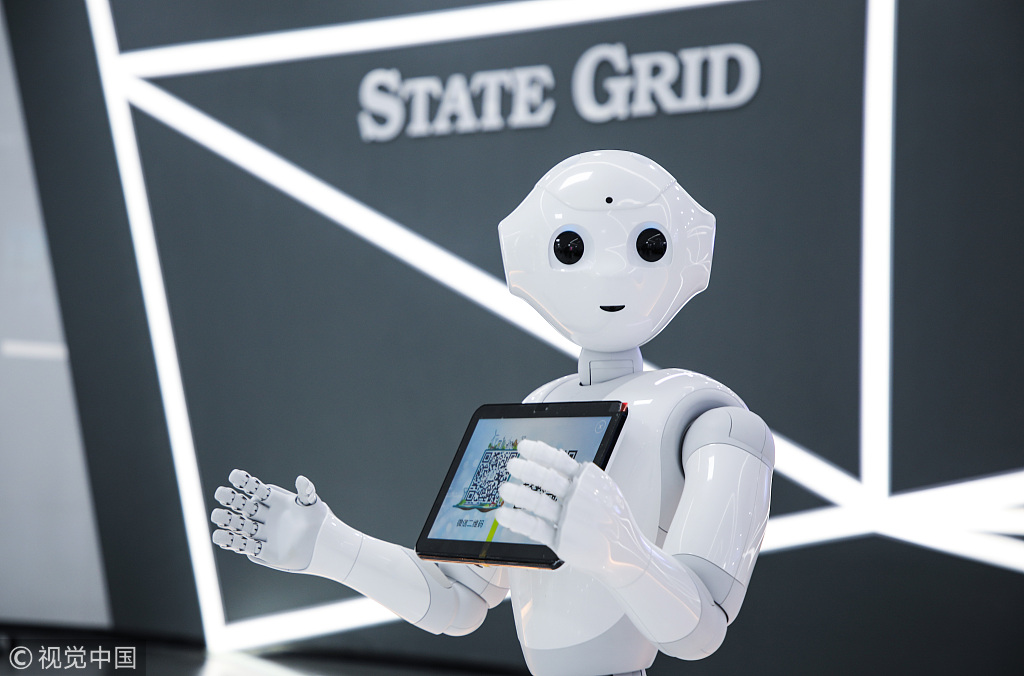
BEIJING - For global heavyweights attending the 2019 New Economy Forum in suburban Beijing, China's booming entrepreneurship and rising innovation capability are topics shared by many speakers.
Yet they are not alone in expressing such views. A previous Bloomberg survey of 2,000 business professionals in 20 countries showed that nearly 60 percent of the respondents in developing countries and 49 percent in developed countries felt that China and India would become the world's centers of technological innovation by 2035.
National priority
Innovation sits high on the Chinese government's agenda.
China decided in 2012 to take an innovation-driven development strategy, underscoring that scientific and technological innovation provides strategic support for increasing production and boosting the overall national strength.
A string of reforms, campaigns and supportive policies have been rolled out to create a nurturing innovation environment for individuals, institutions and enterprises. Incubators and start-ups are mushrooming across the country.
To help provide capital for the bourgeoning innovative start-ups, a Nasdaq-style high-tech board was introduced this year. The sci-tech innovation board, with easer listing criteria but higher information disclosure requirements, has helped finance over 50 firms in the high-tech and strategic emerging sectors so far.
Economic shift
China's vibrant innovation landscape is also partly a result of its development stage, as the country is gearing up for a shift into a consumption-driven economy.
By end-2018, the aggregate business capital in the secondary and tertiary sectors reached 914.2 trillion yuan (about $130 trillion). The secondary industry, which includes industrial and construction enterprises, accounted for 19 percent, while the tertiary industry, or the service sector, accounted for the remaining 81 percent, data from China's fourth national economic census showed.
The production index of the service sector increased by 7 percent in the first 10 months of this year, while high-tech manufacturing saw a rise of 8.3 percent in value added in October, according to the National Bureau of Statistics (NBS).
The changing consumption mix of the Chinese people will continue to drive enterprises' business innovation, NBS head Ning Jizhe said at the forum. "This is one of the key aspects of China's economic transition."
The just-concluded Singles Day shopping bonanza reported record sales as artificial intelligence, live streaming, fintech and robotics technologies enabled more interactive promotion, safer payment and faster delivery.
Market push
For many Chinese firms, innovation is the only way to survive the hyper-competitive market. China's innumerous internet users and expanding middle-income consumers, who crave a higher quality of life, are major forces driving the emergence of new technologies, products and services.
As of June, the number of Chinese internet users reached 854 million and the internet penetration rate was 61.2 percent, data from the China Internet Network Information Center showed.
"One of the most powerful drivers for China's market growth is competition," Ning said, adding that the Chinese market is very competitive, and many enterprises, including state-owned, private and foreign-invested ones, have grown stronger amid competition.
China has fostered a very robust ecosystem, with rapid growth of small and medium-sized enterprises, said Neil Shen, founding and managing partner of Sequoia Capital China, an investor behind many Chinese tech giants and start-ups.
"Increasingly we're seeing that traditional companies in China are no longer traditional. They are digitalizing themselves for market changes," Shen said.