



US' double standards justify violence









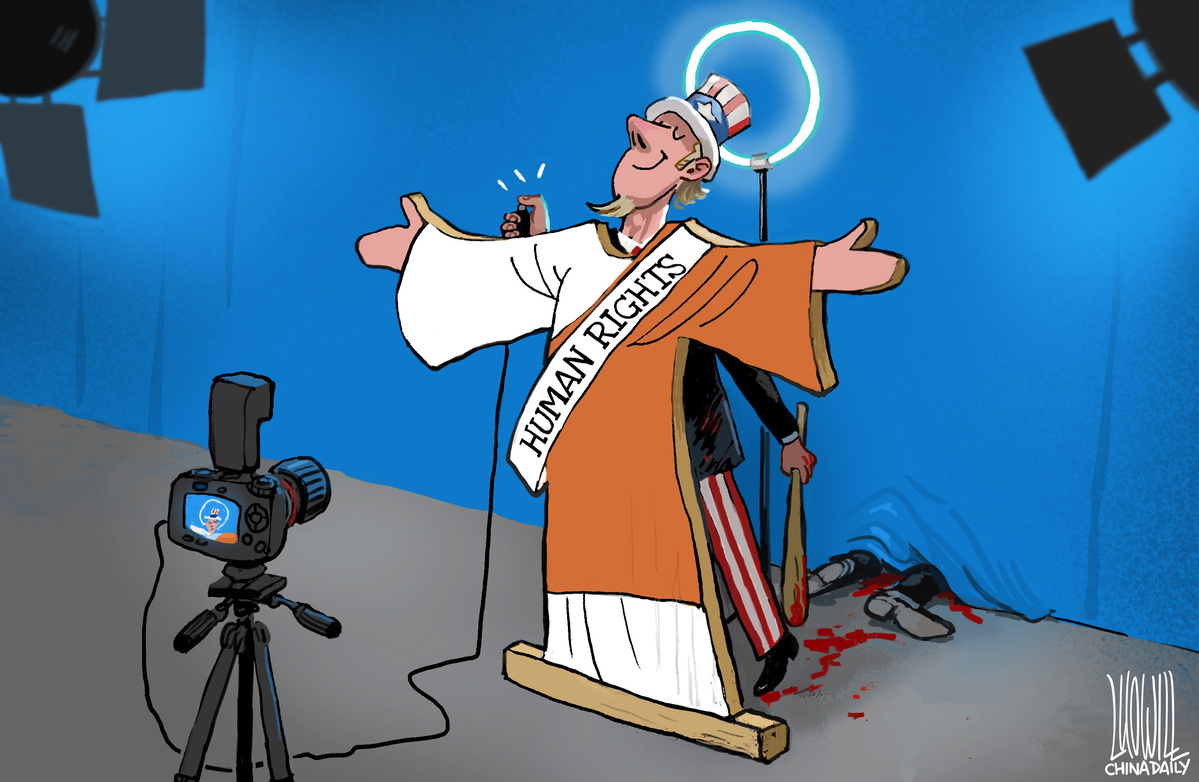
All over the world, protest movements are on the march. In places as diverse as Chile, Haiti, Iraq, Ecuador, France and Bolivia, people are taking to the streets to make their voices heard. Their demands are varied, but all have come to the conclusion they must engage in direct action to get what they believe their governments won't give.
This news might surprise people who've only read media reports from the West. If you were on that strictly limited diet of information, you'd think the only protests on the planet were happening in Hong Kong.
You'd barely be aware of the violence in the city's streets; unless you were active on social media it's likely you'd be shocked by footage of protesters immolating a man for daring to disagree with them, or of the 70-year-old street cleaner killed after being struck by a brick. He, unlike the burned man who remains in critical condition, wasn't even taking a side; he was just there doing his job. This story, along with many others of protesters turning to violence, remains largely unreported in the major press organs of the West.
Why do the biggest media outlets in the world, with enormous platforms and incredible influence, present such a selective version of events? Shouldn't they pay attention to every protest, especially in places like Chile and Bolivia where dozens have been killed? Why the inconsistency?
The answer is simple: Those other movements run counter to US interests.
Bolivia, for instance, is in turmoil because its socialist president Evo Morales — the only leader in South America from an indigenous ethnic group — was, after a military "suggestion" to resign, replaced by far-right Christian fundamentalists. The" interim president", sworn into office before an empty Senate chamber, vowed to return the Bible into government after years of rule by who she called "Satanists" in now-deleted tweets. The new "government" has also disengaged from foreign policy agreements made during Morales' term; big, sweeping changes from an administration that claims to exist strictly to facilitate a new round of elections.
Fascist mobs have burned the homes of lawmakers and forced Morales' party into hiding; all this has been endorsed by the United States, who recognized the "interim government" hours after its founding. Indigenous protesters have been massacred by security forces after taking to the streets against this subversion of democracy, with nary a peep from the same media outlets who so readily praised the riots in Hong Kong.
But they know where their bread is buttered. Haiti, Chile, Ecuador and the "interim presidents" of Venezuela and now Bolivia are all friendly to the West. They have planned or adopted neoliberal policies designed to siphon wealth and labor-power from the Global South. Protests have erupted in these places because the people grew tired of the exploitation spearheaded by the US and its global partners, yet it's only through social media and alternative outlets can the stories of these movements be told. Curiously, the corporate press in the US and elsewhere has given them scant coverage — if they've been mentioned at all.
Not Hong Kong though. There, it's the opposite. Protesters are getting government support and media coverage because they serve as a useful wedge against China, a country that's been on the US "hit list" since the founding of PRC in 1949.
But this is nothing new, of course — in order to fulfill its geopolitical and economic goals the US is more than happy to ignore violence, when it's not causing it directly. Whether the victims are innocent bystanders in Hong Kong, indigenous marchers in Bolivia, or countless civilians killed in military invasions, you can be sure the US government and media will turn a blind eye or skew the story in a more favorable direction.
You'll notice, for instance, that people protesting supposed election fraud in Bolivia — "fraud" alleged by the US-dominated Organization of American States and thoroughly debunked by a study from the Center for Economic and Policy Research —were given airtime on CNN and column space in major US newspapers. This protest was against Morales' victory and, among other absurd accusations, contended his government was responsible for wildfires which rocked the country shortly before the election.
Yet those same outlets are nowhere to be found now that a second movement has begun, one which wants the results of the election honored. Something tells me high-profile US politicians won't be saying much about this movement, even though they've encouraged further violence in Hong Kong by egging protesters there on.
That city is in a state of peril, in no small part due to this double standard — if rioters think they can keep the world's attention by escalating acts of violence, they'll do it and do it gladly. Some protest organizers have been caught admitting they want to raise tensions to a fever pitch, just to provoke a response. Their allies in the Western media, who have already edited videos and selectively removed context to present a one-sided picture of Hong Kong, will reliably play their part.
This hypocrisy is plain to see when you take the time to look. But because media narratives created in the West are so pervasive — and because ordinary people don't spend their free hours combing over press reports for errors or bias — most will passively consume these stories and take them as fact.
It's a sad state of affairs, one that works to the US' advantage. Unfortunately, it's everyday people in Uncle Sam's crosshairs who suffer the harshest consequences.
The author is a writer with China Daily.
The opinions expressed here are those of the writer and do not represent the views of China Daily and China Daily website.





