



Talking tech: Dispelling the myths of China's facial recognition









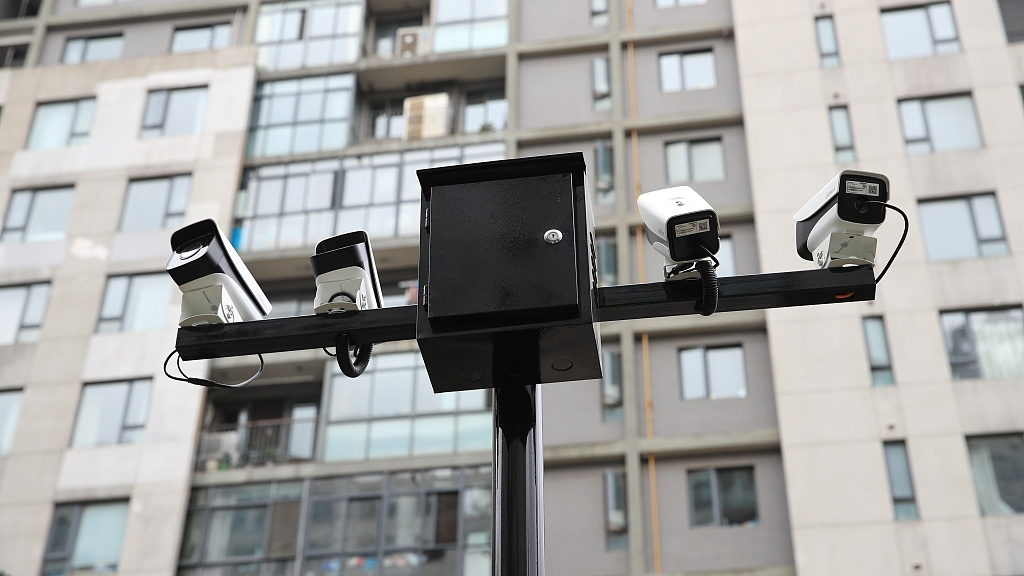
Facial recognition has been widely used across China, powering the technology to unlock phones, pass security checks at airports and purchase goods with a "smile to pay" function.
At its core, facial recognition relies on biometric software capable of identifying and verifying a person by comparing and analyzing patterns of facial images.
However, it does trigger concerns about the issue of data privacy, and such concerns have not gone unnoticed by technology experts and government officials in China.
In June this year, a professional committee under China's Ministry of Science and Technology issued principles on next-generation artificial intelligence (AI) governance, pledging to develop responsible AI in China.
Although a comprehensive regulation system is not fully in place yet, the establishment of a national-level working group to set the standard for facial recognition in China is a giant step in the right direction.
However, some Western media has intentionally ignored China's efforts to regulate data collection. They open fire on the Chinese government with false accusations and cast aspersions on how China will use these technological developments.
Let's start with an article from CNN Business entitled, "China is rolling out facial recognition for all new mobile phone numbers."
It doesn't take long for the article to begin questioning the use of China's new facial recognition technology. The second paragraph reads:
"While the government says the implementation of biometric data 'effectively [protects] citizens' legitimate rights and interests in cyberspace' and helps fight fraud, the move brings with it considerable privacy and security concerns in one of the most tightly controlled online environments in the world."
"The move brings with it considerable privacy and security concerns"? - According to who you might ask.
The journalist provides two unsatisfactory responses to their own statement. They first quote 'four Chinese researchers specializing in AI' to back up their spurious claim of security concerns. The article links to a paper authored by these four Chinese academics from the Chinese Academy of Social Sciences, which touches upon the risks and concerns involving facial recognition. So far so good.
However, what the article fails to articulate is that the research paper also details the many benefits of facial recognition, and similar technologies, and highlights its advantages for the public good.
Meanwhile, the paper does not argue against facial recognition per se but rather the possible ramifications if data is not fully secure and risks falling into the wrong hands.
Next, the article quotes the U.S.-based Electronic Frontier Foundation, a non-profit organization.
But why does the journalist once again assume that a U.S. or Western value framework is applicable to China? We have our own politics, our own ideological schematics and our own way of doing things. When will this assumption of the Western way being the only way end?
Now let's take a look at the second article. This was published in the Daily Mail with the headline, "China starts selling its world-leading surveillance and facial recognition technology globally - despite concerns it violates human rights."
I'm not sure what, or who, the headline is trying to criticize here. Is it aimed at China for selling the technology it has developed? Or those who are looking to purchase it?
Why is China attacked for choosing to market its technological innovations, which have a myriad of uses and are not simply a tool used to violate human rights. If the paper has a problem with other countries using this technology, why doesn't it call them out? Instead it attacks China, making the country look bad and seems to want to hold it to account for the actions of other countries.





