



China's three major megalopolises compared









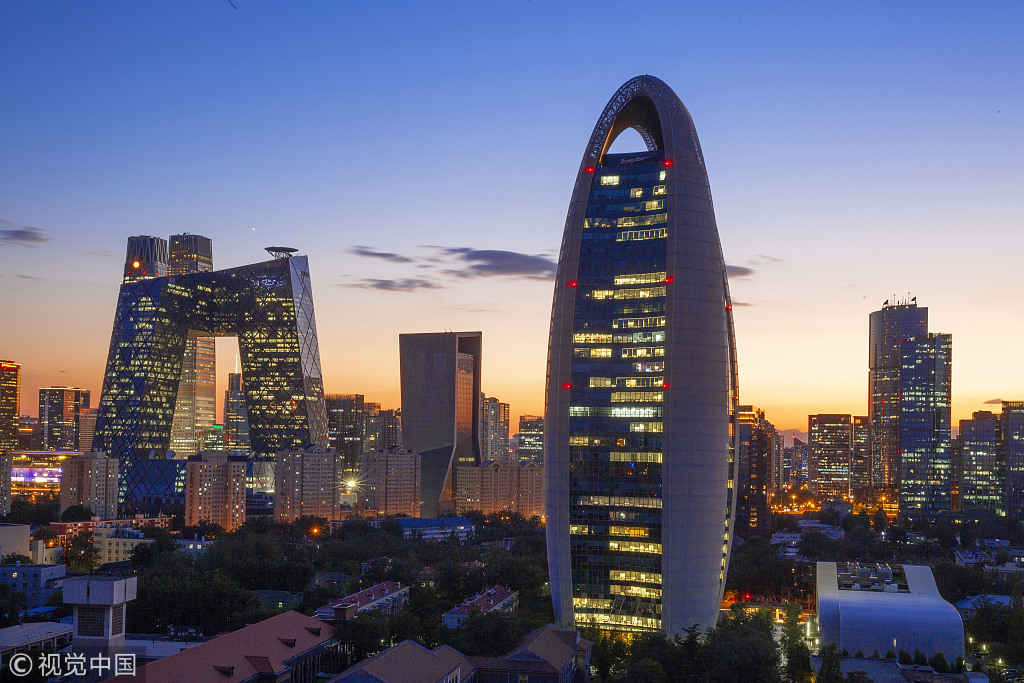
Cloud River Urban Research Institute draws on the 12 sets of data released by the China Integrated City Index 2018 to analyze the performance of China's three major megalopolises.
China's rapid economic growth is the result of the combination of the world's economic landscape shift and the huge potential unleashed by China's reform and opening up. The Pearl River Delta, the Yangtze River Delta Megalopolis and Beijing-Tianjin-Hebei Megalopolis have become the driving force for China's economic development, as well as China's most international and typical megalopolises. The three megalopolises play a key role against the backdrop of the China-U.S. trade frictions and China's economic restructure.
Cloud River Urban Research Institute, a leading think tank for city planning, draws on the 12 sets of data released by the China Integrated City Index 2018 to analyze the performance of the three megalopolises.
(1) GDP
The three megalopolises carry increased weight to China's economy, as they account for 8.6 percent, 19.8 percent and 9.0 percent of the national GDP, respectively, which means 37.4 percent combined. The three megalopolises are obviously the pillar of China's economy.
The performance of the three major megalopolises can be measured by observing the top 30 cities among the nation's 298 cities at prefecture level and above in terms of GDP.
The Beijing-Tianjin-Hebei Megalopolis has two cities whose GDP features in the top 30--Beijing in second place, and Tianjin in sixth.
The Pearl River Delta Megalopolis has nine cities whose GDP making the top 30, including Shanghai in first place, Suzhou in seventh, Hangzhou in 10th, Nanjing in 11th, Wuxi in 13th, Ningbo in 15h, Nantong in 19th, Hefei in 25th, Changzhou in 28th.
The Pearl River Delta Megalopolis has four cities whose GDP ranked in the top 30. They are Shenzhen in third, Guangzhou in fourth, Foshan in 17th and Dongguan in 21st.
The three megalopolises dominate the rankings with 15 in the top 30.
(2) DID Population
Population density is crucial to city issues. The China City Integrated Development Index uses the index of DID (Densely Inhabited District) - districts with a population density of more than 5,000 inhabitants per square kilometer, to analyze population density.
The three megalopolises account for 34.4 percent of the country's total DID population. The Beijing-Tianjin-Hebei Megalopolis accounts for 7.9 percent of the national DID population, the Yangtze River Delta Megalopolis 17.1 percent, and the Pearl River Delta Megalopolis 9.3 percent.
The performance of the three major megalopolises can be measured through observing the top 30 cities among the nation's 298 cities at prefecture level and above in terms of DID population. The Beijing-Tianjin-Hebei Megalopolis has two cities ranked in the top 30--Beijing in second, and Tianjin in fifth.
The Yangtze River Delta Megalopolis has seven cities whose DID ranked in the top 30. They are Shanghai in first, Suzhou in 11th, Hangzhou 13th, Nanjing in 14th, Ningbo in 20th, Hefei in 25th, and Wuxi in 28th.
The Pearl River Delta Megalopolis has four cities whose DID population ranked in the top 30. They are Guangzhou in third, Shenzhen in fourth, Dongguan in ninth, and Foshan in 15th.
There are a total of 13 cities in the three megalopolises making the list of the top 30 cities with largest DID population. However, DID population ratios vary among the three megalopolises, with the Pearl River Delta Megalopolis at 67 percent, much higher than the national average of 31.9 percent, the Yangtze River Delta Megalopolis 46.6 percent, while the Beijing-Tianjin-Hebei Megalopolis only 37.8 percent.


- Nation's satellite data reception coverage reaches new heights
- Central govt to help build Shanghai into a green global shipping hub
- Grand community banquet attracts 2,600 guests in Chongqing
- Giant pandas filmed enjoying their meals at Shaanxi conservation base
- Smart Dragon 3 rocket lifts off at sea with seven satellites
- Chinese researchers launch global project to explore plants' evolutionary history, unlock genetic assets











