



In Shandong province, value of glass works is crystal clear









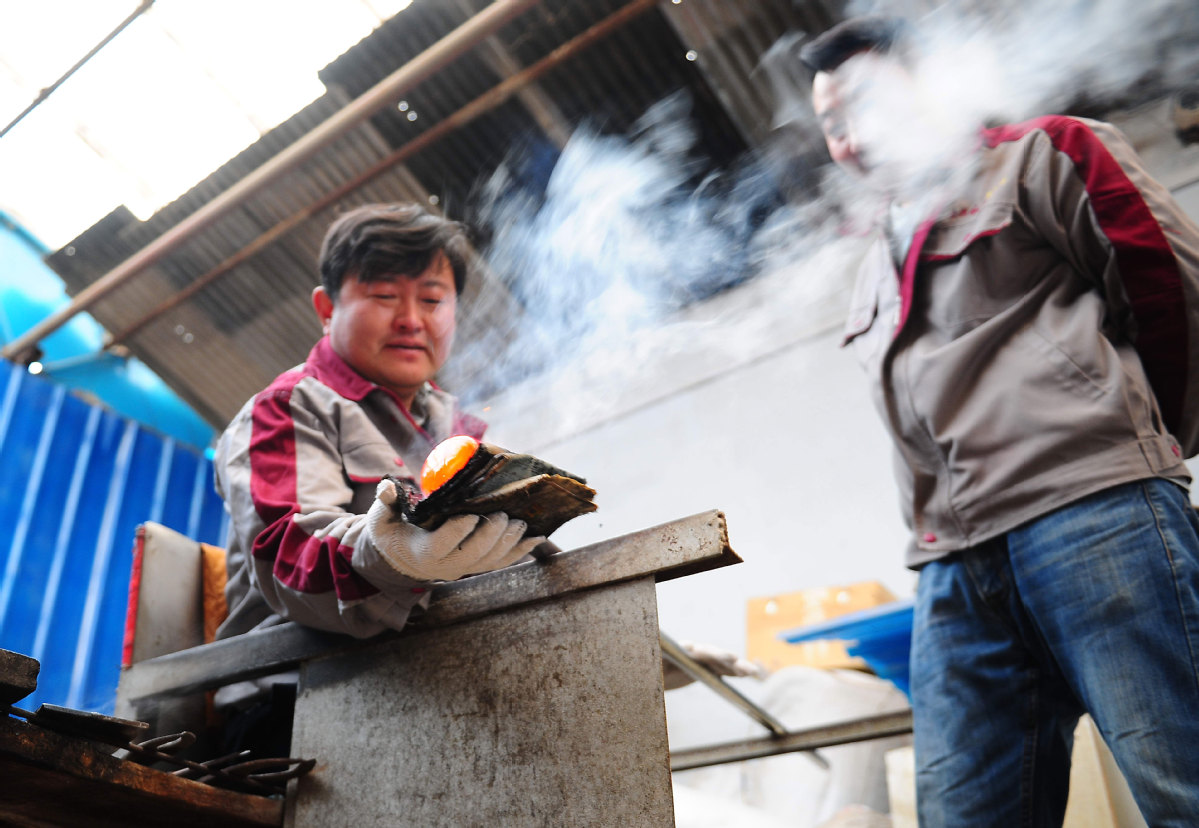
Many may consider glass a mundane material of not much value, but the Boshan district in Zibo, Shandong province, could change one's views through its exquisite glass artwork.
Since the 13th century, colored glaze, known to the Chinese as liuli, has been mass produced in Zibo and other places in China.
On a cold winter day, a liuli artwork workshop at Jinxiang Glass Culture and Arts Co in Boshan is warmed by two brick, mud and metal kilns in which roaring fires melt glass materials. Dozens of craftsmen come to the kilns to dip the tips of blowpipes into molten glass.
Then some craftsmen hurry to their seats to shape the ball before it hardened. Some roll the ball on a thick sheet of steel that lay flat to create a cool exterior layer.
To make good shapes, craftsmen need to dip their blowpipes into the kilns to get molten glass several times.
"Liuli works are a kind of artistic beauty born from fire," said Sun Yunyi, a sophisticated liuli artist.
Sun's grandfather and father were also liuli craftsmen. Inspired by this family tradition, he began working on interior painting at Boshan Arts and Liuli Plant in 1983 when he was 16 years old.
"When I was young, every household in Boshan had a kiln in which they made liuli products," Sun said.
Made from locally abundant raw materials such as silicon dioxide, calcium fluoride and potassium nitrate, Boshan liuli appear in a rich variety of colors, including yellow, scarlet, purple, black and green.
Craftsmen in Boshan have been experimenting with different additives to produce glass of different types and higher quality.
Sun has been experimenting persistently to restore the techniques used to make yellow liuli, which is called "chicken fat" by Boshan locals because of its color and quality.
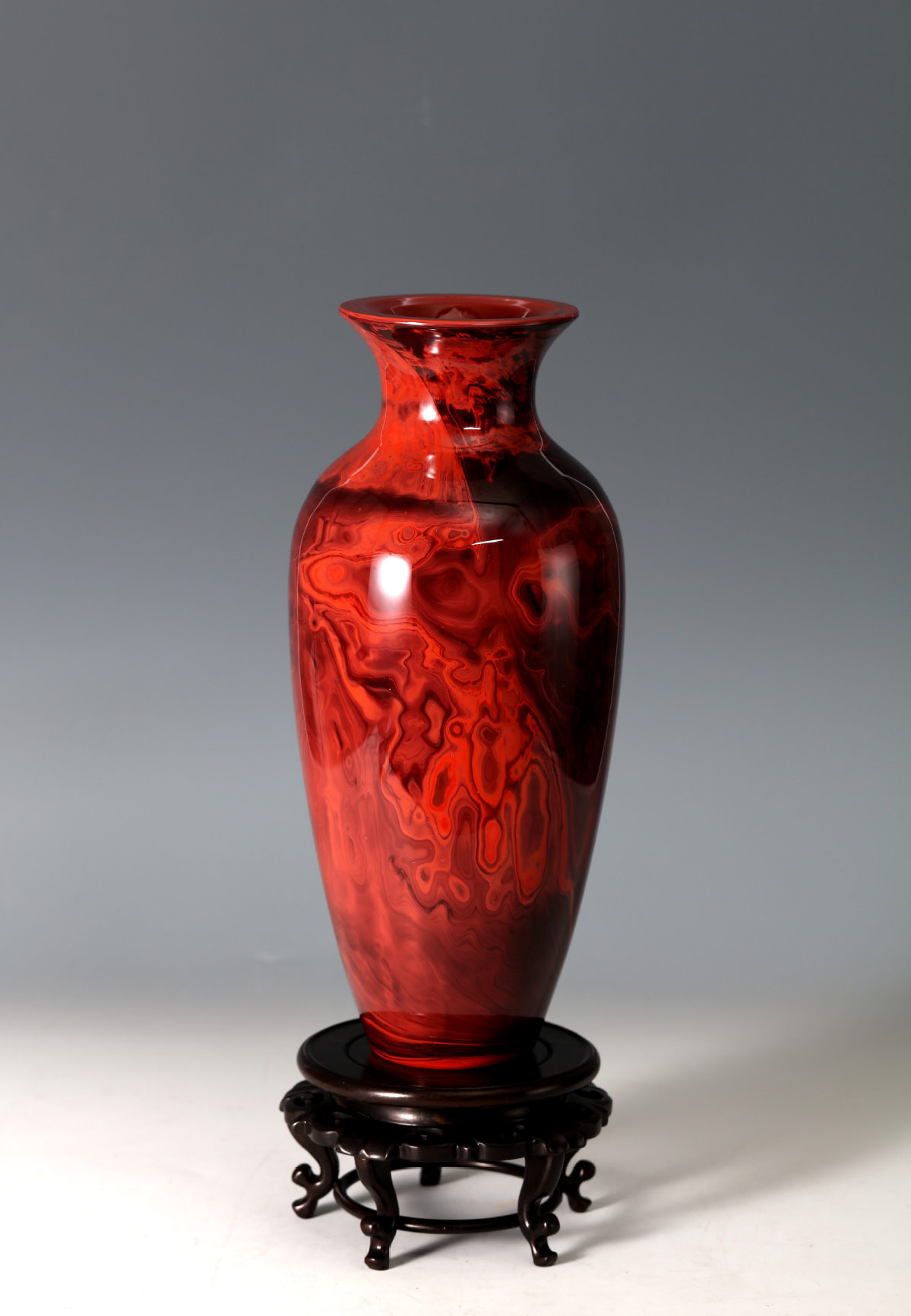
Chicken-fat liuli products were used by royal families during the Qing Dynasty (1644-1911). But the chicken-fat liuli crafting techniques were not recorded, and as a result they had been lost for some time and were not regained until the Suns began working on them.
"The techniques were passed down orally from generation to generation, so the way to make good quality products mainly depends on experience," Sun said.
With two decades of experimentation, Sun successfully restored the techniques, making him an outstanding liuli artist.
Sun is certified as the national patent holder of the production method of chicken-fat yellow glaze and the relief craft based on the set glaze.
There are six main steps in creating liuli-designing, mixing, blowing, cooling, polishing and carving, according to Sun.
After those steps, Boshan-style liuli artwork is produced through techniques like overlay carving and interior painting.
Carving is an intricate process consisting of a dozen steps, including carding, grinding, patterning, waxing, contouring, engraving and polishing.
Interior painting is a Chinese specialty. With a purpose-built slim pen placed into a pea-sized hole, the artist is able to paint exquisite patterns inside a glass work.
So far, Boshan has over 1,000 craftsmen making liuli artwork, of which 124 are national and provincial-class artists. More than 100 liuli artworks have been collected by museums at home and abroad, including the Baoyun Building of the Palace Museum, Bristol Museum & Art Gallery in England and the National Gallery of Australia.
Boshan liuli is gaining wide recognition on the national and world stages with its special artistic and cultural charms, said Zhang Rong, director of the Palace Museum library.
Thanks to local government support, Boshan has developed into the major trade and distribution base of liuli artwork. Liuli products made in the district have been sold in over 80 countries and regions, generating annual revenue of over 250 million yuan ($36 million), according to the local government.





