Prevention is always better than cure









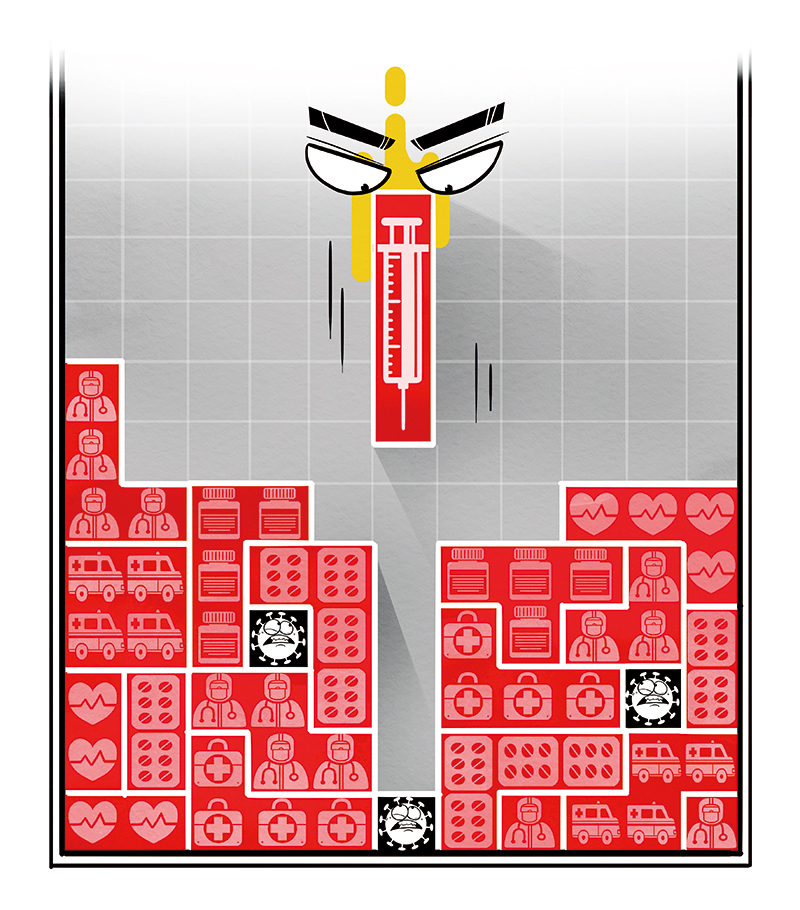
On different occasions, Chinese top leader Xi Jinping has asked Party officials to be on the "highest alert to 'black swan' incidents and take steps to prevent 'gray rhino'" events. He has emphasised the importance to fight well with preemptive warfare so as to prevent and withstand risks, and at the same time fight well the war of strategic initiatives to convert danger into safety and turn crises into opportunities.
A black swan incident is one that occurs even though it had been thought impossible and which could have extreme consequences. A gray rhino event is a highly probable, high-impact yet neglected threat. The president wanted to "prevent and defuse major risks" in order to maintain the country's economic health and social stability.
Xi's perceptive early warning about black swans became a reality when the novel coronavirus epidemic broke out in December.
Since the Lunar New Year fell on Jan 23, State media asked all Chinese families to cancel gatherings and the government imposed strict quarantine measures on Wuhan. On Jan 30, the World Health Organization declared the novel coronavirus a public emergency of international concern.
While there is still much to learn about the novel coronavirus, compared with the 2002-03 severe acute respiratory syndrome (SARS) epidemic, which was transmitted from civet cats to humans, its transmission rate is much faster. But while the mortality rate for SARS was about 10 percent, preliminary estimates for the novel coronavirus, based on Chinese data, appear to be 1 to 2 percent.
This means the novel coronavirus's mortality rate is higher than seasonal influenza but much lower than SARS, because by the time the SARS outbreak was officially declared to be over, in 2004, there were 8,098 reported cases of infection and 774 deaths.
Thanks to valuable lessons it learned from handling the SARS epidemic, China informed the WHO of the novel coronavirus on Dec 31, a few weeks after it was first detected. By contrast, China informed the WHO about SARS four months after it was first detected.
In fact, China shared with the WHO the genetic sequence of the new coronavirus soon after the start of the outbreak, which facilitated global efforts to understand and contain the virus. This, in turn, will accelerate the development of a vaccine.
There is another important difference between the SARS epidemic and the current one which most analysts seem to have missed. China was a very different country during the SARS epidemic in 2002. Its per capita GDP then was only $1,148, whereas in 2019, it was $10,263.Medical facilities, scientific knowledge, research and development capabilities, and the quality of medical care in China have improved significantly since 2002.China is significantly better prepared to contain the epidemic now than it was in 2002-03 to tackle SARS.
The unprecedented quarantine measures, suspension of public transport in many places, closure of entertainment venues and banning of public gatherings appear to have limited the spread of the virus.
Now, China is gradually easing restrictions in lower-risk areas, and many factories are reopening.
The policies China has used have several advantages. It has built new hospitals in an incredibly short time, increased the number of beds in existing hospitals and greatly improved medical facilities. It has also trained a large number of healthcare workers to treat those infected with the novel coronavirus, and developed commercial test kits for the virus, and distributed them in the most vulnerable areas. And it has made people aware of the hygiene requirements to protect themselves against the novel coronavirus.
China's strict measures to contain the epidemic has given the world more time to make necessary preparations for dealing with novel coronavirus cases. Actually, China's measures to contain the spread of the virus have been quite effective. For instance, they have helped Japan handle passengers and crew on the cruise ship Diamond Princess.
Based on SARS and current experiences, some aspects of China's policies needed improvement. And the Chinese authorities have already taken a big step in that direction by banning the illegal trade and consumption of wildlife.
Live animal markets can be found in most Chinese cities. After the SARS outbreak, these shops were closed. This time, the Chinese authorities have banned the consumption of animals under the Wild Animals Protection Law and other laws and all terrestrial wildlife, including those artificially bred and farmed, across the country.
More important, Xi said on Feb 3 that "it is necessary to strengthen market supervision, resolutely ban and severely crack down on illegal wildlife markets and trade, and control major public health risks" at source. Which means the Chinese government believes in the old Chinese proverb, fáng hùan yú wèi rán (prevention is better than cure).
Asit K. Biswas is a distinguished visiting professor at the University of Glasgow and chairman, Water Management International Pte Ltd., Singapore. And Cecilia Tortajada is a senior research fellow at the Lee Kuan Yew School of Public Policy, National University of Singapore. The views don't necessarily represent those of China Daily.