



China will emerge stronger after outbreak









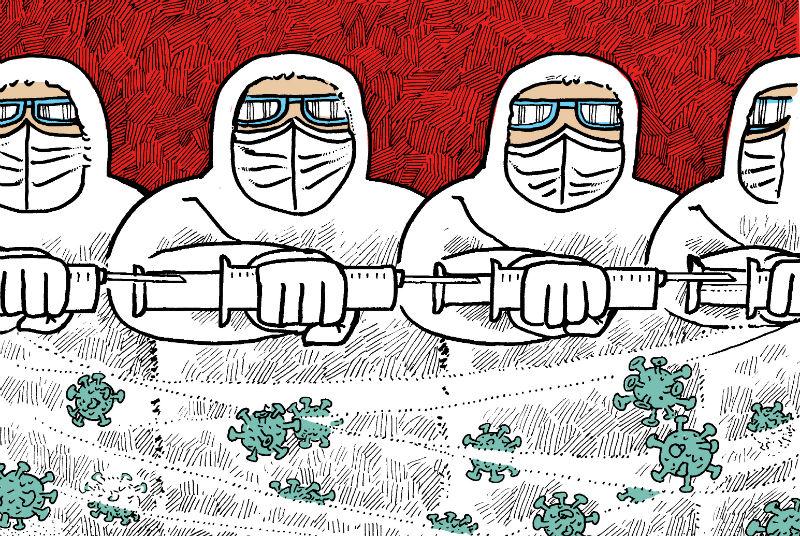
Despite my training and my profession pushing me to make assessments based on data, analysis and econometric models, for once I would like to rely on a set of intuitions and experiences, which derives from the 10 years I lived in China, and venture to make a prediction: China will not only rise from this health emergency stronger than before, but also take advantage of these months of crisis to accelerate its social and economic transformation.
I expect China to learn vital lessons from the novel coronavirus epidemic and to become more prosperous and stable socially, economically and politically. After all, the history of China is dotted with crises that have been turned into opportunities: the banking crisis of the 1990s, which stabilized the banking system; the 2008 global financial crisis, which gave impetus to the development of a high-speed rail network. These are just two of the many examples.
China does more and speaks less
Contrary to how we act in Italy, China speaks less and does more, and does so to pursue its national interest objectives, exactly as any government should do.
I foresee that in the aftermath of the novel coronavirus epidemic, development will accelerate along two interconnected axes.
The first will comprise the proliferation of new software applications and services based on technologies that are already being widely used or being developed according to an already undertaken path.
The second axis will be that of upgrading management models, starting from the manufacturing and health sectors and leading up to the closure of live animal markets and an increase in the hygiene threshold in society.
Some examples will better clarify what I mean.
In the sector I am most familiar with, universities and higher education, the return of students and faculties to campus has been deferred several times; various forms of online teaching are being implemented and the most enterprising professors are already looking to adapt to a type of communication no longer ex cathedra, but via personal computers.
Concept of presence in class to change
University administrations will understand that the concept of compulsory presence will change, since each student will have the choice to watch the videos of lessons whenever he/she wishes and the teachers' performance will be under collective scrutiny, which will be an incentive to improve themselves.
But as in a Darwinian system, only the most flexible will adapt to the changes. Hopefully, the development and systemic improvement of online teaching will lead to an increase in the level of education in the poorest rural areas which even today have relatively little access to quality teaching. If done well, this will increase the standard of living and potential consumption, thus bringing economic benefits.
Remote working will extend to numerous other areas, starting right from remote medical diagnosis, a necessity during an epidemic and of great convenience at a lower cost in normal situations, which will also allow the less well-off to access medical treatment. Italian expertise in the medical field and remote diagnosis can help find interesting ways and satisfy the double-bottom approach: making profits while doing good.
Great advances in high-tech
Another example concerns the application of artificial intelligence. In a very short time, Chinese researchers seem to have developed much more refined facial recognition systems, which allow recognition even for those wearing a face mask. This does not require new technological developments, but simply a further optimization of the deep-learning process and backward propagation of technology and neural networks, that already exist.
An app has also been developed that allows anyone in real time to have a map of their neighborhood showing the homes of those who have contracted the novel coronavirus. Once a person enters a particular number on his or her mobile phone, an app service of Chinese telecom companies will give the names of all the cities he/she has visited in the last 15 days. Both are needed in Italy, especially at airports.
The philosophical debate between privacy and national security will no doubt be fierce in Italy and other European countries, but China is showing us that in time of crisis certain priorities can be readjusted, because national security comes first.
Booming online services proof of development
Within a few days, there has been an explosion of all online services-films and videos, financial services (playing on the stock exchange satisfies both economic and psychological needs), online games and much more-for those forced to stay at home. Most of the restaurants have been suspended, but food delivery services are skyrocketing.
These behaviors are facilitated by the fact that-unlike in the West where the internet was born in the laptop or desktop and, therefore, there is a clear separation between online and offline-in China the internet was born in mobile phones. Therefore, most Chinese users don't perceive the difference between online and offline because they are always online, except when they are asleep.
From crises arise opportunities, new ways of doing business and new markets because today's forced behaviors can easily become permanent in the post-crisis period. I believe that studying these phenomena and anticipating their trends will also be useful for our Italian companies that always struggle to penetrate the Chinese market.
The author is former under-secretary of state at the Italian Ministry of Economic Development. The views don't necessarily represent those of China Daily.


















