



Fiscal, monetary policies key to recovery









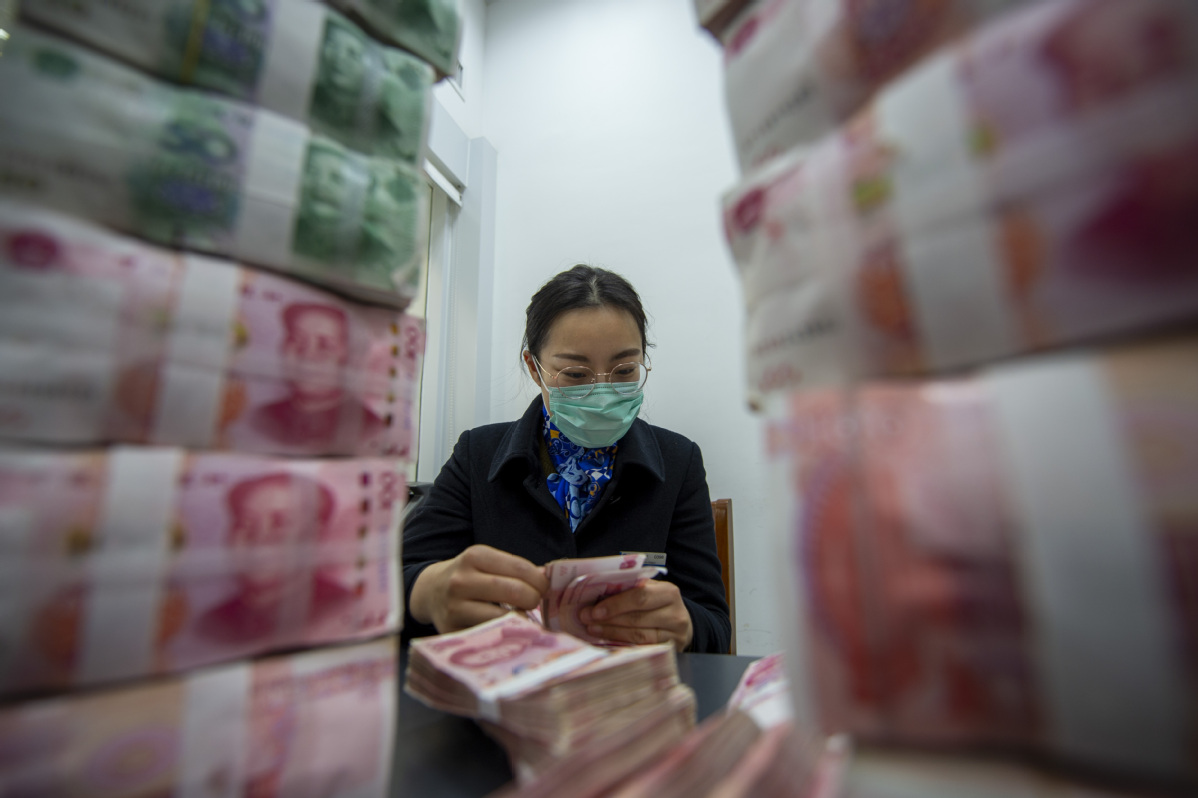
Apart from easing contagion-related difficulties faced by individuals and corporates, fiscal policy will also serve as a backbone to bolster investment, mainly in infrastructure.
So-called new infrastructure construction, or infrastructure projects in high-tech fields such as 5G networks, the industrial internet and data centers, has recently attracted public attention. The projects are expected to benefit both short-term economic stability and long-term industrial upgrading. Yet the narrative may not be as ideal as it sounds.
5G is at the heart of new infrastructure. By 2026, the investment scale related to 5G is expected to amount to 1.15 trillion yuan in China, with nearly 230 billion yuan to be invested in 2020. This amount is too small to fill the gap in demand caused by the epidemic.
Therefore, it may be advisable to incorporate projects of government digitalization into the basket of infrastructure construction. Moreover, investment in traditional infrastructure should also be boosted.
Though contrary to intuition, specific kinds of traditional infrastructure are still in short supply in some regions. Investing in those areas has relatively high-return prospects.
For instance, the housing supply in big cities is insufficient given the large-scale migration from rural areas and citizens' strong demand for improving housing quality. Therefore, investments in constructing rental housing and revamping old communities should be promoted.
Similarly, public health, eldercare and the transport system in urban clusters deserve more public infrastructure investment.
All the above measures will help cushion weakening external demand and preserve the supply capacity of China's industrial sector.
Preemptive fiscal measures can also buffer the shocks of a potential breakdown in the global industrial chain. Such measures include encouraging domestic production of critical parts reliant on imports, and attracting foreign manufacturers to China that can supplement the country's industrial chain.
The country has assumed greater attractiveness as a destination of direct investment as it has made headway in epidemic containment and resumption of production ahead of other economies. More favorable tax policies will reinforce this advantage.
In short, the nation does have a long list of fiscal or quasi-fiscal measures this year to stabilize the economy. Based on our fiscal deficit estimate, China may register an annual economic growth of about 3 percent. Albeit slow, this growth rate could make China the only major economy that records positive growth this year.
As proactive fiscal policy is stepped up, monetary policy is expected to be highly flexible so as to create an enabling environment for the former.
The key will be ensuring an ample liquidity level at both the market and corporate levels via measures like raising the potency of open market operations, further reducing the amount of cash that commercial banks must keep as reserve and supporting treasury purchases.
Meanwhile, retaining a prudent stance when it comes to boosting the money supply is still sensible, as the future of the global pandemic remains highly uncertain. It is important to preserve policy room for worst-case scenarios and prevent high inflation in the global liquidity overflow in the post-pandemic era.
Last but not least, China should further promote the international coordination of macroeconomic policy to avoid an international financial crisis from breaking out, especially in terms of helping the hardest-hit economies.
The article is based on the summary of discussions at a recent seminar of the China Finance 40 Forum, a non-governmental think tank.



















