



COVID-19 has taught us the oneness of the world










The first public report on the novel coronavirus infection in China was the report of "unusual pneumonia" in Wuhan, Hubei province, at the end of December. At that time it was not identified as a coronavirus infection because it was a new disease. This has led to accusations that China was not being transparent.
A diagnosis is like a piece of detective work. Experts try to match patterns between what a patient has and the patterns of known diseases. They then form a list of what is called "differential diagnoses", and tests are conducted to confirm or refute certain diagnoses on that list.
When something doesn't fit anything at all, it could be a new disease, or it could be an unusual pattern of some known disease. In general, it is more likely to be an unusual manifestation of something known rather than a new disease.
As an illustration of the difficulties when doctors are confronted with a new disease that has never been reported before, one can look to the Minamata disease, a neurological disorder, in Japan in 1956.
A case of a child with unusual neurological symptoms was first noted by her doctor in April that year. A few days later, her sister was also affected. The doctor reported that to the local health authorities. A committee was formed to investigate it.
At first, it was believed to be an infectious disease, and the village was isolated. Then there were reports of cats being affected. In November 1956, it was found to be because of mercury pollution in a river in which an upstream factory had been discharging its waste.
I was working in New York in 1982 when AIDS was first noticed in the metropolis. It wasn't called AIDS at the time, since it was then an unknown disease. At first, doctors noticed unusual infections by organisms that normally do not affect people. The first case was reported in June 1981.
At one time, the US Centers for Disease Control and Prevention called it the 4H disease because it affected mainly homosexuals, heroin users, hemophiliacs and Haitians. The media called it "gay-related immune deficiency". It wasn't until September 1982 that the CDC officially named it AIDS. But the harm done in stigmatizing homosexuals was difficult to reverse.
We can see the same process happening now, with the coronavirus being politicized to stigmatize Chinese because the first known cases were detected in Wuhan.
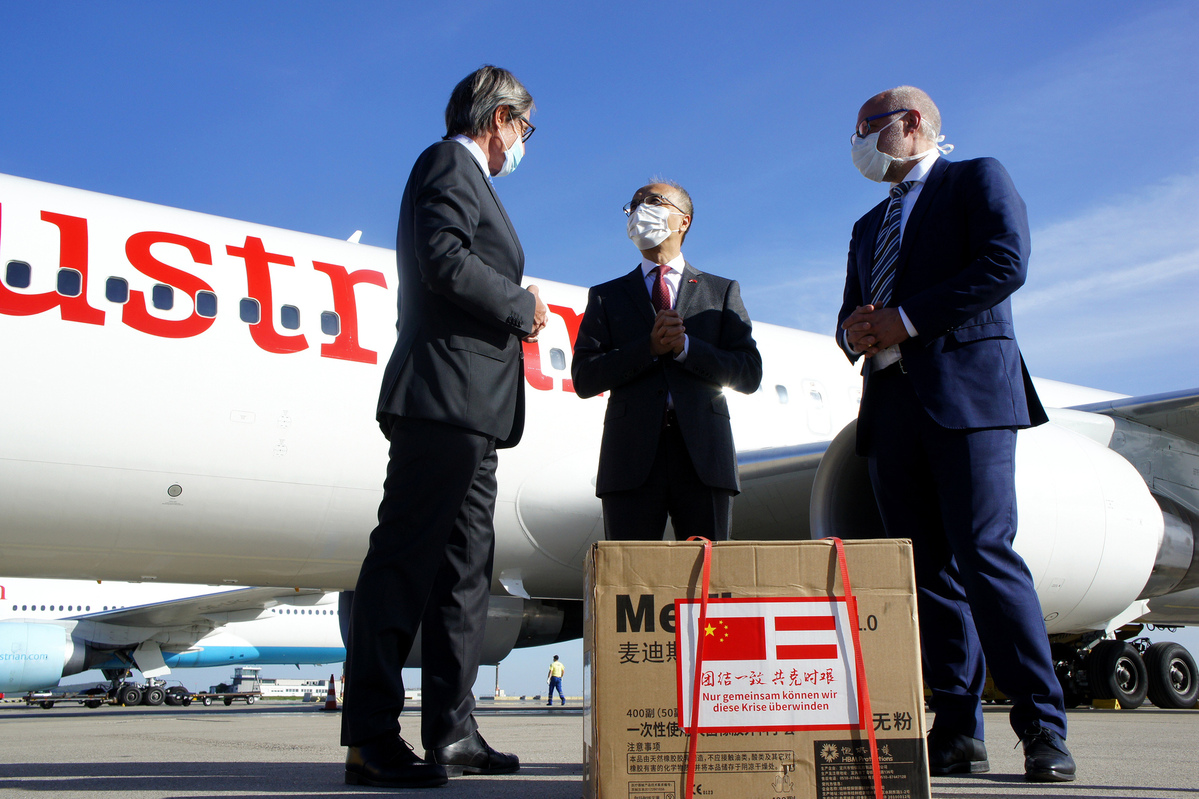
What this pandemic has taught us is the oneness of the people of the world. Apportioning blame for the outbreak is not going to help in dealing with the crisis. International collaboration in curbing the virus spread and finding a cure is the answer.
As John Donne, the English writer of the 16th century, once said,"No man is an island, entire of himself." Imagine for a moment that the rich world manages to contain the virus, and no help is rendered to the poorer countries. Because we are all interconnected, the virus would spread back into the rich world.
China has initiated the overseas delivery of medical supplies and equipment to help fight the virus, only to earn suspicions of ulterior motives.
After World War II, the United States sent a lot of food aid to Asia. Was that done on humanitarian grounds or motivated by soft-power ambitions? The same question can be asked of the Peace Corps, established by the US in 1961.
Instead of pointing fingers at each other, we must operate as one people helping one another.
If we don't learn from our past mistakes, we are bound to repeat them. That would be a great disservice to the people of the world and an affront to those who died in the pandemic.
The author is a hematologist and former medical lecturer at the University of Hong Kong and London University. The views do not necessarily reflect those of China Daily.










