



US oil price turning negative represents a great trial









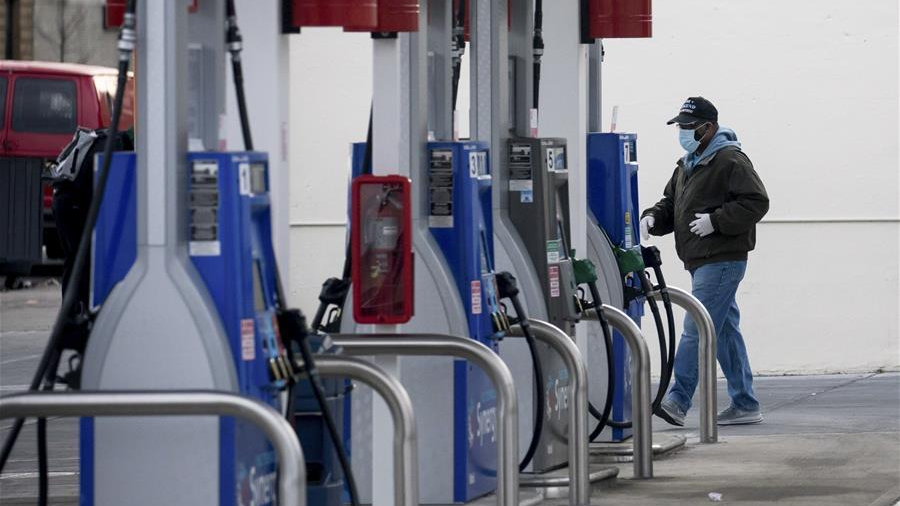
West Texas Intermediate (WTI) crude oil futures prices reached an alarmingly negative level for the first time. On April 21, Beijing time, the settlement price of NYMEX WTI crude oil futures closed at -37.63 US dollars/barrel, with an intraday decline of more than 300 percent, and the lowest price fell to -40.32 US dollars/barrel at one time. This is the first time that crude oil price traded negative since the opening of WTI oil futures market in 1983.
Of course, it's not the first time commodity prices are negative. In history, the spot price for natural gas has been negative more than once. The NYMEX WTI crude oil futures falling into a negative value are the crude oil futures delivered on May 20.
According to the Chicago Mercantile Exchange, the delivery date of WTI crude oil futures contract in May 2020 is on April 21 local time (in the early morning of 22 Beijing time), and Monday is the last trading day before the delivery date. Due to the current crude oil spot market price downturn, the contract in May also keeps falling as the delivery month approaches.
The negative price of NYMEX WTI crude oil futures means that the buyer of crude oil futures is willing to pay for the oil dealers to transport the oil away. The negative price of crude oil indicates that the transportation and storage costs of the oil transported to the refinery have exceeded the oil value itself.
No one will believe that the seller will pay for the buyer to take away the goods. Why would crude oil sellers spend money for the buyers to move the oil away this time?
First of all, this negative price can be understood as storage and transportation costs. Every WTI crude oil futures contract has the delivery volume for 1,000 barrels. As the delivery date approaches, if investors fail to close their positions and finally have to do practical deliver, they must have enough containers and storage as well as pipeline transportation conditions.
Because oil is not like milk or other non-polluting substances that can be dumped directly, the crude oil traders, who do not have enough containers and sufficient storage conditions, have to pay extra for the refineries to transport their crude oil.
Secondly, negative prices are equivalent to transportation and storage costs, which means that the cost of transporting or storing oil to refineries has exceeded the value of oil itself. For oil producers, the loss caused by shutting down the oil well is huge. Therefore, in order to maintain the normal operation of the oil well, the oil producers are willing to pay the crude oil buyers to process the crude oil.
As the COVID-19 pandemic continues, the demand for crude oil is declining, the storage capacity of major refineries is nearly saturated, and the cost of warehousing and transportation is higher than before, resulting in futures prices close to -40 US dollars.
Third, there has been a serious oil surplus since the beginning of 2020. The sharp drop in oil prices at the beginning of the year was initially due to the poor implementation of the production reduction agreement between OPEC and many non-OPEC oil producing countries, especially the bankruptcy of the production reduction agreement between Saudi Arabia and Russia.
Despite a historic agreement earlier this month between the OPEC and its oil producing allies to cut production by 9.7 million barrels a day from May 1, it is still not enough to cope with a drop trend in oil demand. Subsequently, global oil demand is at risk of declining for the first time in 40 years due to the impact of the coronavirus epidemic.
At present, most of the world's regions are under a great lockdown, and most of the production and consumption paused. This has led to a sharp decrease in demand for physical delivery entities such as refineries or airlines downstream of crude oil, and the saturation of storage facilities of these institutions has been at a historical high. If the storage tank capacity is not enough or the storage cost is too high, the manufacturer would rather accept the negative oil price and pay buyers for the deal.
Why is the cost of oil storage and transportation so high? WTI is required for pipeline delivery. Due to the high inventory and the sharp decline in crude oil demand caused by the epidemic, the available storage resources are becoming more and more limited. Oil pipelines and inventories are fully loaded.
The pandemic has led to a weak US oil market and lower spot prices. The global oil storage space has been stretched. IHS Markit expects crude oil inventories to increase by 1.8 billion barrels in the first half of 2020 at current supply and demand rates.
With an estimated 1.6 billion barrels of storage left, producers will be forced to cut production, and by June, there will be no space for oil that no one needs. This has led to a surge in the cost of crude oil storage. Secondly, cost on the floating storage at sea is growing.
In addition, unlike Brent crude oil, which mainly relies on sea transportation, USOC is a "inland crude oil" and must rely on inventory and inland transportation. The cost of transportation and storage has exceeded that of oil itself, forcing traders to pay extra to avoid greater losses.
The negative price of crude oil futures makes the crude oil market, which is already in decline and fragile, even worse. Affected by the oil price, the bankruptcy dilemma of American shale oil companies is becoming more and more obvious.
Although the settlement price of contracts of international crude oil futures is negative, the spot price is positive. Will businesses pay consumers when the car is refueled under "the negative oil price"? Of course not.
The WTI is futures price, not the benchmark for oil price, nor directly related to the price of refined oil used by ordinary citizens. The price adjustment mechanism of domestic refined oil has set up a "floor price" in China, that is, domestic oil price will not be adjusted if average international crude oil price is lower than 40 US dollars/ barrel.





