Pandemic a test for global partnership










Governments in different countries have chosen different ways to combat the novel coronavirus pandemic. One of them is to adopt strict measures, such as sealing areas with a high number of infections, making wearing of face masks mandatory in public in less-affected areas, shutting down factories, mills and shops, and suspending public transport services. This is the approach China has adopted.
Some European countries, especially Italy and Spain, with the highest number of infections in Europe, reacted late. And by the time they adopted measures as strict as China's, it was too late for them to produce optimum results, although the measures particularly severe in Italy.
The positive story of Czech Republic
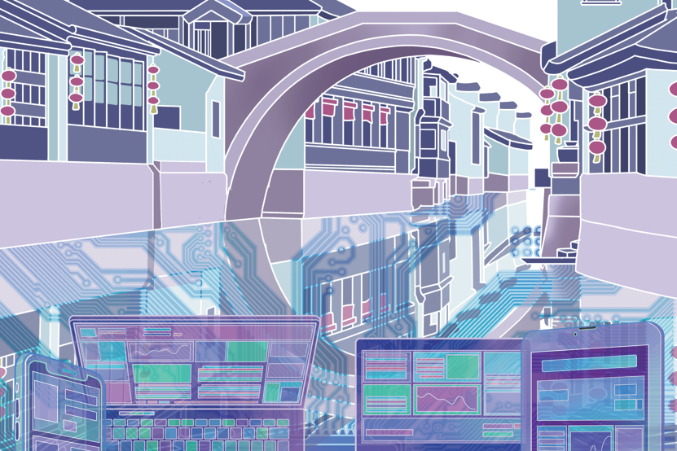
The Czech Republic, however, has a positive story to tell. As part of the China-Central and Eastern European Cooperation mechanism, the Czech Republic waited for the right time to implement strict measures, in order to ensure they were not implemented too quickly or too late to be effective. Other neighbouring European countries reacted similarly. The Czech Republic is now introducing smart quarantine measures while using high-tech aid for contact tracing. These approaches have already proved successful in China, Singapore, the Republic of Korea and other countries.
The United Kingdom and the United States governments initially adopted a different, more relaxed laissez-faire approach to the pandemic, which did not ease the situation in the two countries. After realizing that the coronavirus could kill up to 200,000 people before the UK could achieve "herd immunity", the British government, under tremendous public pressure, was forced to reconsider its approach and tighten its rules. Still, the virus had claimed more than 17,000 in the country by Thursday.
Global economy may gradually return to normal
As a short-term consequence of the pandemic, economic activity has slowed more than that during the 2008 global financial crisis, though economic operations are likely to rebound in the long run. And since, unlike the 2008 global financial crisis, there is no economic reason behind this slowdown, the global economy will hopefully return, albeit gradually, to its original state after the non-economic (viral) cause disappears.
Besides, China has largely contained the spread of the virus at home, and the curve seems to be flattening in Europe. After contracting in the first quarter, China's economy is now showing signs of improvement. The country could regain its strength by next year. But that would depend not only on Chinese companies, institutions and consumers, but also on how the global economy, mainly the European Union and US economies, will develop. Yet since the German economy is estimated to shrink by 5-20 percent and, according to some economists, even the global economy would contract, China may be at an advantage on the global front even though it is resuming economic activity earlier than Western countries.
In the short term, therefore, so-called deglobalization tendencies in production and trade may continue, which could exacerbate the existing structural economic and financial problems of the global system, including US-China trade frictions. But in the future, we will still see a highly globalized society. It will be rather a global reorganization than true deglobalization.
Indeed, globalization has always been dialectically contradictory within the waves of global integration, subsequent partial disintegration, and even larger global integration. But China has already experienced such crises. In recent decades alone, it has handled the 1997 Asian financial crisis, the 2008 global financial crisis, and other challenges.
Need to regroup global cooperation mechanism
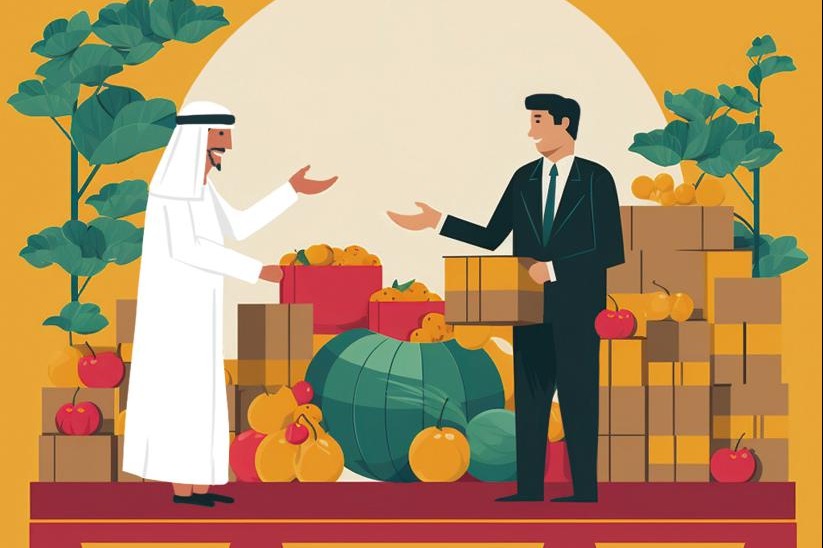
However, the US is in a worse position. The seriousness of the pandemic should not be underestimated, as former US Secretary of State and National Security Adviser Henry Kissinger has said. In his recent article, "The Coronavirus Pandemic Will Forever Alter the World Order", in The Wall Street Journal, he has emphasized the need to both manage the protection of people's health and start preparing for a new, different era. We can take this change positively as space for a better regrouping of global cooperation. China can build more on its Belt and Road Initiative and intensify its cooperation in Eurasia, as well as with developing countries in Africa and Asia, where cooperation and assistance are particularly needed.
True, the novel coronavirus does not discriminate between men and women, young and old, and rich and poor. But the fact is that poorer people are also forced to live and work in poor conditions, and therefore are more likely to be infected than people in the higher-income groups.
Developing countries face even more serious problems
The situation is particularly problematic in developing countries, where many people lack adequate supplies of drinking water and soap, for example, especially in the slums in South and Southeast Asia, Africa and Latin America.
Oxfam estimates that about 500 million people may be forced into poverty due to the pandemic, unless measures are taken to help developing countries now. The outbreak therefore can also exacerbate the existing inequalities, especially if it arouses intolerance and racism instead of solidarity.
We can learn from the coronavirus pandemic and emancipate ourselves from previous problems. The pandemic is a test of global cooperation partners. Together, we can manage the coronavirus pandemic, its health risks, socio-economic problems, and political challenges.
The author is the director of the Centre of Global Studies, the Czech Academy of Sciences.
The views don't reflect those of China Daily.