



Coronavirus is closing US meatpacking plants









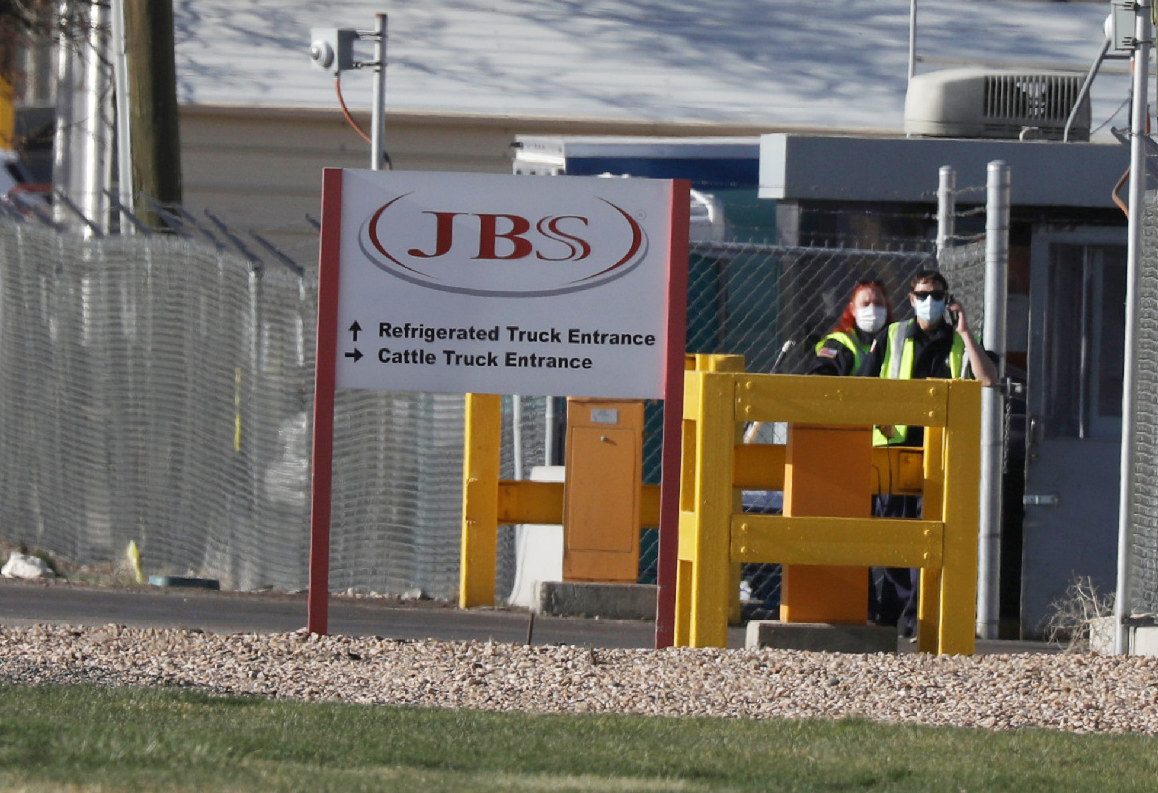
Governors in the US Midwest are warning that the nation's beef and pork supplies could be threatened by the current closure of dozens of meatpacking plants where reportedly at least 3,000 workers have tested positive for the coronavirus and at least 17 have died.
The Washington Post on Saturday reported the number of sickened and dead workers, citing a review of news reports, county health reports and interviews with health officials and worker advocates.
On April 23, USA Today reported that 62 plants in 23 states had more than 3,400 cases of confirmed virus infections among workers and 17 worker deaths at eight plants in eight states.
The Post reported that three of the nation's largest meat processors — Tyson Foods, JBS USA and Smithfield Foods — failed to provide protective gear to all workers and that some employees told the newspaper they were told to continue working in crowded plants even while sick.
Tyson, JBS and Smithfield have closed 15 plants, the newspaper said, and all strongly defended their efforts to protect their employees from the coronavirus, the newspaper reported.
All three companies said they have increased sanitation, have taken steps to ensure social distancing and are checking temperatures as workers report for their shifts. They said they are requiring quarantines for employees who have tested positive for the coronavirus and for those in close contact with them.
Meat processing workers are particularly susceptible to the virus because they typically work right next to each other on the line and congregate in crowded locker rooms and cafeterias, and many have said they have not been equipped with adequate protective gear.
On Sunday, Tyson Board Chairman John Tyson said in a full-page ad in The New York Times, The Washington Post and the Arkansas Democrat-Gazette— that the closing of the company plants due to COVID-19 "means one thing — the food supply chain is vulnerable".
"As pork, beef and chicken plants are being forced to close, even for short periods of time, millions of pounds of meat will disappear from the supply chain," he wrote in a letter published as an advertisement. "As a result, there will be limited supply of our products available in grocery stores until we are able to reopen our facilities that are currently closed."
"If we start to see more closures and these facilities remain offline for a prolonged period of time, it's hard to imagine a scenario in which consumers don't see changes at the supermarket," said David Ortega, an agricultural economist at Michigan State University.
Governors in Iowa, Kansas and South Dakota have said keeping the plants open is necessary to supply the nation's food chain.
Iowa Governor Kim Reynolds said on April 20 that even though "we will continue to see clusters of positive cases" of the virus in the state's meatpacking plants, closing them wasn't an option.
"These are also essential businesses and an essential workforce," said Reynolds, whose state produces one-third of the nation's pork. "Without them, people's lives and our food supply will be impacted. So, we must do our part to keep them open in a safe and responsible way."
Reynolds has refused to close a Tyson Foods pork plant in Waterloo, where dozens of workers have been infected. She said that if hogs can't be processed, farmers will have to euthanize them.
In Kansas, Governor Laura Kelly said: "It would be a disaster if we had to shut down, so we're trying to do everything that we can to keep those plants online."
On Friday, Kansas Health Secretary Lee Norman said that the state has identified 250 coronavirus cases among workers at six meatpacking plants. None of the state's major meatpacking plants have fully shut down.
Cargill and National Beef have reported infections among employees at plants in southwest Kansas, prompting Kelly to direct federal tests and safety equipment to counties in that region.
Plants in southwest Kansas account for 25 to 30 percent of beef processing in the US. The state's major meatpacking plants haven't fully shut down; one closed for a few days for deep cleaning.
"We've found isolation housing for those who need to be quarantined if they've had any contact," Kelly said April 23. "So we're taking a very aggressive approach, because we don't want to be like Iowa or South Dakota where we're having to shut those plants down."
Last week, Smithfield Foods, the world's largest pork producer, shut down its pork-processing plant in Sioux Falls, South Dakota, that accounts for up to 5 percent of the country's pork production. The closure came after more than 500 of the workers were infected and one died from COVID-19. The company also has closed two other plants in Illinois.
When the plant was closed, Smithfield president and CEO Kenneth Sullivan said in a statement: "We believe it is our obligation to help feed the country, now more than ever. We have a stark choice as a nation: we are either going to produce food or not, even in the face of COVID-19."
South Dakota Governor Kristi Noem said closing the plant already has been "devastating" for regional producers.
Virginia has 122 meat processing plants. Some companies will disclose whether any coronavirus cases have occurred at their plants but many – including Smithfield Foods headquartered in Smithfield – won't. The company website says that ``out of respect for our employees' legal privacy, we will not confirm COVID-19 cases in our facilities".
Unions representing safety inspectors and plant workers have urged the US Department of Agriculture (USDA) to tell the plants how to deal with coronavirus outbreaks. But the USDA has instead deferred to the Centers for Disease Control and Prevention (CDC) to give the plants recommendations and has left it to companies to determine their own safety precautions.
The Occupational Safety and Health Administration (OSHA) has decided not to make any of the CDC guidance mandatory. OSHA said it wouldn't enforce such regulations so as not to overly burden companies during the pandemic.










