



Finding patient zero 'extremely difficult'









Chinese scientists said on Monday that it is very unlikely the novel coronavirus was man-made, and finding patient zero is a formidable task that requires global collaboration to succeed.
Jin Qi, director of the Chinese Academy of Medical Sciences' Institute of Pathogen Biology, said that finding the first infected case is an "extremely difficult scientific problem that requires a great amount of interdisciplinary research".
He added that scientists have yet to find patient zero for the 1918 influenza pandemic, HIV or the H1N1 influenza in 2009.
"If patient zero is asymptomatic or has very mild symptoms, he or she may not have seen a doctor and left a medical record," Jin said at a State Council Information Office briefing.
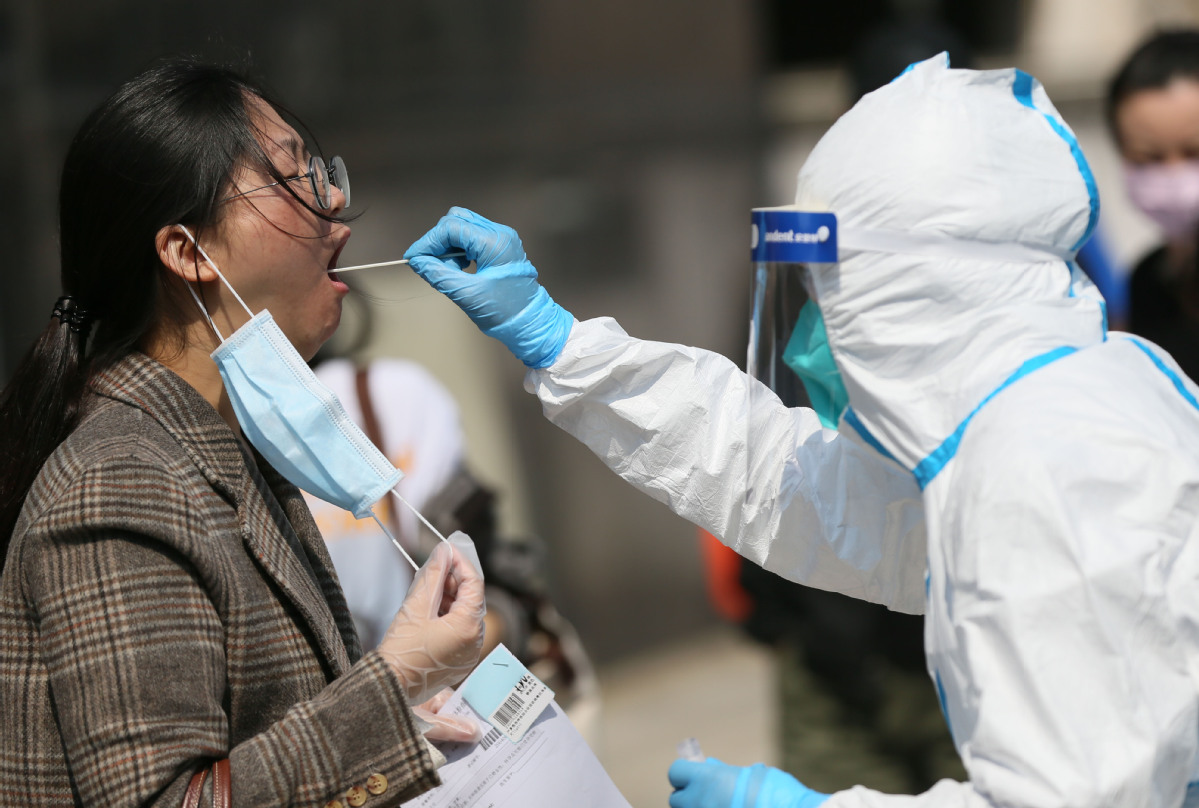
Some experts have proposed using antibody tests to find the first case. But current tests can only tell whether a person has been infected in the past, not when the infection occurred, he said.
Liu Peipei, a virologist at the Chinese Center for Disease Control and Prevention, said the increased number of people with COVID-19 antibodies, as well as the existence of asymptomatic patients, are two main obstacles in finding patient zero.
Liu said that China and many other countries are also looking for patient zero. He said he hopes countries can work together to tackle this challenging task.
When asked about the origin of the novel coronavirus, Liu said the scientific community has reached a consensus, which is, the possibility of the virus being man-made is "very low".
Jin said the purpose of tracing the contagion's origin is to formulate specific prevention and control plans to prevent similar outbreaks from happening in the future. "But this is also a very difficult scientific undertaking."
Some have speculated the COVID-19 may disappear with the arrival of hot weather, similar to what happened during the severe acute respiratory syndrome outbreak in 2003, but experts refuted these claims.
Wang Guiqiang, head of Peking University First Hospital's department of infectious diseases, said the probability of seeing a significant drop in COVID-19 cases in the Northern Hemisphere's summer is low.
"COVID-19 is very different from SARS and MERS (Middle East respiratory syndrome) for it has a longer incubation period and high ratio of asymptomatic patients, Wang said. It is believed that the novel coronavirus is temperature sensitive, and can be destroyed when making contact with water above 56 C, "but weather temperatures cannot naturally reach this high".
"Given the current global pandemic situation, it is unlikely that the virus will die away this summer. At the same time, we cannot rule out the possibility of the virus returning in the fall or winter in places where people tend to gather," he said.
Wang said that scientists have yet to find any intermediate host of the virus, so a globalized, unified prevention and control effort is necessary. "So long as one country has existing cases, other countries cannot relax their measures or else there may be new cases popping up around the world throughout the year."
Jin agreed with Wang's assessment, saying it is misguided to believe COVID-19 will go away in the summer like SARS did simply because they are both coronaviruses.
"People infected with SARS had clear symptoms of fever that we could efficiently identify and control," Jin said. "However, for COVID-19, there may be people who are presymptomatic, have mild symptoms, are asymptomatic or have other types of conditions. Do you really think humanity can get rid of this virus so easily?"
"It is possible that COVID-19 will become seasonal and stay with us for a long time," he added.
As a result, experts said the most effective ways to curb the virus are through vaccinations and drug development. Three vaccines-one adenovirus vector and two inactivated-have entered phase two clinical trials in China, and more research is needed to evaluate their safety and efficacy, Wang said.
He added that China is also testing convalescent plasma transfusion, stem cell therapy and monoclonal antibodies to treat COVID-19.


- Pioneering AI system for rare disease diagnosis
- Two giant pandas debut at Urumqi Water Park Zoo
- Six firefighters dead after fall from cliff
- 6 firefighters killed as fire truck plunges off cliff in Central China
- Beijing Spring Festival temple fairs blend tradition with technology
- Central government to supervise investigation into deadly blast








