



World trade likely to continue as normal after pandemic ends









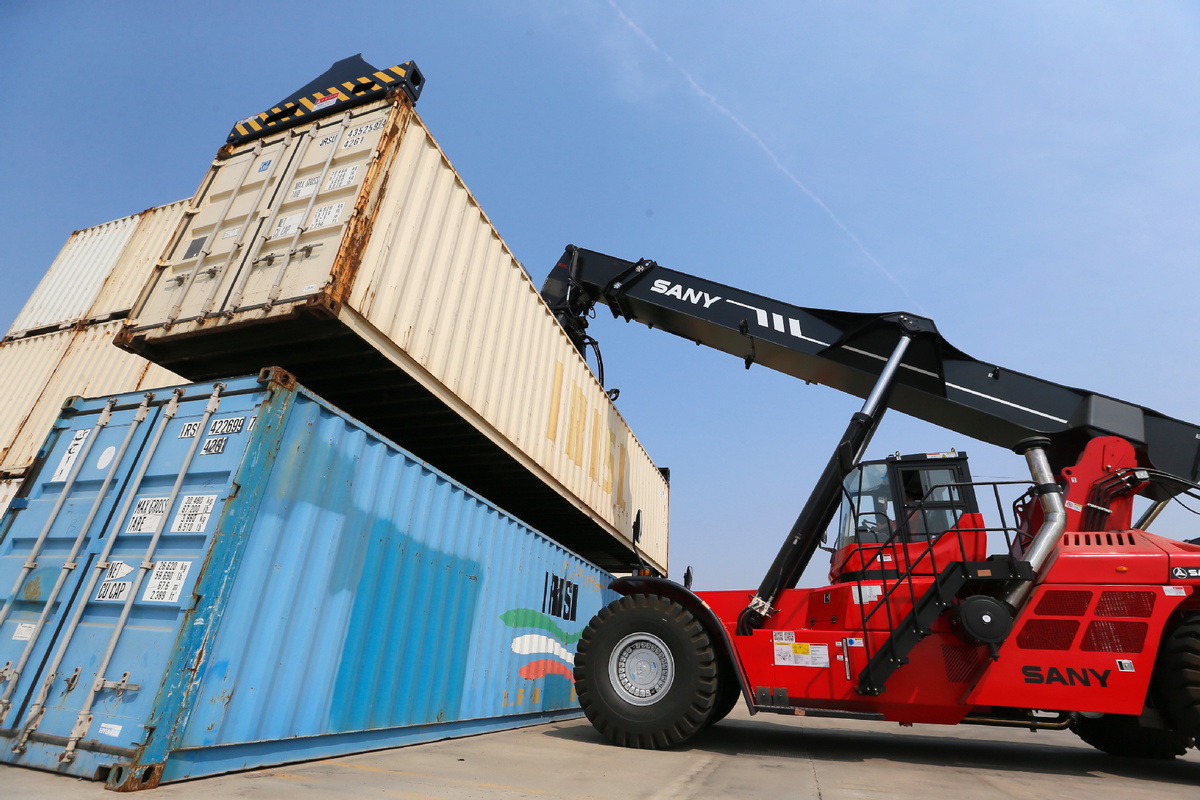
Supply chains, both global and domestic, have been severely disrupted by the novel coronavirus pandemic and the measures undertaken by governments to combat it.
Will it be business as usual once the crisis has passed? Or has there been a lasting shift in the pattern of trade at home and with the rest of the world?
The disruption has already sparked a debate about whether we have all become too dependent on both what others produce and on what we sell to them.
Inevitably, trade nationalists in the West have used the crisis to bolster their existing arguments that their countries have become too dependent on importing goods from China.
According to a commentary on United States channel Fox News: "After Americans flatten the curve of coronavirus, it's time to push back another spike: our increasing economic dependence on China."
A former leader of the United Kingdom's Conservative Party, Iain Duncan Smith, jumped on the anti-China bandwagon early on, with a diatribe in the right-wing Daily Mail, in which he proposed that "once we get clear of this terrible pandemic, it is imperative that we all rethink that relationship and put it on a much more balanced and honest basis".
Happily, while such commentators use the crisis to highlight what they regard as the failings of globalization, more practical minds are engaged in the down-to-earth question of how to protect supply chains in a time of global crisis.
Air and sea traffic has declined in the face of trade disruption. In March, the Maersk line cancelled two China-Europe sailings due to "declining market demand".
And, faced with the disruption of cargo flights, exporters and importers have turned increasingly to rail, to ensure the smooth running of East-West traffic.
The UK international freight company Davies Turner noted that, with air freight experiencing little or no immediate booking capacity, and inevitable delays and high prices, rail was looking increasingly attractive.
"Importers that traditionally move freight by air only need to factor in the slightly longer lead times for rail, to see what a massive cost saving they can benefit from," according to the company, which runs a weekly express rail service from Xi'an to the UK. "Importers that are able to remodel their supply chains to use the rail freight option may do so on a permanent basis."
Xinhua news agency reported that 809 China-Europe freight trains carrying 73,000 containers were sent across China in March. Both numbers hit a monthly record.
The stable operation had made the route a top choice for many Chinese enterprises, it quoted Yao Xiang, a manager with logistics group Sinotrans' northeast company, as saying.
RailFreight journal speculated in late March that the rail boom might prove short-lived as factories closed in Europe as novel coronavirus advanced.
Wang Dezhan, president of China Railway Container Transport Europe Logistics Company, was nevertheless confident that the resumption of work in China will speed up the economic exchanges and material flows between China and Europe.
Some experts believe some of the impact on world trade could be long-lasting. John Perry, who heads the logistics consultancy Scala, believes that: "For many, we are likely to see a re-assessment in supply chain strategies."
Reliance upon global supply chains would decline, particularly on single sourcing of components, raw materials, and finished products, according to Perry. There would also be more positive encouragement of domestic production, manufacturing, and farming.
There will certainly be changes as everyone ponders the lessons of the global crisis. But the economic nationalists might turn out to be overoptimistic if they think it spells the end of the kind of globalization that has brought huge benefits to many countries. No society ever got richer by turning its back and relying on the mantra of self-sufficiency.
The crisis has provoked a spike in China-bashing, particularly in the US among President Donald Trump's core supporters. The Trump re-election campaign emailed supporters asking potential donors to "give President Trump the necessary funds to hold China accountable".
Some US commentators speculated, however, that Trump himself might soft-pedal on turning anti-China rhetoric on trade into a feature of his campaign.
According to Christina Wilkie at CNBC, the US business channel, Trump sees his trade deal with China "as a key part of his overall plan to help the US economy recover from the impact of coronavirus".
The reality is that global economies are intertwined. US and other Western producers suffer when their exports to China are disrupted. Their consumers suffer when there is an interruption in imports from China.
The present crisis may have temporarily rattled that equation. There could be long-lasting changes once this is all over, but in the area of world trade, a return to a version of business as usual seems inevitable for everyone's benefit.
Harvey Morris is a senior media consultant for China Daily UK.










