



Ag experts seek stability in trade for US, China









When a panel of agricultural industry veterans, policymakers and investors were asked to describe with one word their take on the future of US-China relations, the answers included "volatile", "uncertain", "worried" and "murky".
Despite that, Bob Holden, a former Missouri governor and chairman and president of the US Heartland China Association, said: "We believe that there is much to be gained from the collaboration when the two largest economies in the world (cooperate), and our people have much in common in our aspirations for a better future."
The US Heartland China Association brought a panel together Wednesday to examine the US-China relationship,specifically the agricultural relationship, via an online videoconference.
Issues related to US-China agricultural trade, the impact of COVID-19 and the future of US heartland agriculture were discussed. The event was sponsored in part by the US China Exchange Foundation.
Holden said his organization represents 20 states from the Great Lakes to the Gulf of Mexico, including 11 top agricultural states that are leading producers of soybeans, corn, rice, hogs, chicken and cattle.
Jennifer Hillman, a senior fellow for trade and international political economy at the Council on Foreign Relations, said that the phase one trade deal signed in January between the US and China has resulted in a truce in the ongoing trade war.
So far, China has made progress in regulatory aspects of the agreement by streamlining the process of exporting US agricultural products to China, she said.
"A number of dairy companies have been certified to sell to China, restrictions on poultry and beef export have been loosened and China removed all tariffs on poultry," Hillman said.
In phase one, China will purchase $12.5 billion in additional agricultural products on top of the pre-trade-war level of $19.5 billion in 2017.
China made $5.1 billion in purchases by the end of March. "It is possible that China will make up for the shortage in winter," Hillman said.
However, there is some uncertainty in fulfilling phase one. Hillman said that there is a possibility that either China can't meet its commitments or the US won't be able to provide the desired goods.
Due to the trade war, China has shifted its purchases of several products away from the US. For example, China's primary suppliers of corn and soybeans are now Ukraine and Brazil, respectively.
The COVID-19 pandemic has disrupted the food supply chain in the US, especially in the meat processing sector. The US transportation sector has also been affected.
"There is concern: Why are we exporting to China just to meet the goal of this deal if it's going to leave Americans without bacon or other products," Hillman said.
The trade war has taken a toll on US farmers. China's imports of US agricultural products was reduced by more than half to $9.1 billion in 2018 and $13.8 billion in 2019.
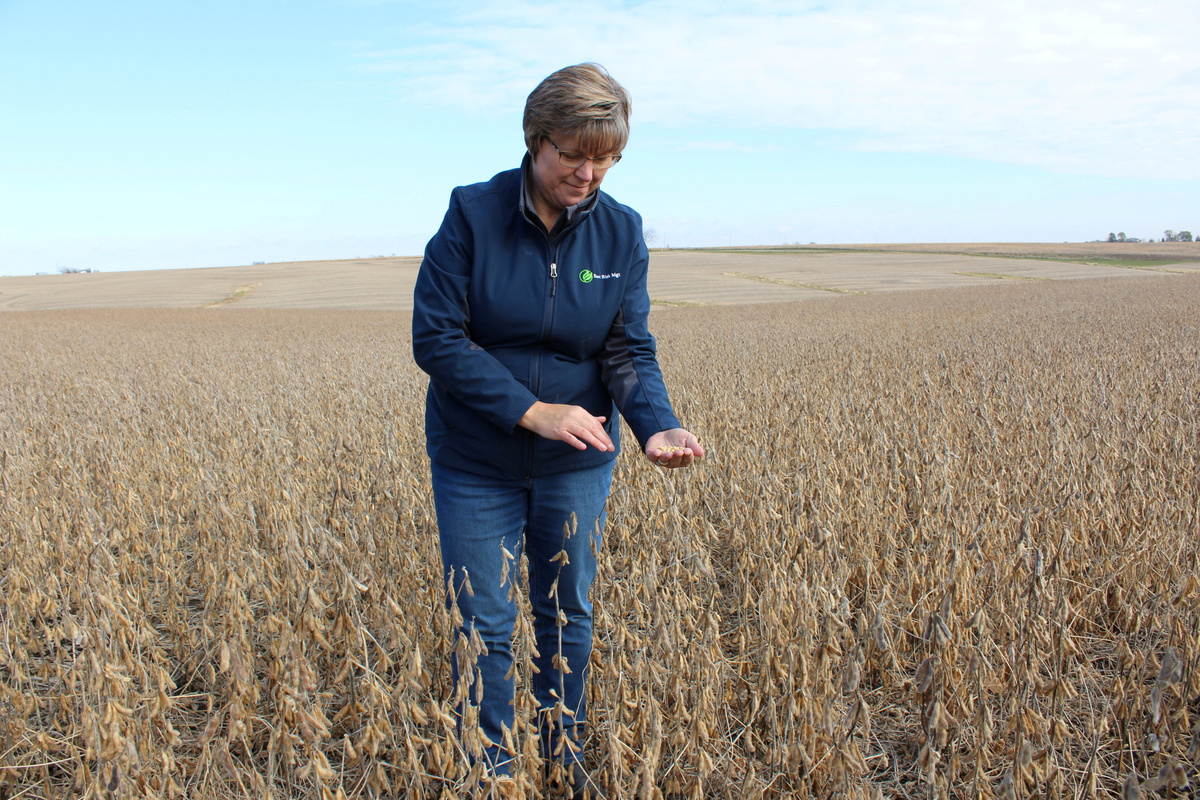
The current mindset of US farmers is one of unease, said Tom Vilsack, president and CEO of the US Dairy Export Council and a former US secretary of agriculture.
"Farmers have a good reason for being nervous and anxious. There is anxiety resulted from the potential threat to pull out of that phase-one trade deal as President Trump recently expressed," Vilsack said.
Rajiv Singh, co-chairman of FoodShot Global, said the agricultural sector is in a tricky situation amid a trade war coupled with a "black swan event",the coronavirus pandemic. He called for the two governments to work together to provide some certainty for the global food system.
"If you look at the global food system in the next 50 years, the US heartland and China are two anchors … with the US heartland on the production side and China on the consumption side," he said.
"There have been a lot of issues to be resolved that are translated into financial stress. These two anchors really have to work together to find a way for the global food system to work."










