Experts call for improved grassroots facilities










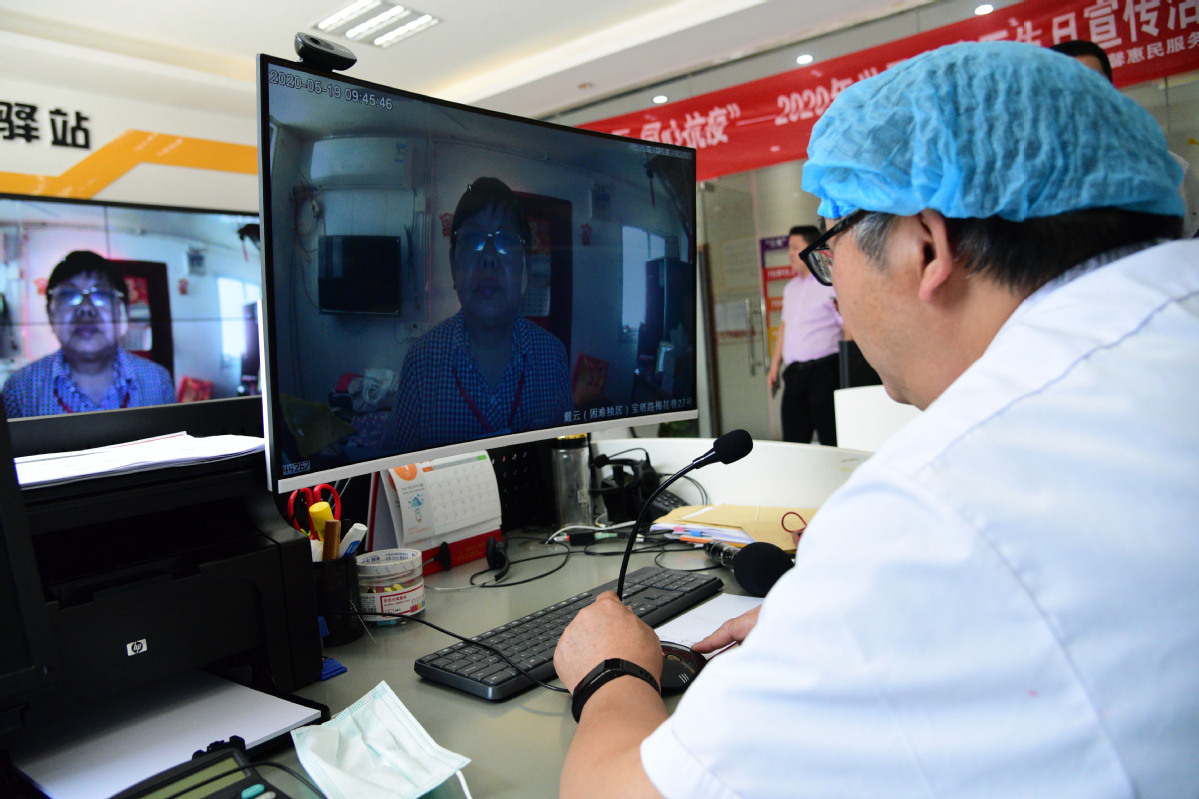
Ongoing reforms will be accelerated and strengthened. Wang Xiaodong reports.
Following the outbreak of severe acute respiratory syndrome in 2003, China increased investment in the national public health system.
The resulting improvements included construction of a first-class Center for Disease Control and Prevention, and the establishment of a national network to report infectious diseases and public health emergencies.
This year's novel coronavirus outbreak was the first time an infectious disease-such as H1N1 flu, aka swine flu, or Middle East respiratory syndrome-h(huán)ad caused a major epidemic in China since 2003.
With the COVID-19 epidemic increasingly being brought under control, the nation, especially experts and officials, is reflecting on deficiencies in the health system, including emergency responses to outbreaks of infectious disease.
The COVID-19 epidemic is a major public health emergency. The virus has spread faster and wider than any other since the founding of the People's Republic of China in 1949, and has proven to be the most difficult to contain.
By Saturday night, there had been more than 83,000 confirmed COVID-19 cases on the Chinese mainland, resulting in more than 4,600 deaths, according to the National Health Commission.
The commission's figures show that there are currently 129 patients being treated for COVID-19 on the mainland.
Meanwhile, nearly 80,000 patients had beaten the illness and had been discharged from hospitals, it said.
In the past month, the number of new cases reported daily had mostly remained in single digits-a sharp contrast to the thousands that were reported every day at the height of the outbreak in February-until a rise was reported in Beijing toward the end of last week.
Intensification
In the Government Work Report, delivered to the National People's Congress, the top legislative body, on May 22, Premier Li Keqiang called for greater intensity in the construction of the public health system this year.
Li stressed reform of the disease prevention and control system, and improvements to the mechanism for reporting and issuing early warnings about infectious diseases.
Information about epidemics will continue to be released in a timely, open and transparent manner, he said.
During this year's two sessions-the annual meetings of the NPC and the Chinese People's Political Consultative Conference-national legislators and political advisers proposed ways of improving the health system to eliminate loopholes and prevent epidemics.
Dong Xiaoping, director of global public health at the Chinese Center for Disease Control and Prevention, said reforming the CDCs, a core part of the health system, and improving talent selection are necessary to improve the system.
"In the reforms, the CDCs should be given certain administrative powers," said Dong, a member of the National Committee of the CPPCC, the top advisory body.
Under the law on the prevention of infectious and contagious diseases, CDCs across China may only collect and analyze information related to outbreaks and then report to health authorities.
CDCs across China are managed by local authorities. However, those at higher levels, such as the national CDC, lack the authority to direct local CDCs, which results in poor coordination, Dong said.
Higher-level CDCs should be given certain administrative roles during national medical crises, so they can mobilize control and prevention resources in urgent cases, he added.