Tourism brings wealth to easternmost village









Since 2012, the tourism industry in Zhuaji Hezhe village has been booming, with annual per capita income increasing from 6,000 yuan ($848) to about 20,000 yuan.
Zhuaji, a distinctive village with ethnic minority elements in China's easternmost city of Fuyuan, Heilongjiang province, has a population of 753, including 155 Hezhe people.
The village saw more than 10,000 tourist visits in 2019, bringing its tourism revenue up to 6 million yuan.
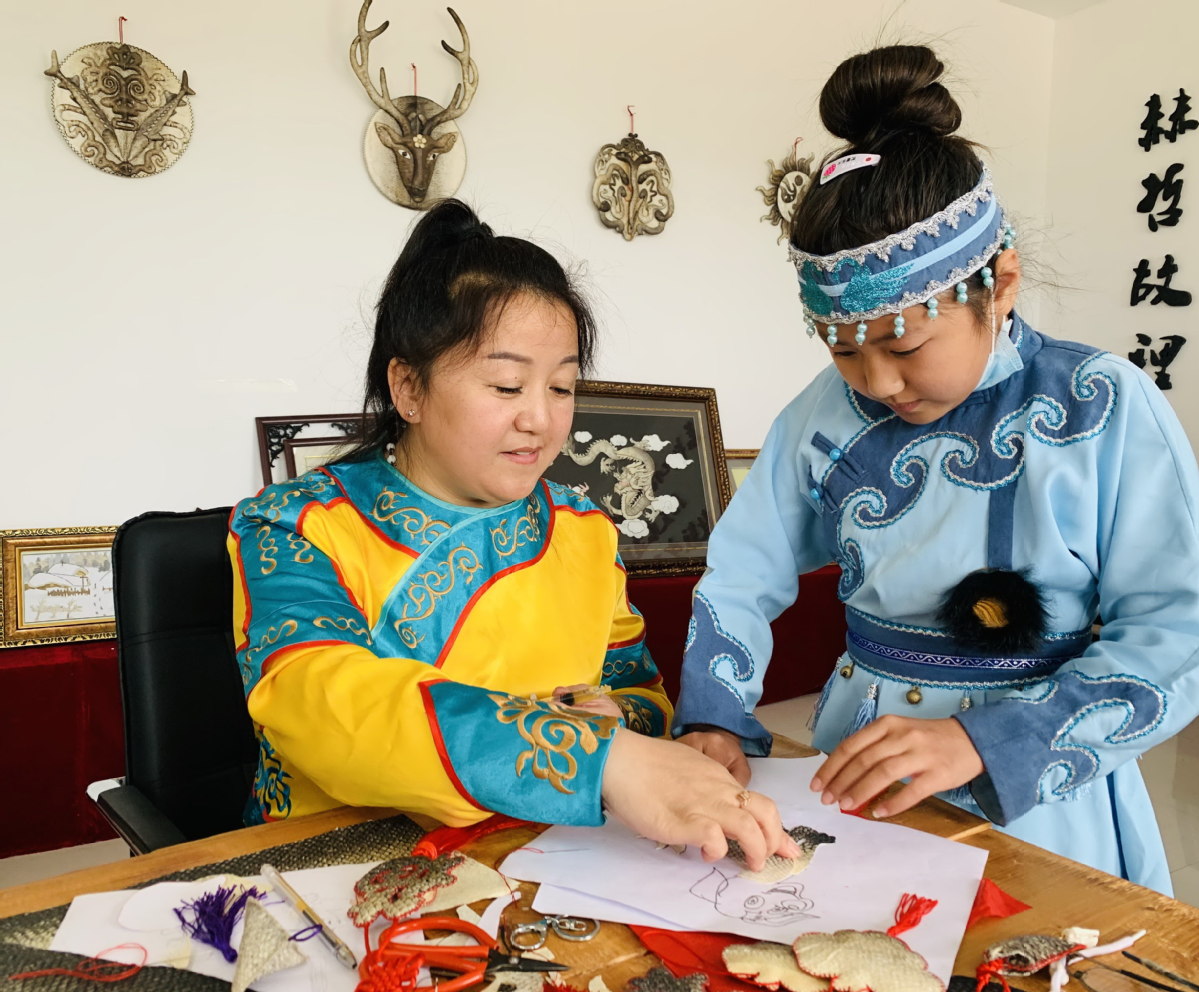
Tourists can feast on a variety of fish and buy unique ornaments made from fish skin and bones.
The Hezhe people are one of the smallest ethnic groups in China, numbering just 5,354, according to the 2010 national census.
They mainly live in the counties of Tongjiang, Fuyuan and Raohe by the Songhua, Heilong and Wusuli rivers in Heilongjiang, where they have long depended on fish for survival.
"The Hezhe people are hospitable, and we usually offer the 'talaha'to our distinguished guests," said Cao Liwei, owner of a restaurant in the village. "Talaha" means grilled raw fish in the Hezhe language.
"Fresh fish is grilled medium-rare and then cut into thin slices. People eat it dipped in salt," she said. "The dish can only be made from wild carp."
Cao, 48, and her husband started their business in 2016.
"The busiest season lasts from May to October, which can bring us more than 60,000 yuan," she said. "In the winter, I can stay in a warm room enjoying the leisure time that was unimaginable before."
With paved roads through the village and new houses available to every household around 2016, villagers in Zhuaji had set off on their journey to a better life.
Located beside the Wusuli River, Zhuaji covers 1.3 square kilometers but has no cultivated land.
"The whole village lives mainly on fishing," said Li Shaodong, Party secretary of the village. "However, since the 1990s, fish stocks have been declining year by year, making life challenging for the villagers."
"At that time, we all lived in small, thatched cottages and had to suffer from dust on windy days and muddy roads on rainy days," Li recalls.
In 2012, Zhuaji was rated as a national-level impoverished village.
To lift the village out of poverty, Fuyuan city government officials tried various methods to develop the tourism industry and promote traditional ethnic culture.
"When we started exploring tourism, we found that although we received lots of visitors, few of them chose to stay in the village for long due to the lack of hotels and restaurants," Li said. "Studying some famous tourist attractions in the country, we planned to improve the construction of homestays and characteristic restaurants to attract more tourists."
So far, there are 26 homestays and 10 restaurants.
With government support, the village spent 22 million yuan to change its appearance, including renovating roads, adding a green area of 15,000 square meters and installing new trash cans and solar street lamps.
"Tourists from all over the country came and stayed here longer," Li said. "Around 100 villagers are directly involved in the tourism industry, bringing them more income."
In July 2016, Zhuaji was officially removed from the list of national-level poverty-stricken villages.
That same year, 37 families joined a newly established cooperative focusing on Hezhe ethnic folk art, such as fish-skin artwork, Hezhe folk songs and dances.
The cooperative invited professional teachers from Fuyuan Cultural Center to give lessons to all the members, helping them create unique ornaments as well as pass on their cultural heritage.
Zhou Chunxiang, a 50-year-old villager, can make more than 100 ornaments with fish skin within a tourist season, bringing her about 5,000 yuan after selling them to the tourists.
"Although I'm a Hezhe person, I didn't know how to turn fish skin into paintings or ornaments until I learned from the teacher in the cooperative," she said.
Zhou also learned Hezhe Yimakan Storytelling, an oral art that was listed by UNESCO as an Intangible Cultural Heritage in Need of Urgent Safeguarding in 2011.
Yimakan is narrated in the Hezhe language and takes both verse and prose forms. It consists of many independent episodes depicting tribal alliances and battles, including the defeat of monsters and invaders by Hezhe heroes.
"The handicrafts and Yimakan performance are really loved by tourists, which made me feel proud of our culture," she added.
The better life inspired more young villagers to return to their hometown, including Shang Meihan.
Shang, 24, became a dance teacher at Fuyuan Children Palace after graduating from Jiamusi Vocational College in 2015.
"I am a Hezhe girl born in Zhuaji, and I was really happy to see the great change in my hometown," she said. "When I knew the village urgently needed relevant professionals to support the development of its tourism industry, I decided to return in 2016."
As a professional dancer, she and her partners perform folk dances for tourists, presenting Hezhe ethnic flavor. She also works a guide at the village's Hezhe Folk Exhibition Hall.
"During the past three years of work, I learned a lot about the history and culture of our group," she said. "We have so many intangible cultural heritages to be proud of, and we cannot let the culture disappear in our generation."



- Why do China's cultural and creative products go viral?
- Aviation sci-fi park Nantianmen to open in 2027
- Chinese researchers make breakthrough in green cooling technology
- Former head of national forestry and grassland body under investigation
- A new lease of life: Providing dialysis access in rural China
- China's grain output hits new high in 2025