



With the US dollar wobbly, are financial shocks inevitable?









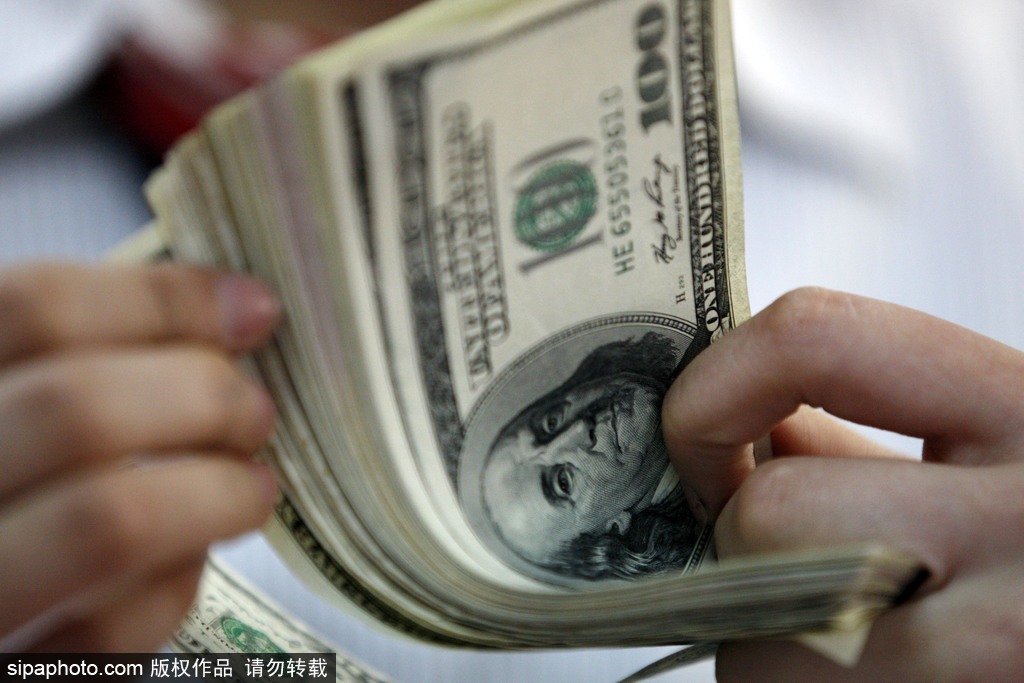
Even before the economic shock of COVID-19, many economists were warning that the US reliance on very large-scale, very low interest rate borrowing, largely from non-US institutions, is not sustainable.
Is it really plausible that the Federal Reserve can pump more and more money into the economy without causing inflation? Can the United States keep using borrowed money for both government and private consumption, not productive investment, without lenders starting to worry that they might not be paid back-or might be paid back in steeply devalued dollars?
Will the dollar continue to be a viable international reserve currency even while the Fed pumps money into the economy and the US government continues to borrow huge funds with no end in sight?
The US government is responding to the novel coronavirus by repeating the playbook, in a more extreme form, that it followed after the tech market collapse of 2000 and the Global Financial Crisis of 2008-09. Since the start of this year, the Fed has expanded the size of its balance sheet by $3 trillion, to 33 percent of GDP from 19 percent.
This is by far the fastest increase in US money supply in history. At the same time, the federal government is expected to borrow $4 trillion to $5 trillion, or 20 percent of GDP, this year. Much of this borrowing is from foreigners.
China, on the other hand, is concentrating on improving the real economy and is following a much less risky monetary and fiscal policy course. At the same time, Chinese industry is being restructured toward higher value products with world-leading technology. And China is taking many steps to move toward more efficient market-based institutions.
The consensus belief, at least hope, is that the Fed's extreme expansionary policies will rescue the US economy, at least until the next crisis. However, well-known mainstream economist Stephen Roach, now a faculty member at Yale and former chairman of Morgan Stanley Asia, last month predicted that the dollar will fall 35 percent by early 2021, adding credibility to those who fear that the dollar-based financial system will not survive this crisis.
A dollar collapse would present the Chinese economy with big opportunities and big challenges. If nothing else changes, the value of the yuan would rise to 4 or 5 to the dollar from the current 7 level. This would mean that many low-end exports to the US would no longer be viable.
But Chinese industry is already moving to higher value-added products, which are not so price-sensitive. The total Chinese trade surplus would have to be sharply reduced, but that will further enable an emphasis on raising domestic spending within the country and on exporting to Eurasian countries.
China would also likely stop or reduce its purchases of dollar-denominated assets, especially US Treasury bills, meaning that China (and Japan) will no longer provide the financing of the US budget and trade deficits.
The COVID-19 crisis was a big shock to the economy, but it is made worse by 20 years of large US government budget deficits and ever-decreasing savings rates. Neither political party has been willing to get the budget under control or to stop relying on steadily increasing monetary stimulus.
For the last 20 years, the US economy has been based on maintaining two large imbalances-the federal government budget deficit and the trade deficit. Extremely low interest rates are like opium-once a society becomes hooked, the detox will be painful and scary.
The persistence of America's twin deficits-large government budget deficit and trade deficit-has been possible only because of the special reserve currency status of the US dollar. That is, the US has made up its shortfalls in investible capital by borrowing very large sums from non-US institutions at very low interest rates. If the dollar loses its special status, that will no longer be possible.
According to April data from the US Bureau of Economic Analysis, personal income fell 10.5 percent and spending declined 13.6 percent year-on-year. Fearful consumers have stopped spending-raising the personal savings rate to an astonishing (for the US) 33 percent of income! Yet, these personal savings are far more than negated by federal government borrowing that is expected to be around $4 trillion to $5 trillion, or 20 percent of GDP, this year.
Roach's key argument is that huge US government borrowing is driving the consolidated US savings rate down to unprecedentedly low levels-below 2 percent of GDP. In this situation, the only way to fund investment and government spending in the US will be to sharply increase borrowing from foreign sources-largely China or Japan. But, would China or Japan really be willing to invest more in dangerously over-valued dollar assets?
The entire US financial system has become dependent on very low interest rates. Payments on the government debt are not so onerous if interest rates are low. Corporations have been heavily indebted, but their debt payments are low. And home prices have risen to their current high levels because mortgage interest rates are very low. Any interest rate rise, which will certainly happen if inflation rises or the valuation of the dollar falls, will cause chaos in all these markets.
At the moment, the US government is still able to borrow large sums at near-zero interest rates because investors have few other places to put their money. But, can this really continue at the same time the Fed is vastly expanding the money supply?
An investor who buys a 10-year US Treasury today at less than 2 percent interest is betting that dollar interest rates will remain low, that inflation will remain low, and that the dollar will not be devalued over the next 10 years. Who will be willing to make that bet over the next year as other world economies recover and other investment opportunities arise?
In its June stress test of major banks, the Fed found that the banks are adequately capitalized to survive probable scenarios. But many of the Fed's current activities reek of desperation. In addition to monetizing the government budget by massive buying of Treasury bills, the Fed is now buying corporate bonds and, astonishingly, individual corporate stocks. This means that the valuations of all classes of assets are artificially high, supported by Fed purchases.
It's true that traditional monetary theorists have been warning of inflation for the last 20 years, so some policymakers have become confident that the Fed can simply continue to print exponentially increasing amounts of money without adverse consequences. Unfortunately, the imbalances become greater the longer this persists, meaning that the economic shock will be greater when the system finally collapses.
The economic shock of the dollar collapse would be greatest in the US, which would have to restructure its entire industrial structure, government financing, and financial system. This could be very beneficial in the long term-if the US economy survives a very tough and long transition without going into deep depression.
No one really knows whether the Fed's highly expansionary policies will cause a rapid fall in the value of the dollar and a possible collapse of the dollar-based world financial system in the next year or so. Eventually, the current system will be unsustainable, but it might muddle through with increasing uncertainties and financial imbalances until another crisis comes along.
China's policies of upgrading its industry to higher value-added products and redirecting exports through the Belt and Road Initiative are important ways to prepare for the inevitable currency shocks to come.
The author is a commentator with China Daily.



















