Policies should focus on upgrading SMEs, not just emergency relief









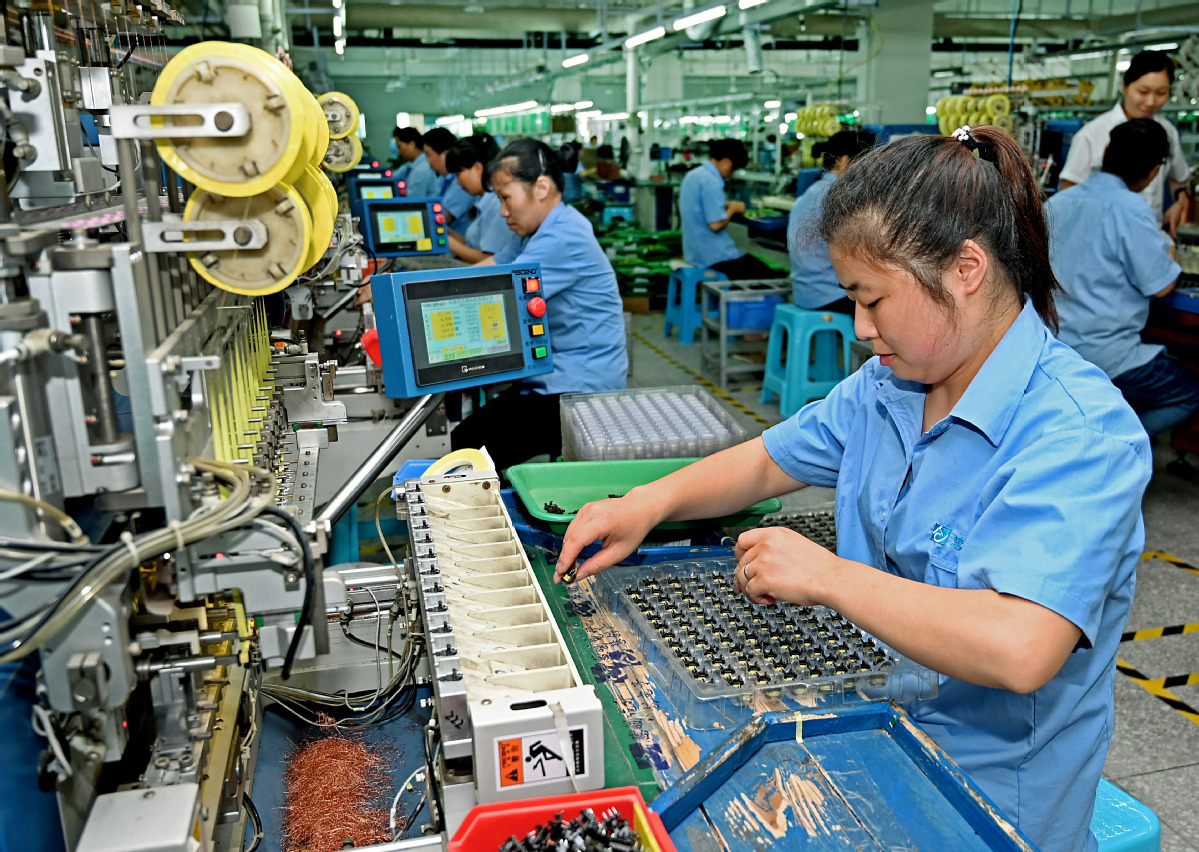
Recent reports of the recovery of small and medium-sized enterprises are great news for China's real economy. The government policies that made this possible are partly a response to the economic disruptions caused by the COVID-19 pandemic, but they predate the coronavirus and are designed to support and upgrade the nation's SMEs.
In many ways, the measures to upgrade the labor force through vocational education and to ensure that banks lend to SMEs are reminiscent of the German economic model's emphasis on specialized manufacturers that depend upon and employ well-trained workers.
Standard Chartered's SME Index rose to 53.3 in June from 51.7 in May. Since SMEs make up about 80 percent of urban new hiring, Standard Chartered's employment expectations indicator also rose to 53.2 from 52.1 in the same period. Numbers above 50 indicate an improving situation. Similarly, the SME development index of the China Association of Small and Medium Enterprises rose 3.5 points to 85.5 in the second quarter.
Long before COVID-19 hit the economy, reforms to boost SMEs were paying off. In the 2019 World Bank Ease of Doing Business Index, China jumped 15 places from the 46th to the 31st most business-friendly country in just one year-2018 to 2019.
Since SMEs depend mostly on direct sales, this data shows that consumer confidence and demand is experiencing a robust recovery. Larger businesses can sometimes rely on saved reserves and can be stimulated by loans or subsidies, but small businesses cannot continue unless they are making real sales.
To fight the economic effects of COVID-19, the government has implemented tax, financing and regulatory measures to help SMEs, with a special focus on maintaining employment. Caixin Media calculates that these measures will save SMEs 2.5 trillion yuan ($356.6 billion) this year.
Measures include readjustments of pension contributions, unemployment insurance and worker compensation payments plus 53.9 billion yuan of direct subsidies for employment-all of which make it cheaper for employers to retain employees. Postponing corporate taxes and delaying loan payments allow companies to get through this year's cash crunch.
At a symposium on Monday, Premier Li Keqiang stressed timely implementation of macro policies amid safeguarding employment, people's livelihoods and market entities. He also stressed fiscal, monetary and employment-oriented policies as well as further fee cuts and tax reductions for enterprises.
He added that liquidity should be kept at a reasonable level to alleviate financing problems faced by micro, small and medium-sized enterprises, and modern technology should be applied to developing inclusive finance.
Many SMEs are labor intensive, so they often offer a path for less educated young people to get work experience and to begin saving to start their own enterprises. Many owners of businesses in rural areas or smaller cities began their careers working in lower-level jobs in the big cities. In turn, the businesses they have founded are now offering opportunities for the next generation. As part of the recovery package, migrant workers can receive a one-time start-up subsidy if they return to their hometowns to set up new businesses.
This year, China is devoting tens of billions of yuan to provide vocational skills training for 35 million people and increasing enrollment in vocational colleges by 2 million students. Thus, China is moving decisively in the direction of the German model that encourages students to see vocational training as a highly respectable alternative to university education. Such well-trained workers are an important factor in the success of Germany's manufacturing sector.
Financing is a problem for small businesses in every country. Usually, it is time-consuming, expensive and not very profitable to do the in-depth analysis needed to make loans to SMEs. Left to their own choices, banks would prefer to make consumer loans or to provide financial services. So, if a nation wants to maintain its SMEs, banking regulations need to force banks to develop the lending expertise needed.