US stress on security will hurt trade









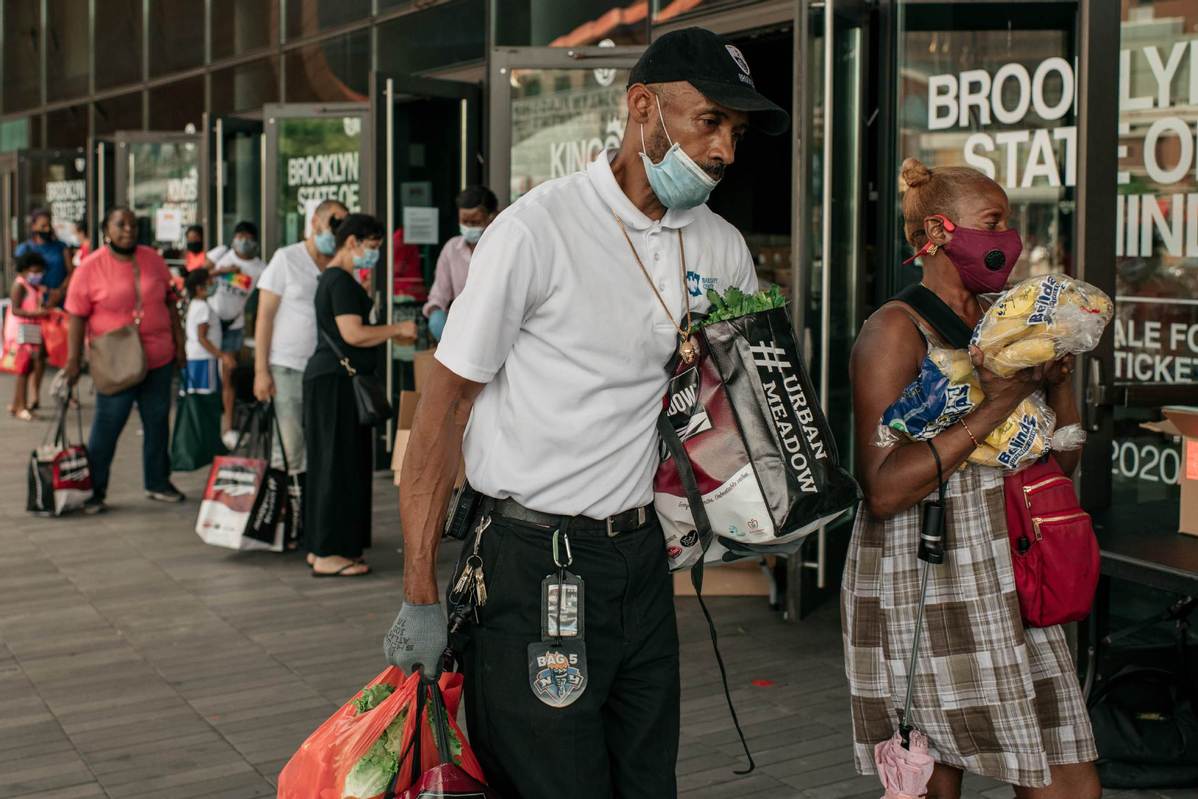
By disrupting the world's interconnected economic, social and geopolitical spheres, the COVID-19 pandemic has exposed just how fragile and inequitable the institutions that govern them really are. It has also highlighted how difficult it is to address systemic fragility and inequity amid escalating national security threats.
In 2007, Dani Rodrik, a professor at Harvard University, proposed an "impossibility theorem" for the global economy, according to which democracy, national sovereignty and global economic integration are fundamentally incompatible. "We can combine any two of the three, but never have all three simultaneously and in full," he said.
Hong Kong model for growth and prosperity
To see how social, economic and national security policies are entangled in this "trilemma", consider Hong Kong's experience. Since British colonial rule, a policy of "positive non-interventionism" has enabled the city's economic growth. Hong Kong's colonial administrators knew that a relatively small market, manufacturing sector and trade volume meant that a commitment to openness, rather than a targeted development strategy, was the surest route to prosperity.
They were right. Today, Hong Kong possesses one of the world's busiest ports, and has long permitted capital, information and people to move freely. Near-zero tariffs and ultra-low taxes have enabled the city to become a global financial hub, and one of the world's biggest markets for equity and debt financing. And, from the start, the Chinese mainland's process of "reform and opening-up" included deeper economic engagement with the Hong Kong Special Administrative Region, which boosted the city's dynamism.
Yet, as in the advanced economies, the globalization-fueled economic boom masked deepening social problems. As manufacturing shifted from Hong Kong to the mainland, many jobs were lost, not only on the factory floor, but also in logistics and back-office services. The result was a hollowing-out of the middle class. Today, the SAR's Gini coefficient-in which zero represents maximum equality and one represents maximum inequality-stands at 0.539, compared with 0.411 in the United States (the highest among major developed economies).
There was a time when Hong Kong's non-interventionist economic approach was accompanied by a similarly hands-off social policy. But the 1967 riots-a labor dispute that grew into large-scale protests against British rule-forced the government to build low-cost public housing to alleviate worker discontent. But the approach was flawed. Today, nearly 45 percent of Hong Kong residents live in public rental or subsidized housing. On the mainland, by contrast, 90 percent of households own at least one house.
America's high-cost anti-terrorist defenses
Addressing these social problems will not be easy, not least because of rising national security risks. Hong Kong's economic development was enabled by near-zero national security costs-a byproduct of peaceful Sino-US engagement. This began to change with the terrorist attacks of Sept 11, 2001, which highlighted the asymmetry between low-cost weapons and high-cost anti-terrorist defenses-and the need to implement such defenses, anyway.
The risks posed by the more recent proliferation of digital technologies are marked by a similar asymmetry. Cyberattacks are cheap to mount, but they can topple entire financial, information or defense systems. As Rodrik's "trilemma" suggests, such risks force governments to make tradeoffs. National security concerns must shape economic policy, but the result may not necessarily advance the imperative of delivering the resources needed to address social inequities.
When economic policy fails to deliver reasonable social equity-reflected in, for example, widespread home ownership and quality jobs-internal security risks rise. And, indeed, in Hong Kong, as in the US and many other places, many workers and young people have rejected the political establishment, embraced localist and populist ideologies, and protested against state institutions. Such trends often lead to chaos and violence, inviting tough action to restore order.
Challenge for HK more complicated
The challenge is all the more complicated for Hong Kong because of its position as a financial gateway between the mainland and an increasingly hostile US. As Rodrik has said, the Sino-US conflict is shaped largely by national security concerns, to the point that economics is at risk of becoming "hostage" to geopolitics or, worse, reinforcing and amplifying the strategic rivalry.
The US' weaponization of finance exemplifies this risk. Since the so-called war on terror began, the US has been leveraging the private sector and banks to isolate particular actors from the international financial system. In recent years, the US has relied so extensively on secondary sanctions that even France and Germany have been mulling how to sidestep its financial dominance, including by creating an alternative global payment system or a European fund that could allow trade to continue with US-sanctioned countries.
As the US has imposed financial sanctions on a growing number of Chinese enterprises and individuals, China is worried that the US could use the SAR as a kind of Trojan horse to destabilize the country's polity, including its national security initiatives. After all, the US' national security strategy explicitly aims to not only protect Americans and their way of life, but also advance "American influence in the world".
China's fears may be coming to pass. The US recently passed the so-called Hong Kong Autonomy Act, which allows for imposition of sanctions "with respect to foreign persons involved in the erosion of certain obligations of China with respect to Hong Kong, and for other purposes". In other words, the US is using the financial system to punish Chinese officials involved in the implementation of the new national security law in the SAR.
The US administration also considered undermining the Hong Kong currency's peg to the US dollar. Fortunately, US leaders thought better of this idea, because, considering the SAR's position as the world's fourth-largest foreign-exchange trading center, it could threaten the entire US dollar payment system.
Global tragedy of commons
But this decision is small comfort given the trajectory of the US-China rivalry. The growing emphasis on national security will undermine global trade and investment further, leaving fewer resources to finance social policies, address inequality, and tackle climate change. This is a global tragedy of the commons, and there is no guarantee that recognizing it will change the outcome.
Project Syndicate
The views don't necessarily reflect those of China Daily.
Andrew Sheng is a distinguished fellow at the Asia Global Institute at the University of Hong Kong and a member of the UNEP Advisory Council on Sustainable Finance; and Xiao Geng, chairman of the Hong Kong Institution for International Finance, is a professor at and director of the Research Institute of Maritime Silk-Road at Peking University HSBC Business School.