Ten finless porpoises appear in Yangtze









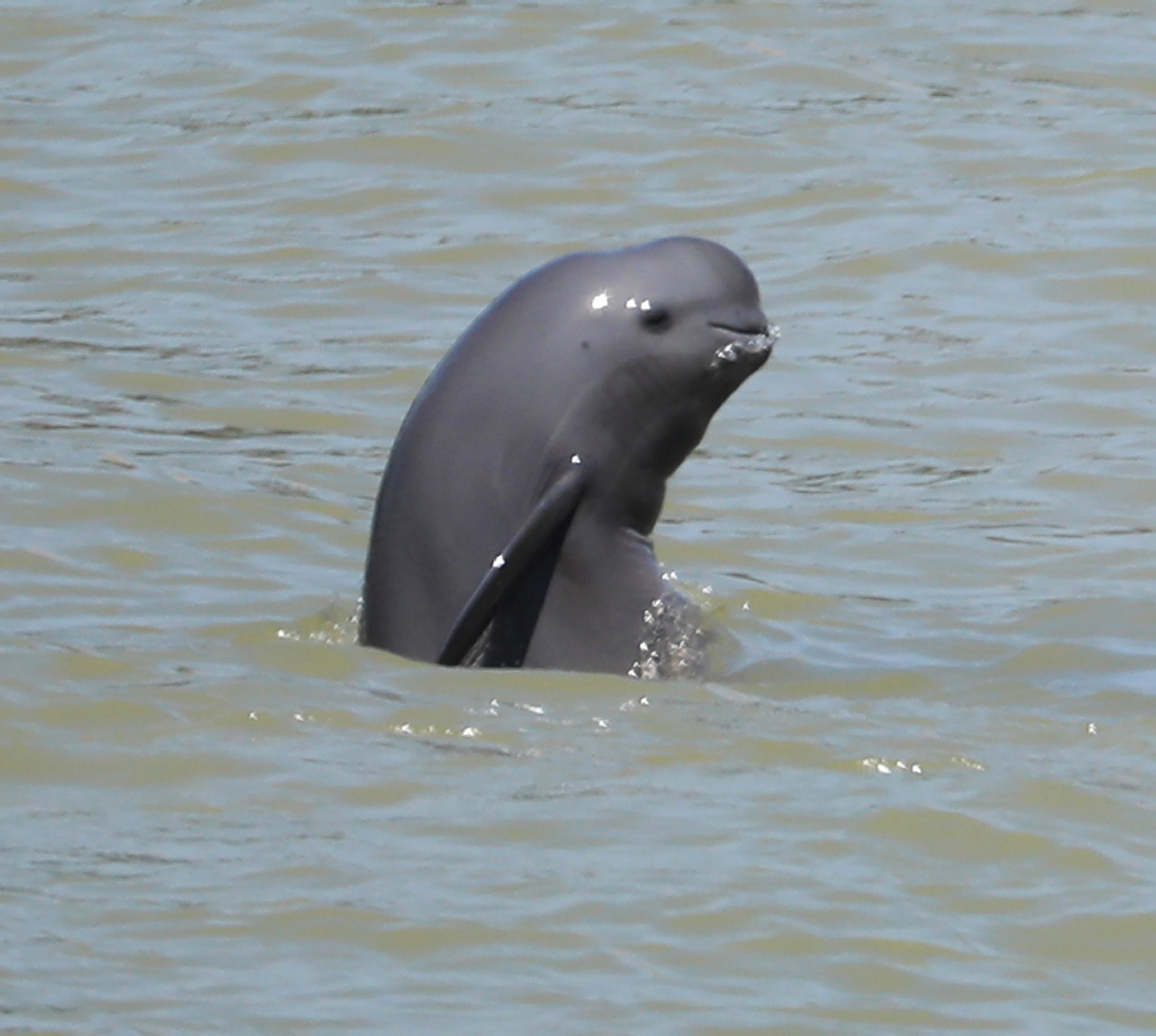
A group of highly endangered Yangtze finless porpoises was recently seen in the Yangtze River in the area of Wuhan, Hubei province, which an expert says may be a result of less interference from human activities or an increase in food availability.
A group, or pod, of about 10 porpoises appeared some eight months after the country initiated a 10-year ban on fishing in the river at the beginning of the year.
The rare appearance was recorded in a short video by a local resident and soon attracted attention online.
The finless porpoise and the Baiji dolphin, or Yangtze River dolphin, both members of the cetacea family and the only two aquatic mammals in the river, were designated as "critically endangered" and placed on the red list of threatened species by the International Union for Conservation of Nature in 2013.
Among the very few porpoise species, the Yangtze finless porpoise is the only one that lives in freshwater, according to Zhang Xianfeng, an aquatic wildlife researcher at the Institute of Hydrobiology of the Chinese Academy of Sciences. Its small size and cute "smile" make it a much-loved animal in China and beyond.
"Rising water levels during the flood season and the fishing ban may both contribute to this rare animal's appearance, given that sandbanks are covered by water and more water plants are available for fish. Without interruption from human activities, the finless porpoise might be more active," Zhang said.
He said it's a good thing that the public has become more aware about the urgency of saving the finless porpoise and protecting the Yangtze ecosystem. However, the appearance of the pod of porpoises cannot necessarily be seen as a sign that the population is increasing.
"Its total remaining population, around 1,000, is very limited, which has severely affected its reproduction rate. It is estimated only about one out of three in the population is able to reproduce offspring. In such a long river like the Yangtze, the chances for them to have babies are very slim," he explained.
The finless porpoise is widely believed to be an important indicator of the health of the Yangtze, which stretches over 6,300 kilometers and includes rich and complex terrains and climates along its basin, giving it one of the highest levels of biodiversity in the world.
Over the past 40 years, the porpoise's number has declined dramatically due to many factors, such as climate change and habitat loss, according to Zhang Xinqiao, senior program manager of the World Wide Fund for Nature in China.
Scientific research on the species released by the Ministry of Agricultural and Rural Affairs in 2018 shows that its population was just 1,012-fewer than the giant panda.
However, he said the population has shown some stability in recent years thanks to joint protection from government organs, research institutes and other social organizations.
To preserve biodiversity along the Yangtze, China started a 10-year fishing moratorium in 332 natural reserves, extended along the river's entire primary course, its major tributaries and lakes linked to the river, protecting not only the finless porpoise but also more than 4,300 kinds of aquatic life living in the Yangtze River Basin.
"The fishing ban is crucial to ecological restoration of the whole river basin. Usually, it takes three to five years for fish to produce a new generation. A 10-year fishing ban means two to three generations of fish will be produced, which will significantly expand the finless porpoise's food supply," Zhang Xinqiao said.
Also, he said the fishing ban removes the threat to the porpoise from tools used in fishing.
"But the effect of the fishing ban, supported by scientific monitoring data of aquatic resources, will be known only after three to five years," he said.





- Pact to boost China's gold market
- Annual lantern festival opens in Shanghai
- Work teams dispatched after earthquake hits Diebu county in Gansu
- Zhangjiajie National Forest Park transforms into a winter paradise
- Thousands enjoy freshly cooked laba porridge in Sichuan
- Short videos highlight the beauty of Hebei